
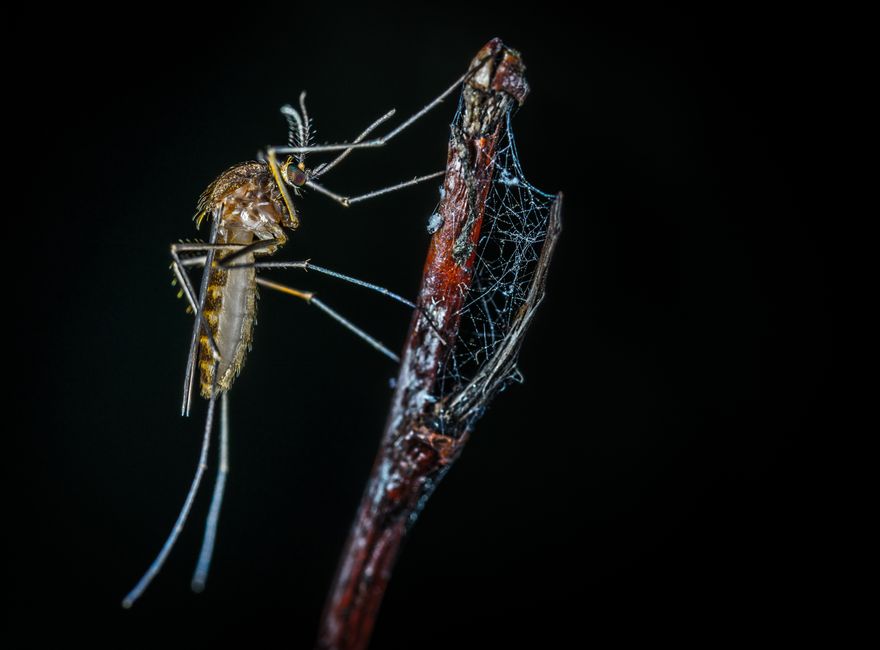
If you have ever been the one person at the cookout covered in bites while everyone else sits untouched, you have probably blamed your blood type. It is a popular idea, and it has a kernel of truth. Research suggests mosquitoes land on people with type O blood more often than on people with other blood types, though the effect is modest and far from the whole story.
Here is what that research actually looked like. In a controlled study, mosquitoes fed more on people with type O blood than on those with type A. The difference was real but not dramatic. On its own, blood type does not explain why some people get eaten alive and others walk away clean.
The bigger drivers are things you cannot see: the carbon dioxide you exhale, the heat your body gives off, the chemicals in your sweat, and the microbes living on your skin. Blood type is one small part of a much larger picture.
What Blood Type Do Mosquitoes Like The Most?
Type O appears to attract mosquitoes slightly more than other blood types. The evidence comes from a small number of studies, and the effect is modest — not the deciding factor in who gets bitten.
One often-cited experiment presented mosquitoes with feeding membranes carrying blood from different blood types. The mosquitoes showed a preference for type O. Another study found that people with type O blood were more likely to be bitten than people with type A.
Two things are worth keeping in perspective. First, these were small studies. Second, the difference between blood types was much smaller than the difference between individual people. Two people with the same blood type can have wildly different bite rates.
About 85 percent of people secrete substances that signal their blood type in their sweat and saliva. This is controlled by a gene called the FUT2 gene. If you are a secretor with type O blood, you may be sending out a stronger signal than a non-secretor. Roughly 15 percent of people do not secrete these markers at all, which may make them less noticeable to mosquitoes regardless of blood type.
Why Do Mosquitoes Bite Some People More Than Others?
Carbon dioxide is the single most powerful draw. Mosquitoes can detect it from a distance, and they follow the trail toward its source. People who exhale more — larger bodies, people breathing heavily after exercise — give off a stronger signal.
Once a mosquito gets close, other cues take over. Body heat matters. So does the mixture of chemicals on your skin, including lactic acid, uric acid, and ammonia. These vary from person to person based on genetics, diet, and the bacteria that live on your skin.
Skin bacteria play a larger role than most people realize. The types and amounts of bacteria on your skin produce different chemical blends. Some blends are more attractive to mosquitoes than others. This is one reason the person next to you can be ignored while you get swarmed.
Other factors that influence bite rates include:
- Pregnancy — pregnant women attract more mosquitoes, likely due to higher carbon dioxide output and body temperature
- Alcohol consumption — drinking beer has been linked to higher bite rates in at least one study
- Body size — larger people exhale more carbon dioxide
- Clothing color — mosquitoes seem to be drawn to dark colors like black and navy
- Time of day — different mosquito species are active at different hours
Blood type sits near the bottom of this list in terms of impact. It is real, but it is not the main event.
Does Blood Type Affect How Badly Mosquito Bites Itch?
Blood type does not appear to affect how much a bite itches. The itch comes from your immune system’s reaction to proteins in mosquito saliva, not from your blood type.
When a mosquito bites, it injects saliva to keep your blood flowing. Your immune system recognizes those proteins as foreign and releases histamine. Histamine causes the swelling, redness, and itching.
People who have been bitten many times may develop a milder reaction over time as their immune system adjusts. Others develop stronger reactions. This varies widely and does not track with blood type.
If bites tend to swell up dramatically, that is called a large local reaction. It is an immune response pattern, not a blood type issue. In rare cases, people can have severe allergic reactions to mosquito bites that require medical attention.





What Actually Repels Mosquitoes?
EPA-registered repellents are the most reliable option. DEET, picaridin, IR3535, and oil of lemon eucalyptus have all been shown to reduce bites when used as directed.
These products work by interfering with the mosquito’s ability to detect you. They do not necessarily kill mosquitoes or drive them away from the area. They make you harder to find.
Higher concentrations of DEET do not mean stronger protection — they mean longer protection. A 10 percent DEET product may protect for about two hours, while a 30 percent product may last around five hours. The exact duration varies by product and conditions.
Other steps that help:
- Wear loose, light-colored clothing that covers your arms and legs
- Use screens on windows and doors
- Eliminate standing water around your home, where mosquitoes breed
- Avoid being outdoors at dawn and dusk when many species are most active
Some people prefer natural options like citronella candles or essential oil sprays. The evidence for these is weaker than for EPA-registered repellents. Citronella candles may offer some protection in still air, but wind disperses the smoke and reduces their effect.
Can Changing Your Blood Type Reduce Mosquito Bites?
No. You cannot change your blood type, and doing so would not meaningfully change your bite rate anyway.
Blood type is determined by genetics and stays fixed throughout life. Even if blood type were the dominant factor in mosquito attraction — which it is not — there would be no practical way to use that information.
The more useful approach is to focus on the factors you can control. Repellent, clothing, and avoiding peak mosquito hours will do far more than worrying about your blood type.
If you are getting bitten frequently despite using repellent, consider whether you are applying it correctly. Many people miss areas like the ankles, wrists, and neck. Mosquitoes often target these thinner-skinned areas.
Do Mosquitoes Prefer Certain Blood Types for Disease Transmission?
Mosquitoes do not choose their blood meal based on disease transmission. They feed on whatever host they find. The disease risk comes from what the mosquito carries, not from your blood type.
That said, some research has looked at whether blood type affects susceptibility to certain mosquito-borne diseases. The findings are mixed and not strong enough to guide personal decisions.
The important point is that mosquito-borne illnesses like West Nile virus, dengue, and Zika can affect anyone regardless of blood type. Prevention is about avoiding bites, not about your blood type.
If you live in or travel to an area with known mosquito-borne disease activity, follow local public health guidance. That may include repellent use, protective clothing, and in some cases vaccination or preventive medication.
Frequently Asked Questions
What blood type do mosquitoes like the most?
Research suggests mosquitoes land on people with type O blood more often than those with type A. The effect is modest and much smaller than factors like carbon dioxide, body heat, and skin chemistry.
Are mosquitoes more attracted to certain people regardless of blood type?
Yes. Some people are consistently bitten more than others, and this is mainly due to how much carbon dioxide they exhale, their body heat, and the chemical signals on their skin. Blood type is a minor factor compared to these.
Does blood type affect how mosquitoes find you?
About 85 percent of people secrete blood type markers in their sweat and saliva, which may make them more detectable to mosquitoes. This is controlled by genetics, not by blood type alone.
Can I change my blood type to avoid mosquito bites?
No. Blood type is fixed by genetics and cannot be changed. Even if it could, it would not be an effective way to reduce bites.
