
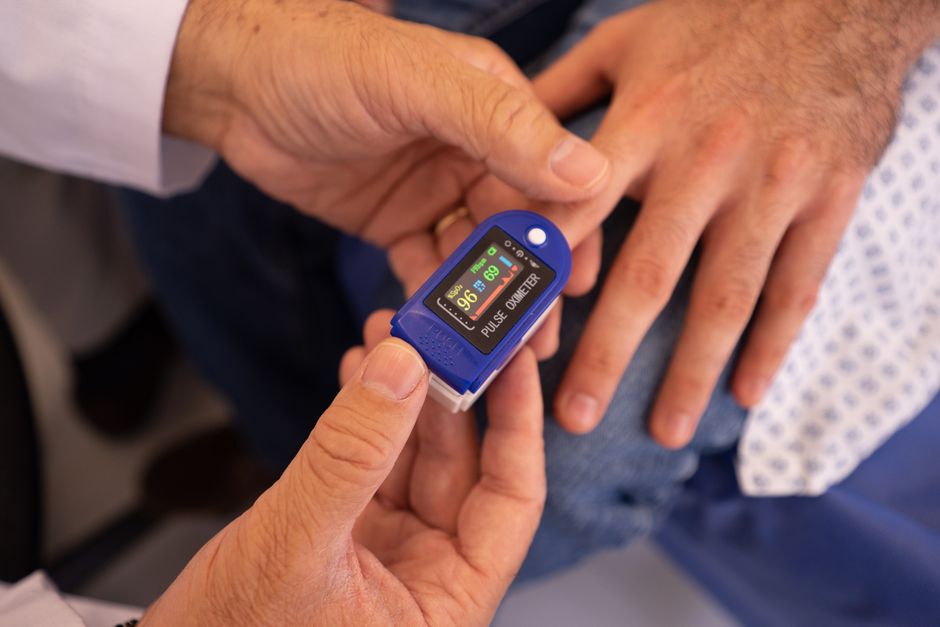
Normal blood oxygen levels are generally defined as an oxygen saturation (SpO2) of 95% to 100% when measured by a pulse oximeter, and a partial pressure of oxygen (PaO2) between 80 and 100 mmHg when measured by an arterial blood gas test. These numbers reflect how well your lungs are moving oxygen into your blood and how efficiently your blood delivers it to your body’s tissues. Levels below 90% are considered low and require medical evaluation.
What Are Normal Blood Oxygen Levels?
Blood oxygen levels are measured in two main ways: noninvasive pulse oximetry and arterial blood gas (ABG) analysis. For most healthy adults at sea level, an SpO2 reading of 95% to 100% is normal. An ABG result showing a PaO2 of 80 to 100 mmHg is also considered normal.
These values can shift slightly with age. A healthy 70-year-old may have a baseline SpO2 around 95%, while a younger person might sit at 98% or 99%. People living at high altitudes often have lower baseline oxygen levels—90% to 92% can be normal for them because the air has less oxygen.
Oxygen saturation below 90% is called hypoxemia. Below 80% is a medical emergency. Below 70% is life-threatening and can cause organ failure within minutes.
How Is Blood Oxygen Measured?
Two methods are used in clinical practice.
Pulse oximetry is the most common. A small device clips onto a finger, toe, or earlobe. It uses light wavelengths to estimate the percentage of oxygen-carrying hemoglobin in your blood. It is painless and gives a reading in seconds. However, pulse oximeters can be less accurate in people with dark skin pigmentation, poor circulation, or certain nail polishes.
Arterial blood gas (ABG) is the gold standard. A blood sample is drawn from an artery, usually in the wrist, and analyzed directly for oxygen and carbon dioxide levels. This test is more invasive but provides precise measurements of PaO2, along with pH and CO2. ABG is typically used in hospitals or when pulse oximetry results are unreliable.
If you use a home pulse oximeter, readings between 95% and 100% are generally fine. A reading between 91% and 94% warrants attention, especially if you have lung disease or other risk factors. Below 90% requires prompt medical evaluation.
What Causes Low Blood Oxygen Levels?
Low blood oxygen, or hypoxemia, can result from several conditions:
- Lung diseases such as chronic obstructive pulmonary disease (COPD), pneumonia, asthma, pulmonary embolism, or COVID-19
- Heart problems that reduce the flow of oxygenated blood, like congenital heart defects or heart failure
- Anemia — fewer red blood cells mean less oxygen can be carried to tissues
- High altitude — lower oxygen in the air causes a drop in SpO2
- Sleep-disordered breathing — sleep apnea can cause repeated drops in oxygen at night
- Sedative overdose or neurological problems that slow breathing
Acute causes — like a sudden asthma attack or a blood clot in the lung — can bring oxygen down quickly. Chronic causes — like emphysema — tend to lower oxygen gradually over years.

What Are the Symptoms of Low Blood Oxygen?
The body responds to low oxygen in several ways. Early signs include shortness of breath, rapid breathing, and a racing heart. Many people also feel confused or restless because the brain is highly sensitive to oxygen deficits.
A classic visible sign is cyanosis — a bluish or purplish tint to the lips, gums, or fingertips. This occurs when deoxygenated hemoglobin in the blood reaches a certain concentration. If you see cyanosis, oxygen levels are probably dangerously low, and you need emergency care.
Other symptoms include headache, fatigue, dizziness, and poor coordination. Some people with chronic hypoxemia adapt over time and may not feel breathless even with moderately low SpO2. That is why regular monitoring matters for people with conditions like COPD or heart failure.
When Should You See a Doctor About Low Blood Oxygen?
You should seek medical attention if your pulse oximeter reading is consistently below 95% and you have symptoms like chest pain, difficulty breathing, or confusion. A single low reading can be due to a poor sensor contact — recheck it.
An SpO2 below 90% is a clear red flag. Even without symptoms, a sustained reading below 90% requires evaluation. Below 88% often warrants supplemental oxygen, especially in people with chronic lung disease.
If you have a known condition like COPD or heart failure, your doctor may give you a personal target range. Many patients with COPD, for example, are told to maintain SpO2 above 88% to 92% — not necessarily 95% or above — because higher oxygen levels can suppress their breathing drive. Always follow your specific medical plan.
Can Blood Oxygen Levels Be Too High?
Yes, but it is very rare in normal circumstances. Oxygen saturation above 100% is not possible in a standard pulse oximeter reading — the device caps at 100%. However, an ABG can show a PaO2 above 100 mmHg. This can happen if someone is breathing supplemental oxygen.
Very high oxygen levels (hyperoxemia) can damage lung tissue over time, especially in premature infants or people on mechanical ventilation. This is called oxygen toxicity. For healthy people breathing room air, oxygen levels cannot rise above normal; the body regulates it tightly. You do not need to worry about “too much oxygen” from normal breathing.
What Factors Can Affect Pulse Oximeter Readings?
Several things can cause inaccurate readings:
- Dark skin pigment — some studies show pulse oximeters can overestimate oxygen saturation in people with darker skin, meaning a reading of 94% may be actually lower
- Poor circulation — cold hands, shock, or peripheral artery disease reduce blood flow to the fingers
- Nail polish — especially dark colors like blue, black, or green can interfere with the sensor
- Motion — shaking or moving the finger can cause false readings
- Carbon monoxide poisoning — pulse oximeters cannot distinguish between oxygenated hemoglobin and carbon monoxide-bound hemoglobin, so a reading can appear normal even when oxygen delivery is dangerously impaired
If you get a confusing reading, check the probe placement, warm your hand, and remove any nail polish. If the reading still seems off, a repeat test or an ABG may be needed.
How to Monitor Blood Oxygen at Home
Home pulse oximeters are widely available and useful for people with chronic lung or heart conditions. The FDA recommends that readings be used as a trend, not a single number. A drop of 4% or more from your baseline, even if still above 90%, should be discussed with your doctor.
For the most accurate results, rest for a few minutes before testing. Place the oximeter on a clean, nail-polish-free finger at heart level. Stay still and breathe normally. Record the number after about 30 seconds of stable reading.
Do not rely solely on a pulse oximeter. If you feel short of breath, dizzy, or have chest pain, your clinical symptoms matter more than the number on the screen.
Frequently Asked Questions
What is a normal oxygen level by age?
For healthy adults at sea level, normal SpO2 is 95% to 100% regardless of age, though older adults may sit at 95% baseline. Children and infants have similar ranges, with 95% to 100% considered normal for most.
What happens when oxygen level drops to 90?
An SpO2 of 90% is the threshold for hypoxemia. At this level, your tissues may not get enough oxygen. If it persists or drops further, you need medical evaluation.
Is 93% oxygen level OK for elderly?
A reading of 93% is below the normal range for most people and warrants attention, especially if the person has lung disease or symptoms. For healthy older adults, a single 93% reading may be acceptable, but it should be rechecked and discussed with a doctor.
Can stress cause low oxygen levels?
Stress itself does not directly lower blood oxygen levels. However, anxiety can cause hyperventilation (rapid breathing), which may temporarily change oxygen and carbon dioxide balance but rarely causes true hypoxemia in a healthy person.
