
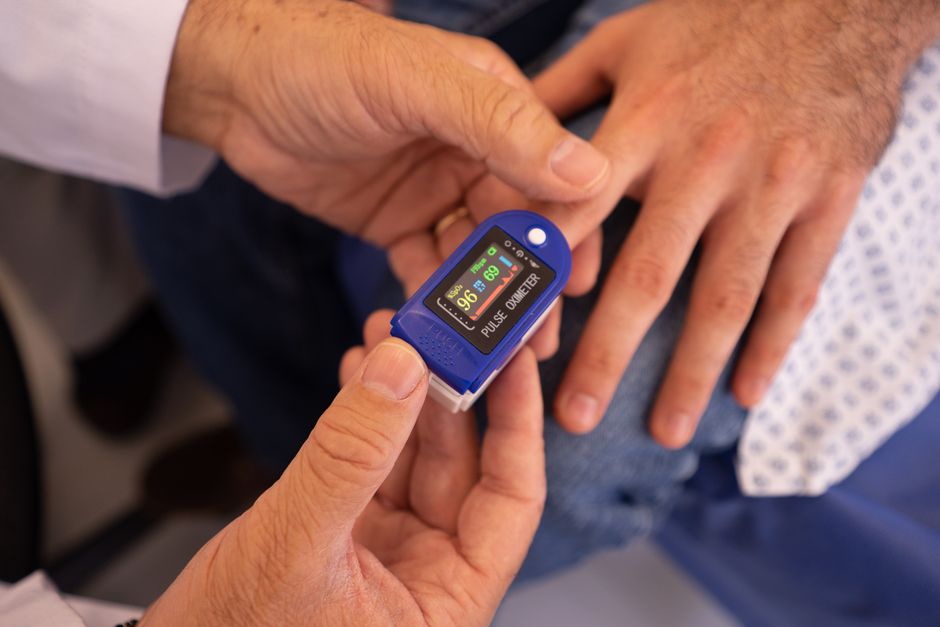
Good blood oxygen levels for most healthy people are between 95% and 100% when measured with a pulse oximeter. A reading of 92% or lower is considered low and usually requires medical attention. This is the simple answer, but what your numbers actually mean depends on your health, your equipment, and whether you are awake or asleep.
What Is Blood Oxygen and Why Does It Matter?
Every cell in your body needs oxygen to produce energy. Your lungs pull oxygen from the air and pass it into your bloodstream. Red blood cells then carry that oxygen to your tissues. Without enough oxygen, your organs cannot work properly.
Your blood oxygen level tells you how well this process is working. It is a direct measure of how saturated your hemoglobin is with oxygen. Hemoglobin is the protein in red blood cells that carries oxygen. When people say “blood oxygen level” they usually mean oxygen saturation, or SpO2.
Low blood oxygen is called hypoxemia. If it goes on too long, it can damage your heart, brain, and other organs. That is why knowing your numbers matters.
What Are Good Blood Oxygen Levels? The Numbers You Need to Know
For a healthy person at sea level, a normal oxygen saturation reading is between 95% and 100%. This applies whether you are sitting, walking, or doing light activity.
Here is how the numbers break down:
- 95% to 100% – Normal and healthy for most people
- 91% to 94% – Borderline low. This may be normal for some people with chronic lung disease, but it can also signal a problem. Check with your doctor.
- 90% or below – Clinically low. This is hypoxemia and you should seek medical attention.
- 92% is the common cutoff – Many hospitals consider 92% the threshold for concern in people without chronic lung conditions.
These numbers apply when you are awake and resting. Your levels naturally drop slightly during sleep but usually stay above 90%. If they drop below 88% for more than a few minutes during sleep, that may indicate sleep apnea or another problem.
How Is Blood Oxygen Measured?
There are two main ways to measure blood oxygen. The most common is a pulse oximeter. This is the small clip that goes on your finger. It shines light through your skin to measure oxygen saturation. It is painless and gives a reading in seconds.
Pulse oximeters are reasonably accurate when used correctly. But they have limits. Dark nail polish, cold hands, poor circulation, and movement can all cause false readings. If the reading seems off, check your finger position and warm your hands.
The other method is an arterial blood gas test. This is a blood draw from your wrist. It is more accurate and also measures carbon dioxide and pH levels. Doctors use it in hospitals when they need precise numbers.
A third option is a home sleep test or overnight oximetry. This tracks your oxygen levels while you sleep and can help diagnose sleep apnea. It is not something you need unless your doctor recommends it.

What Causes Low Blood Oxygen Levels?
Low blood oxygen can happen for many reasons. Some are temporary and some are chronic. Understanding the cause helps determine what to do about it.
Common causes include:
- Lung conditions like COPD, asthma, pneumonia, or COVID-19
- Heart conditions that affect blood flow and oxygen delivery
- Anemia, which reduces the number of red blood cells available to carry oxygen
- High altitude, where the air has less oxygen
- Sleep apnea, which causes repeated pauses in breathing during sleep
- Smoking, which damages the lungs and reduces oxygen absorption
Some people with chronic lung disease live with oxygen levels in the 88% to 92% range and are stable. That is not normal for a healthy person, but it can be their baseline. The key is knowing your personal normal range and recognizing when it changes.
What Are the Symptoms of Low Blood Oxygen?
Your body gives clear signals when oxygen is low. The most common symptom is shortness of breath. You may feel like you cannot catch your breath even when resting. Other symptoms include:
- Rapid breathing or heart rate
- Confusion or trouble concentrating
- Headache, especially in the morning
- Bluish color to your lips, fingertips, or skin
- Dizziness or lightheadedness
- Fatigue that does not match your activity level
Not everyone with low oxygen has symptoms. Some people, especially those with chronic conditions, adapt over time and may not notice gradual drops. That is why checking your oxygen level with a pulse oximeter can be useful if you have a condition that puts you at risk.
Severe hypoxemia can cause confusion, loss of consciousness, and organ damage. If your oxygen level drops to 88% or below and stays there, or if you have trouble breathing, seek emergency care.
When Should You Be Concerned About Your Oxygen Level?
A single low reading is not always a reason to panic. Pulse oximeters can give false lows. If you get a reading of 92% or below, wait a few minutes, check your finger position, and take another reading. If it stays low, or if you feel short of breath, call your doctor.
You should seek emergency care if:
- Your oxygen level drops to 88% or below and does not come back up
- You have severe shortness of breath
- You cannot speak in full sentences without gasping
- Your lips or fingertips turn blue
- You feel confused or disoriented
For people with chronic lung disease, your doctor may have given you a personal target range. Follow that guidance. If your numbers drop below your personal threshold, use your rescue medication or supplemental oxygen as directed and contact your healthcare provider.
Can You Improve Your Blood Oxygen Level at Home?
If your oxygen level is low because of a temporary issue like mild altitude sickness or shallow breathing from anxiety, there are things you can try. But if it is low because of a medical condition, you need treatment for the underlying cause.
Things that may help in specific situations:
- Deep breathing exercises. Slow, deep breaths from your diaphragm can improve oxygen exchange in your lungs.
- Change your position. Sitting upright rather than lying flat can help your lungs expand more fully.
- Move to fresh air. If you are in a stuffy room or at high altitude, getting to a place with more oxygen can raise your levels.
- Stay hydrated. Thin mucus is easier to clear from your lungs, which helps with breathing.
There is no evidence that drinking oxygenated water, using oxygen sprays, or taking supplements like vitamin B12 will raise your blood oxygen level if you do not have a deficiency. These claims are widely promoted but not supported by clinical evidence.
If you have a chronic condition that causes low oxygen, your doctor may prescribe supplemental oxygen. Do not use oxygen at home without a prescription. Too much oxygen can be harmful, especially for people with certain lung conditions.
What About Oxygen Levels During Exercise?
Your blood oxygen level stays fairly stable during exercise in healthy people. It may drop slightly during very intense exertion but usually stays above 94%. If your oxygen level drops significantly during exercise, that is a sign that your heart or lungs may not be handling the workload well.
Some athletes use pulse oximeters to track their recovery and performance. For most people, this is not necessary. If you feel fine during exercise and do not have symptoms, you do not need to monitor your oxygen level.
If you experience shortness of breath out of proportion to your effort, or if your oxygen level drops below 93% during exercise, mention it to your doctor.
How Reliable Are Home Pulse Oximeters?
Home pulse oximeters are generally reliable when used correctly. Studies have found that most consumer devices are accurate within 2% to 3% of lab-measured values. That means a reading of 96% could actually be anywhere from 94% to 98%.
Accuracy matters more at lower levels. A reading of 92% might actually be 89% or 95%. That is why doctors do not rely on a single reading. They look at trends over time and compare the reading to your symptoms.
To get the most accurate reading from a home pulse oximeter:
- Remove nail polish from the finger you use
- Warm your hands if they are cold
- Sit still and rest your hand on a flat surface
- Wait 30 to 60 seconds for the reading to stabilize
- Take multiple readings and use the average
If your readings seem inconsistent or do not match how you feel, trust your symptoms. Shortness of breath matters more than a number on a screen.
Frequently Asked Questions
What is a normal blood oxygen level by age?
Normal blood oxygen levels do not change significantly with age in healthy people. A reading of 95% to 100% is normal for adults of any age.
Is 94% blood oxygen level bad?
94% is borderline low for a healthy person. It may be normal for someone with chronic lung disease, but if you are otherwise healthy, check again and contact your doctor if it stays at 94% or drops lower.
What does 92% oxygen level mean?
92% is below the normal range and is the threshold many hospitals use to define low oxygen. You should seek medical evaluation if your oxygen level is 92% or below, especially if you have symptoms like shortness of breath.
Can a pulse oximeter give a false reading?
Yes. Dark nail polish, cold hands, movement, and poor circulation can all cause inaccurate readings. Always confirm a low reading by checking your finger position, warming your hands, and taking another reading after a minute of rest.
