
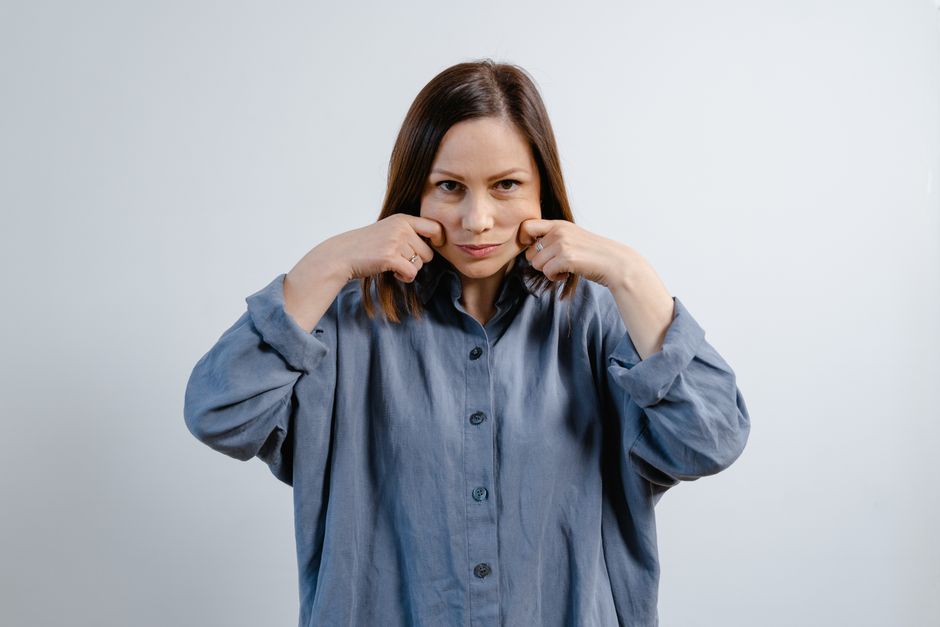
The muscles of facial expression are a group of about 20 thin, flat muscles located just beneath the skin of your face, scalp, and neck. Unlike most muscles in your body that move bones, these muscles move skin. They are the reason you can smile, frown, raise your eyebrows, and squint. They are also essential for non-verbal communication, helping you express emotions without saying a word.
What Are The Muscles Of Facial Expression And How Do They Work?
Most skeletal muscles in the body attach to bone at both ends and pull on a joint to create movement. The facial muscles are different. They typically originate from bone or fascia and insert directly into the skin. When they contract, they pull the skin, creating the folds, lines, and movements you see as expressions.
These muscles are all controlled by a single nerve, the facial nerve. This nerve sends signals from your brain to the muscles, telling them exactly when to fire. If this nerve is damaged, the muscles on that side of the face may become weak or paralyzed, which is what happens in Bell’s palsy.
What Are The Major Muscle Groups And Their Actions?
To understand the face, it helps to break the muscles into regions: the forehead, the eyes, the mouth, and the nose. Each group has a specific job.
The Forehead and Eyebrows
The frontalis muscle covers the forehead. When it contracts, it raises your eyebrows and creates horizontal lines across your forehead. This is the muscle behind a surprised or alert look.
Working against it is the procerus, a small muscle between your eyebrows. It pulls the skin downward, creating the horizontal wrinkles at the top of your nose. Next to it, the corrugator supercilii pulls the eyebrows inward and downward, producing the vertical “frown lines” between your brows. This is the muscle that works when you concentrate or worry.
The Eyelids and Around the Eyes
The orbicularis oculi is a circular muscle that surrounds each eye. It acts like a sphincter. When it contracts, it closes the eyelid. This is the muscle you use for blinking, squinting, and protecting your eyes from bright light. The part of this muscle that sits on the eyelid itself is responsible for the gentle, involuntary blinks you do all day.
The Mouth and Lips
The mouth has the most complex group of muscles. The orbicularis oris is the circular muscle around the lips. It closes the mouth and purses the lips, like when you are about to kiss or whistle.
The buccinator is a flat muscle in the cheek. It holds food in place between your teeth when you chew. It is also the muscle you use to blow air out forcefully, like when you play a trumpet.
Several muscles work to move the corners of the mouth. The zygomaticus major pulls the corners of the mouth upward and outward. This is your primary smiling muscle. The risorius pulls the corners of the mouth sideways, creating a forced or tight smile. The levator anguli oris also lifts the mouth corner, while the depressor anguli oris pulls it downward, creating a frown.
The mentalis muscle sits on the chin. It raises the skin of the chin and pushes the lower lip upward, producing the wrinkled look of the chin when you pout.
The Nose
The nasalis muscle has two parts. The transverse part compresses the nose, narrowing the nostrils. The alar part flares the nostrils open, which happens when you take a deep breath or smell something strongly.
Why Are These Muscles Different From The Rest Of Your Body?
The key difference is their insertion point. Most muscles pull on bones across a joint. Facial muscles pull on skin. This allows for the fine, subtle movements needed for expression.
Another difference is their size. These muscles are thin and small. They do not generate much force, but they are precise. This precision is what allows you to show a slight smirk versus a full grin.
They are also unique because many of them are arranged in layers. Some are deep, close to the bone, and some are superficial, right under the skin. This layered arrangement creates the complex three-dimensional movements of the face. The superficial muscles are the ones that attach directly into the skin and are most responsible for visible expression.





What Happens When These Muscles Stop Working?
When the facial nerve is damaged, the muscles lose their signal. This results in a condition called facial nerve palsy. The most common form is Bell’s palsy, which causes sudden, temporary weakness on one side of the face.
Someone with this condition may find it hard to close their eye on the affected side. They may also notice their mouth droops and they cannot smile symmetrically. In most cases, Bell’s palsy resolves on its own within a few weeks or months, but it can be distressing while it lasts.
Another condition that affects these muscles is hemifacial spasm. This is when the muscles on one side of the face twitch or contract involuntarily. It is often caused by a blood vessel pressing on the facial nerve. It is not dangerous, but it can be uncomfortable and embarrassing for the person experiencing it.
How Do These Muscles Contribute To Aging?
Repeated muscle contractions over decades create lines in the skin. When the frontalis muscle contracts thousands of times, it creases the skin, forming forehead lines. The corrugator muscle creates the vertical “elevens” between the brows. The orbicularis oculi creates the “crow’s feet” at the corners of the eyes.
These are known as dynamic wrinkles because they are caused by movement. They are a natural part of aging. They become more visible as the skin loses elasticity and collagen over time.
This is the reason botulinum toxin injections work for wrinkles. The toxin temporarily blocks the nerve signal to specific muscles. When the muscle cannot contract, the skin stays smooth. The effect is temporary because the body eventually grows new nerve endings and the muscle regains function.
Are There Exercises To Strengthen These Muscles?
Many online sources claim that “face yoga” or facial exercises can tone these muscles and reduce wrinkles. The evidence for this is limited. Some small studies suggest facial exercises may thicken the skin and slightly improve appearance in middle-aged women, but the results are not definitive.
There is no strong clinical evidence that facial exercises can prevent or reverse sagging. The muscles of facial expression are not like biceps that need to be strengthened. They are already active constantly throughout the day with every blink, chew, and expression.
Overworking these muscles is actually what causes wrinkles. There is no reliable evidence that exercising them more will reverse that process. If you enjoy facial exercises, they are unlikely to cause harm, but you should not expect dramatic results based on the current evidence.
What Is The Role Of The Platysma?
The platysma is a broad, thin sheet of muscle that spans the neck and the lower face. It originates in the chest and shoulder area and inserts into the lower jaw and the skin of the lower face.
When it contracts, it pulls the corners of the mouth downward and tenses the skin of the neck. This is the muscle that creates the “grimace” look. It also helps you lower your jaw against resistance.
As people age, the platysma can separate into two visible bands running down the front of the neck. This is a common cosmetic concern. The muscle itself is not weak; it is just showing its natural structure through thinner skin.
Frequently Asked Questions
How many muscles are in the face?
There are about 20 named muscles of facial expression. The exact count varies slightly depending on how individual muscles are grouped and defined.
What nerve controls the muscles of facial expression?
The facial nerve, also called the seventh cranial nerve, controls all of these muscles. Damage to this nerve causes weakness or paralysis on the affected side of the face.
What is the strongest muscle of facial expression?
The buccinator, the muscle in the cheek, is often considered the strongest. It is essential for chewing and blowing, but it does not produce visible expressions like the mouth or eye muscles do.
Why do we get wrinkles from facial expressions?
Repeated muscle contractions fold the skin in the same place for decades. Over time, the skin loses elasticity and the creases become permanent lines.
