
Muscle soreness after a workout is a normal part of the repair process. It happens when tiny tears form in muscle fibers during exercise, especially when you try a new activity or push harder than usual. The soreness you feel one to two days later is called delayed onset muscle soreness, or DOMS. You cannot make it disappear instantly, but you can reduce the intensity and shorten the duration with a few proven strategies. The fastest approach combines light movement, targeted nutrition, and smart recovery habits.
What Causes Muscle Soreness After Exercise?
Delayed onset muscle soreness peaks about 24 to 72 hours after exercise. It is caused by microscopic damage to muscle fibers and the surrounding connective tissue. This damage triggers an inflammatory response as your body works to repair the tissue and make it stronger.
The soreness is not caused by lactic acid. That is a common myth. Lactic acid clears from your muscles within an hour after exercise ends. The ache you feel days later comes from the repair process itself, including swelling and immune cell activity in the damaged tissue.
Eccentric contractions cause the most soreness. These are movements where the muscle lengthens under tension, like lowering a weight slowly or running downhill. If your workout is heavy on eccentric movements, expect more soreness than usual.
How To Get Soreness Out Of Muscles Fast
The fastest way to reduce muscle soreness is to keep moving at a low intensity. Light activity increases blood flow to the affected muscles, which helps deliver oxygen and nutrients needed for repair. A short walk, a gentle bike ride, or easy swimming for 15 to 20 minutes can noticeably reduce the ache.
Active recovery works better than complete rest for most people. Complete rest does not speed up recovery and can actually make the soreness feel worse because muscles stiffen up. The key is keeping the intensity very low. You should not feel like you are working out again. The goal is circulation, not additional muscle damage.
Gentle stretching can help, but the evidence for stretching as a soreness treatment is mixed. Some research suggests stretching does not reduce DOMS, while other studies show small benefits. If stretching feels good, do it. Just keep it gentle and avoid bouncing. Static stretching before a workout does not prevent soreness, so do not rely on it as a preventive measure.
Does Massage Help Muscle Soreness?
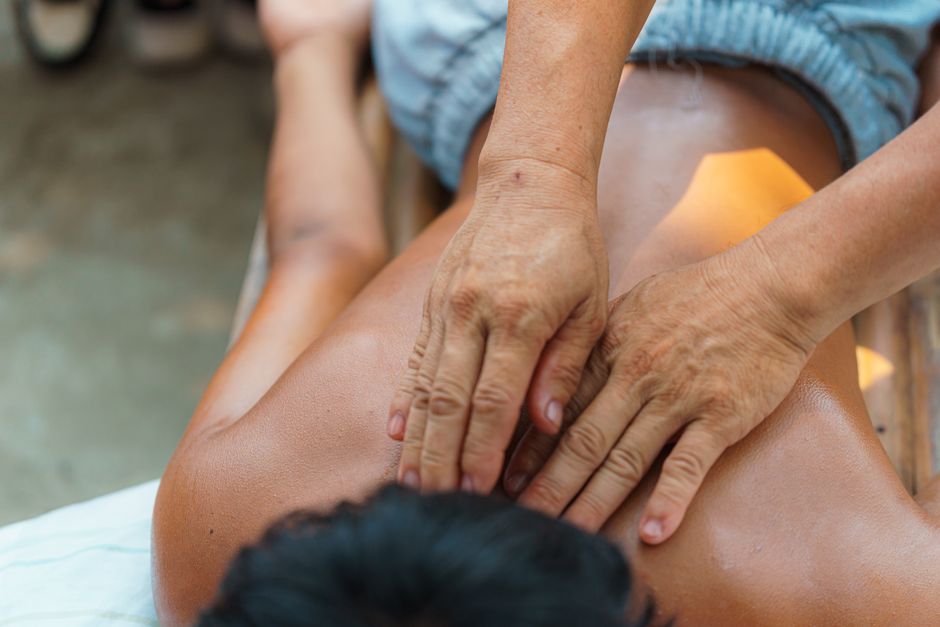
Massage is one of the better-supported treatments for muscle soreness. Research consistently shows that massage performed after exercise can reduce soreness intensity and improve perceived recovery. The effect appears to be modest but real.
How does massage work? It likely reduces inflammation and improves blood flow in the treated muscles. Some studies also suggest massage reduces the production of a protein called cytokines, which are involved in the inflammatory response. The benefits are temporary, but they can last for several hours to a day.
You do not need a professional massage therapist. Self-massage with a foam roller or massage gun can provide similar benefits. Foam rolling after a workout has been shown in several studies to reduce soreness and improve range of motion. Spend about 30 to 60 seconds on each muscle group, using steady pressure. Avoid rolling directly over joints or bones.


Heat or Ice: Which Works Better?
Heat therapy is generally more helpful than ice for muscle soreness that has already developed. Heat increases blood flow, relaxes tight muscles, and reduces stiffness. A warm bath, heating pad, or warm compress applied for 15 to 20 minutes can provide noticeable relief.
Ice is more useful in the first few hours after exercise to limit excessive inflammation. But once DOMS has set in, cold therapy does not consistently reduce soreness. Some studies show cold water immersion can reduce soreness, but the effect is modest and may not be worth the discomfort for most people.
Contrast therapy, alternating between heat and cold, has some evidence behind it but is not clearly better than heat alone. If you enjoy it, it is safe for healthy adults. Just avoid extreme temperatures and never apply ice directly to skin without a barrier.
What About Anti-Inflammatory Medications?
Nonsteroidal anti-inflammatory drugs, or NSAIDs, can reduce muscle soreness. Medications like ibuprofen and naproxen work by dampening the inflammatory response. Some research shows they can reduce soreness when taken after exercise.
However, there is an important trade-off. Inflammation is part of the muscle repair process. Blocking it too aggressively may interfere with long-term strength gains. Some studies suggest that taking NSAIDs regularly around workouts reduces the muscle-building response to training. If your goal is to build strength, occasional use for severe soreness is reasonable, but do not make it a routine part of your recovery.
Always follow the dosing instructions on the label. Do not take NSAIDs if you have kidney problems, stomach ulcers, or a history of gastrointestinal bleeding. If you are unsure whether these medications are safe for you, ask a doctor or pharmacist.
Do Supplements Speed Up Muscle Recovery?
The supplement market is full of products claiming to cure muscle soreness. Most do not have strong evidence behind them. A few have modest support.
Protein is the most evidence-backed supplement for recovery. Consuming protein after exercise provides the building blocks your muscles need for repair. Research consistently shows that adequate protein intake supports muscle recovery and reduces soreness. A serving of 20 to 40 grams of protein after a workout is a reasonable target for most healthy adults.
Tart cherry juice has been studied for muscle soreness with positive results. Some studies show it reduces soreness and speeds up recovery, likely due to its antioxidant content. The effect is modest, and you need to drink it consistently around your workouts to see benefits.
Creatine is well-studied for muscle performance but has less evidence specifically for reducing soreness. Omega-3 fatty acids have shown small benefits in some studies. Branched-chain amino acids, or BCAAs, are heavily marketed for soreness, but the evidence is mixed and not convincing.
Be cautious with any supplement that promises dramatic results. No supplement has been shown to eliminate muscle soreness. If a product sounds too good to be true, it probably is.
How Long Does Muscle Soreness Last?
Most muscle soreness resolves within 72 hours. Mild soreness may fade within 24 hours. Severe soreness from an intense workout, especially one heavy in eccentric contractions, can last up to five days.
If soreness lasts longer than five days or is accompanied by dark urine, severe swelling, or significant weakness, seek medical attention. These symptoms could indicate rhabdomyolysis, a serious condition where muscle tissue breaks down and releases harmful proteins into the bloodstream. This is rare but can happen after extremely intense exercise, particularly when someone pushes through pain or exercises while dehydrated.
You should also be aware of the difference between soreness and pain. Soreness is a dull, diffuse ache that affects both sides of the body equally and improves with movement. Pain is sharp, localized to one spot, and worsens with activity. Sharp pain that persists may indicate a muscle strain or injury that needs different treatment.
Can You Prevent Muscle Soreness?
You cannot completely prevent muscle soreness if you are challenging your muscles. Any new or intense exercise will likely cause some soreness. But you can reduce how bad it gets.
Progress gradually. The most common cause of severe soreness is doing too much too soon. Increase your workout volume or intensity by no more than 10 percent per week. This allows your muscles to adapt without excessive damage.
Warm up properly before exercise. A warm-up that includes light aerobic activity and dynamic movements prepares your muscles for work. This does not prevent all soreness, but it reduces the strain on your muscles and may lower the severity of DOMS.
Stay hydrated. Dehydration can worsen muscle damage and delay recovery. Drink water before, during, and after exercise.
Frequently Asked Questions
Can you stretch away muscle soreness?
Stretching provides temporary relief but does not speed up muscle repair. Gentle stretching can feel good, but the research on stretching for soreness is mixed.
Is it okay to exercise with sore muscles?
Light exercise is fine and can actually help reduce soreness through increased blood flow. Avoid intense training on the same sore muscle groups until the soreness fades.
Does drinking water help muscle soreness?
Proper hydration supports recovery but does not directly cure muscle soreness. Dehydration can make soreness feel worse and delay the repair process.
When should I worry about muscle soreness?
Seek medical help if soreness lasts more than five days, is one-sided, or comes with dark urine, severe swelling, or weakness. Sharp pain that worsens with movement may indicate an injury, not normal soreness.
