
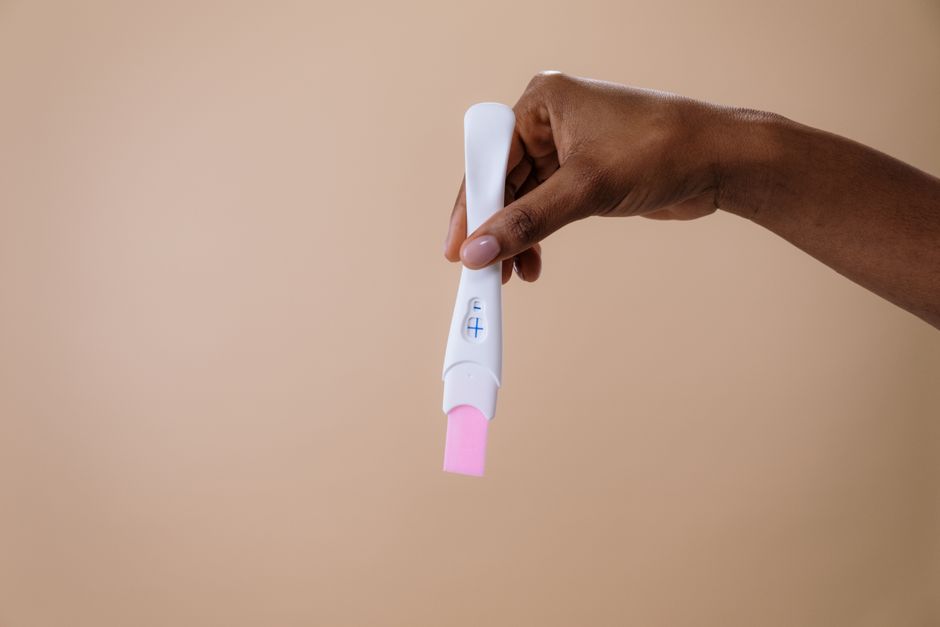
Pregnancy symptoms can start as early as one week after conception, but most people notice the first signs around the time of a missed period. The most reliable early indicators include a missed period, breast tenderness, fatigue, and nausea. However, every pregnancy is different, and many early symptoms overlap with other conditions.
What Are The First Signs Of Pregnancy?
The earliest signs of pregnancy happen because your body starts producing human chorionic gonadotropin (hCG) right after a fertilized egg implants in the uterus. This hormone triggers physical changes within days.
The most common first sign is a missed period. If your cycle is regular and you are more than a few days late, pregnancy is a real possibility. But stress, illness, or changes in routine can also delay a period, so this alone is not proof.
Breast changes are another early clue. Many women report tenderness, swelling, or a heavy feeling in their breasts as early as one to two weeks after conception. The areolas may also darken. According to the American College of Obstetricians and Gynecologists (ACOG), breast tenderness is one of the earliest physical signs.
Fatigue is also common. Your body is working hard to support a growing embryo, and progesterone levels rise quickly. This can make you feel unusually tired even during the first week after conception.
When Do Pregnancy Symptoms Typically Start?
Most pregnancy symptoms do not appear immediately after sex or ovulation. Implantation usually happens 6 to 12 days after ovulation. Only after implantation does hCG start rising enough to cause noticeable symptoms.
For most women, the first signs appear around week 4 of pregnancy, which is roughly the time of the expected period. Some women notice symptoms as early as week 3, but this is less common. Research published in the Journal of Clinical Epidemiology found that only about 50 percent of women experience any symptoms by the time they miss their period.
Home pregnancy tests can detect hCG in urine about 12 to 14 days after conception. Blood tests at a doctor’s office can detect it even earlier, around 7 to 12 days after conception. If you are experiencing symptoms before a test would show positive, it is likely not pregnancy-related yet.
What Does Research on Early Pregnancy Signs Show?
Studies have found that the most commonly reported early pregnancy symptoms are not as reliable as many people think. A large study in the journal Human Reproduction followed women trying to conceive and tracked their daily symptoms. The researchers found that only a missed period and breast tenderness had any real predictive value for pregnancy.
Nausea and vomiting, often called “morning sickness,” typically do not start until around week 6 of pregnancy. This is about two weeks after a missed period. The CDC reports that 70 to 80 percent of pregnant women experience some nausea during the first trimester, but it is rarely an early sign.
Implantation bleeding is another commonly cited early sign. Some women notice light spotting when the embryo attaches to the uterine lining. However, a 2018 review in the journal Fertility and Sterility noted that implantation bleeding occurs in only about 25 percent of pregnancies. It is easy to confuse with a light period or ovulation spotting.
There is no strong evidence that food cravings, mood swings, or frequent urination are reliable early signs. These symptoms usually develop later in the first trimester, often after week 6 or 7.





How to Tell the Difference Between PMS and Early Pregnancy Symptoms
This is one of the most confusing parts of early pregnancy recognition. Many symptoms of early pregnancy are nearly identical to premenstrual syndrome (PMS). Both involve rising progesterone, which causes breast tenderness, bloating, fatigue, and mood changes.
The table below shows the key differences between common PMS symptoms and early pregnancy signs:
| Symptom | PMS | Early Pregnancy |
|---|---|---|
| Breast tenderness | Mild to moderate, usually resolves with period | Often more intense, lasts beyond expected period |
| Fatigue | Mild, improves once period starts | Can be severe, persistent |
| Nausea | Rare | Common after week 4-6 |
| Mood changes | Irritability common | More varied, often includes weepiness |
| Cramping | Lower abdomen, often strong | Mild, occasional pulling sensation |
| Bleeding | Heavy to moderate flow | Light spotting only |
The only reliable way to tell the difference is a pregnancy test. If your period is late and you have symptoms, take a home test. If it is negative and your period still does not come, wait a few days and test again. False negatives are more common than false positives early on.
What Are The First Signs Of Pregnancy That Are Often Overlooked?
Some early signs are subtle enough that many women miss them. One of these is a slight rise in basal body temperature that stays elevated. If you track your temperature for fertility purposes, a temperature that remains high for more than 18 days is a strong indicator of pregnancy.
Another overlooked sign is changes in cervical mucus. After ovulation, mucus usually dries up. In early pregnancy, some women notice a creamy, white discharge that persists. This is caused by increased estrogen and blood flow to the pelvic area.
Some women report a metallic taste in their mouth or a heightened sense of smell very early on. These symptoms are not well-studied, but many women describe them in online forums and pregnancy books. The scientific evidence for these as reliable early signs is weak, but they are worth noting if they occur alongside other symptoms.
A few women experience implantation cramping. This feels like a mild pulling or tingling in the lower abdomen, often around the time implantation would occur. It is usually much milder than period cramps and does not last long.
Common Misconceptions About Early Pregnancy Signs
There is a lot of misinformation online about what counts as a “sure sign” of pregnancy. One common myth is that a positive ovulation test means you are pregnant. Ovulation tests detect luteinizing hormone (LH), not hCG. However, hCG can sometimes cause a false positive on an ovulation test. This is not reliable and should not be used as a pregnancy test.
Another myth is that you can tell you are pregnant within hours of conception. Biologically, this is impossible. The fertilized egg has not even implanted yet. Symptoms do not start until hCG enters your bloodstream, which takes at least 6 to 12 days.
Some people claim that the position of the baby or the shape of the belly in early pregnancy can predict gender or health. There is no scientific evidence for this. Early pregnancy symptoms have nothing to do with the baby’s sex or eventual health outcomes.
What to avoid: Do not rely on old wives’ tales or internet quizzes to confirm pregnancy. Do not assume that severe nausea means a healthy pregnancy or that no symptoms means something is wrong. Every pregnancy is different. The only way to confirm is through a medical-grade test.
When Should You Take a Pregnancy Test?
The best time to take a home pregnancy test is after you miss your period. Testing earlier increases the chance of a false negative because hCG levels may still be too low to detect. Most home tests claim to detect pregnancy up to five days before a missed period, but accuracy drops significantly that early.
If you test before your missed period and get a negative result but still have symptoms, wait until the day of your expected period and test again. If your period is a week late and the test is still negative, see your doctor. There could be other reasons for a delayed period that need attention.
Blood tests at a clinic are more sensitive than urine tests. They can detect hCG as early as 7 days after ovulation. If you are undergoing fertility treatments or have irregular cycles, your doctor may recommend a blood test for earlier confirmation.
Frequently Asked Questions
Can you feel pregnant before a missed period?
Some women report symptoms like fatigue or breast tenderness before a missed period, but these are not reliable on their own and can be caused by other factors.
How soon after implantation do you get symptoms?
Most women notice symptoms about 1 to 2 weeks after implantation, which is usually around the time of a missed period.
Can stress delay your period and mimic pregnancy symptoms?
Yes, stress can delay your period and cause fatigue, bloating, and breast tenderness that feel like early pregnancy.
Is implantation bleeding a sure sign of pregnancy?
No, implantation bleeding only occurs in about 25 percent of pregnancies and can be confused with other types of spotting.
