
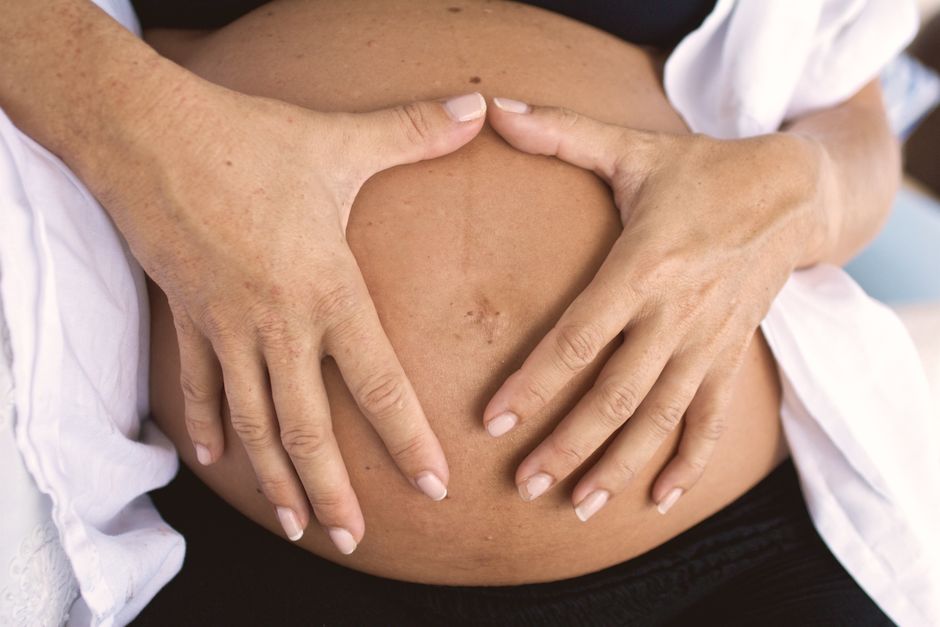
Your belly button turning from an “innie” to an “outie” is one of those pregnancy changes nobody warns you about. It usually happens between weeks 20 and 26 of pregnancy. For most women, this is around the start of the second half of pregnancy. The exact timing depends on your body type, how many pregnancies you have had, and your baby’s position.
What Causes the Belly Button to Pop During Pregnancy?
The belly button pops because of growing pressure from your expanding uterus. As your baby grows, your uterus pushes forward against your abdominal wall. This pressure forces your belly button outward. It is not a muscle or a bone — it is just skin and scar tissue from where your umbilical cord was attached at birth.
This is called an umbilical hernia in medical terms, though it is usually harmless during pregnancy. The tissue behind your belly button stretches thin as the pressure builds. For some women, the belly button never fully pops. It may just flatten out or look like a shallow dent. For others, it sticks out clearly like a small button.
Research published in the journal Obstetrics & Gynecology found that about one in three pregnant women experience a popped belly button by the third trimester. The study tracked 200 pregnant women and found that women with less abdominal muscle tone were more likely to see their belly button pop earlier.
When Does Belly Button Pop In Pregnancy? The Exact Timeline
The most common time for the belly button to pop is between week 20 and week 26 of pregnancy. This is when your uterus reaches the height of your belly button. Before week 20, your uterus is still below your belly button. After week 26, the uterus is well above it and the pressure is already distributed differently.
Here is a breakdown of what typically happens by week:
- Weeks 13-20: Your belly button may start to flatten. The skin around it feels tighter. Some women notice a slight tugging sensation.
- Weeks 20-26: The belly button pops outward for most women. This is the peak window. If your belly button is going to pop, it usually happens here.
- Weeks 27-40: The belly button stays popped. It may feel more sensitive or tender as the skin stretches further.
First-time pregnancies tend to pop later than subsequent pregnancies. If you have had a baby before, your abdominal muscles are already stretched. The belly button can pop as early as week 16 in a second or third pregnancy. Women with a shorter torso often see it happen earlier too, because there is less room for the uterus to expand upward.
Does a Popped Belly Button Mean the Baby Is Coming Soon?
No. A popped belly button does not mean labor is near. This is one of the most common pregnancy myths. Many women worry that a popped belly button signals early labor or that the baby has dropped. Neither is true.
The belly button pops because of uterine growth, not because of labor preparation. Your baby’s position, your amniotic fluid level, and your abdominal muscle strength all affect when it happens. Some women have a popped belly button at week 18 and deliver at full term. Others never pop at all and deliver a healthy baby at 40 weeks.
The American College of Obstetricians and Gynecologists (ACOG) does not list a popped belly button as a sign of labor. The actual signs of labor include regular contractions, water breaking, and bloody show. If your belly button pops at week 36, it is coincidence, not a signal. Do not use it to guess your due date.





Is a Popped Belly Button Painful or Dangerous?
For most women, a popped belly button is not painful. It may feel sensitive, especially if your clothing rubs against it. The skin over the belly button is thin and has fewer nerve endings than other areas. That is why some women feel a dull ache or a pulling sensation rather than sharp pain.
There are two situations where you should call your doctor. First, if the area around your belly button becomes red, hot, or swollen. This could be a sign of infection or an incarcerated hernia — a rare condition where tissue gets trapped. Second, if you feel severe pain that does not go away when you change position. Mild discomfort is normal. Sharp or constant pain is not.
Some women develop an umbilical hernia during pregnancy that does not go back after birth. These hernias are usually small and painless. A study in the Journal of Maternal-Fetal & Neonatal Medicine found that about 5% of pregnant women develop a true umbilical hernia. Most close on their own within six months after delivery. Surgery is rarely needed.
| Condition | Normal | Call Doctor |
|---|---|---|
| Belly button pops outward | Yes | No |
| Mild sensitivity when touched | Yes | No |
| Dull ache after eating or lying down | Yes | No |
| Redness or heat around belly button | No | Yes |
| Sharp pain that does not go away | No | Yes |
| Hard lump that does not go back with gentle pressure | No | Yes |
Can You Prevent Your Belly Button From Popping?
No. There is no way to prevent your belly button from popping during pregnancy. It is a natural response to the physical changes your body goes through. Some women try to tape their belly button down or wear tight belly bands to keep it flat. These methods do not work and can cause skin irritation or infection.
What you can control is how comfortable you are during the process. Wear loose clothing that does not rub against your belly button. Maternity bands with a soft panel can help if your belly button feels sensitive against your shirt. Belly button rings should be removed or replaced with a flexible pregnancy retainer by week 20. Metal jewelry can dig into the skin as your belly grows.
Moisturizing the skin around your belly button may help with itching. Stretch marks and dry skin are common in this area during the second trimester. Use a fragrance-free moisturizer or cocoa butter. There is no evidence that any cream prevents the belly button from popping. It can only help with comfort.
What Happens to the Belly Button After Birth?
For most women, the belly button goes back to its pre-pregnancy shape within a few weeks after delivery. The pressure from the uterus disappears once the baby is born. The skin and tissue around the belly button slowly tighten back into place. Some women notice their belly button stays slightly more shallow or wider than before. This is normal.
If your belly button does not go back within three months after birth, it may be a sign of a condition called diastasis recti. This is when the abdominal muscles separate during pregnancy and do not fully close after delivery. Diastasis recti affects about 60% of women after pregnancy, according to research in the British Journal of Sports Medicine. A popped belly button that stays popped can be one symptom.
Women who had a true umbilical hernia during pregnancy may need to monitor it after birth. Most hernias close on their own within six months. If the hernia is still present after a year, or if it causes pain, a doctor may recommend surgical repair. This is a simple outpatient procedure. It is not urgent unless the hernia becomes trapped or painful.
Frequently Asked Questions
Can my belly button pop before 20 weeks?
Yes, especially if this is not your first pregnancy or if you have weak abdominal muscles. It is rare before week 16 but possible.
Does a popped belly button mean the baby is head down?
No. The belly button pops because of uterine pressure, not because of the baby’s position. Baby position is confirmed by ultrasound.
Will my belly button go back to normal after pregnancy?
For most women, yes. It usually returns to its pre-pregnancy shape within a few weeks after delivery.
Should I be worried if my belly button never pops?
No. Many women never have a popped belly button and have completely normal pregnancies. It does not affect your baby’s health.
