
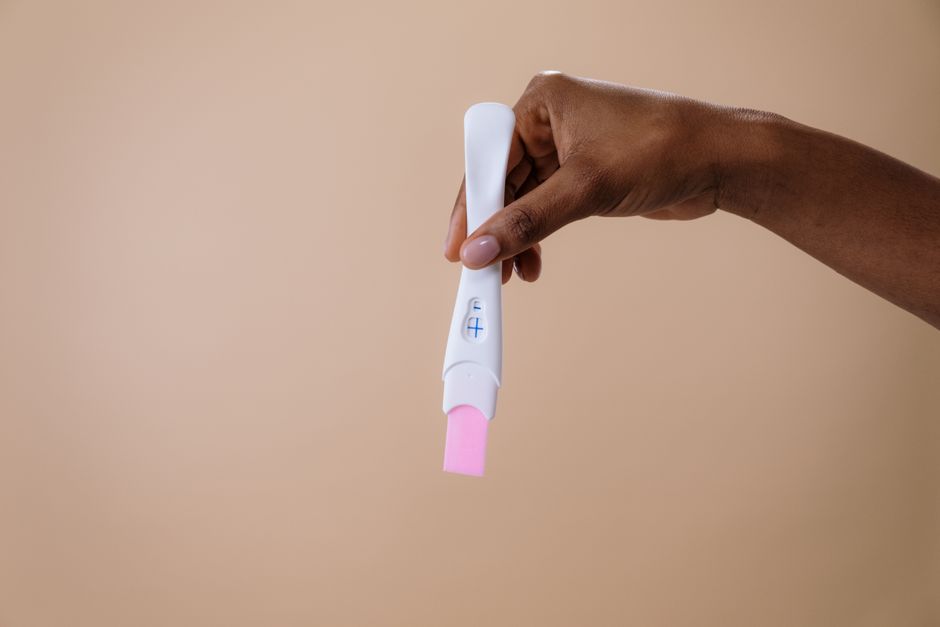
The earliest reliable sign of pregnancy is a missed period, but many people notice other changes before they confirm with a test. These can include tender breasts, fatigue, nausea, and needing to urinate more often. Timing varies a lot from person to person, and some people have no early symptoms at all.
Pregnancy tests detect human chorionic gonadotropin (hCG), a hormone the body starts making after a fertilized egg implants in the uterus. Implantation usually happens about 6 to 12 days after ovulation, and hCG becomes detectable in urine around the time of a missed period. That biology explains why early symptoms and test timing are so closely linked.
What Are The Early Pregnancy Signs Most People Notice First?
Missed period, breast tenderness, and fatigue top most lists. These are the symptoms people most often report in the first few weeks, and they overlap heavily with normal premenstrual changes.
Breast tenderness is common and often described as a heavier, fuller, or more sensitive feeling than typical period-related breast changes. Fatigue is another frequent early complaint. Some people notice nausea, a heightened sense of smell, or more frequent urination.
Here is the part that surprises many people: early pregnancy symptoms are caused largely by rising progesterone and estrogen, the same hormones that shift before a period. That is why symptoms alone cannot confirm pregnancy. Two people with identical symptoms can get opposite test results.
When Do Early Pregnancy Symptoms Usually Start?
Most symptoms, when they appear, begin around the time of a missed period or in the weeks just after. That generally means roughly two to four weeks after conception for many people.
Some people notice changes earlier, and some notice nothing until well into the first trimester. There is no fixed schedule. Symptom onset depends on how quickly hormones rise and how sensitive an individual is to those shifts.
Nausea, often called morning sickness, typically starts around week 6 of pregnancy and often eases by the end of the first trimester. But “typical” is not “universal.” Some people never feel nauseated. Some feel it later. Some feel it all day rather than only in the morning, which is why the “morning” label can be misleading.
Can You Have Early Pregnancy Signs and a Negative Test?
Yes. A negative test does not always mean you are not pregnant, especially if you test very early. Timing is the most common reason for a false negative.
Urine tests measure hCG, which takes time to build up after implantation. Testing before a missed period can produce a negative result even when pregnancy is present. Waiting a few days and retesting is the usual approach. Home tests vary in sensitivity, and following the package instructions matters.
Very dilute urine can also affect results. Many people test first thing in the morning for that reason. If symptoms continue and tests stay negative, or if a period is unusually late, talking with a clinician is reasonable. A blood test can detect hCG earlier and more precisely than a urine test.





Which Symptoms Are Common but Less Reliable?
Many widely shared “early signs” are common in pregnancy but also common outside it. Spotting, cramping, bloating, mood changes, and food aversions all fall into this category.
Implantation bleeding is a real phenomenon. Some people notice light spotting when the fertilized egg attaches to the uterine lining. But light spotting also happens for many other reasons, including normal hormonal variation. Its presence or absence tells you little on its own.
Food cravings and aversions are frequently reported, but they are not dependable indicators. The same is true of mild cramping, which can resemble period cramps. None of these can distinguish pregnancy from a normal cycle on their own.
One clarification worth making: a “heightened sense of smell” is often listed as an early sign, and many pregnant people do report it. But smell sensitivity also shifts with the menstrual cycle and varies widely between individuals. It is a supporting clue at best, not a reliable marker.
How Do Early Symptoms Compare With Premenstrual Symptoms?
The overlap is substantial, which is the core difficulty. Both early pregnancy and the premenstrual phase involve rising progesterone, and both can cause breast tenderness, fatigue, bloating, and mood shifts.
There is no symptom that reliably separates the two by feel alone. A missed period plus a positive test is what settles the question. Symptoms can raise suspicion, but they cannot answer it.
| Symptom | Common in early pregnancy | Common before a period |
|---|---|---|
| Breast tenderness | Yes | Yes |
| Fatigue | Yes | Yes |
| Nausea | Yes, often from around week 6 | Less common |
| Light spotting | Possible (implantation) | Possible |
| Missed period | Yes | No |
Nausea is the one symptom on that list that leans more toward pregnancy, but it is not exclusive to it. Everything else overlaps enough that self-diagnosis by symptom is unreliable.
When Should You Test or See a Clinician?
Testing after a missed period gives the most reliable home result. If the first test is negative and symptoms continue, retesting a few days later is reasonable.
Contact a clinician if you have a positive test, if a period is unusually late with ongoing negative tests, or if you have symptoms that concern you. Severe pain, heavy bleeding, or feeling faint warrant prompt medical attention rather than waiting.
Once pregnancy is confirmed, early prenatal care matters. A clinician can confirm the pregnancy, discuss what to expect, and review medications and supplements. Folic acid is widely recommended before and during early pregnancy to reduce the risk of certain birth defects, and a clinician can advise on the appropriate amount for you.
If you are trying to conceive or think you might be pregnant, avoid alcohol and check any medications with a clinician or pharmacist. Established guidance on medication safety in pregnancy is specific, and it is not something to reason out on your own.
Frequently Asked Questions
How soon can you get a positive pregnancy test?
Most home urine tests can detect hCG around the time of a missed period, though some are designed for earlier testing. Testing too early raises the chance of a false negative, so retesting after a few days is common.
Can you be pregnant with no symptoms at all?
Yes. Some people have no noticeable early symptoms and only learn they are pregnant from a test. The absence of symptoms does not mean something is wrong.
Is spotting an early sign of pregnancy?
Light spotting can happen around implantation, but it also occurs for many other reasons. Spotting alone cannot confirm or rule out pregnancy.
Does morning sickness always happen in the morning?
No. Nausea in early pregnancy can happen at any time of day, and some people feel it all day. The “morning” label is a common name, not a rule.
