
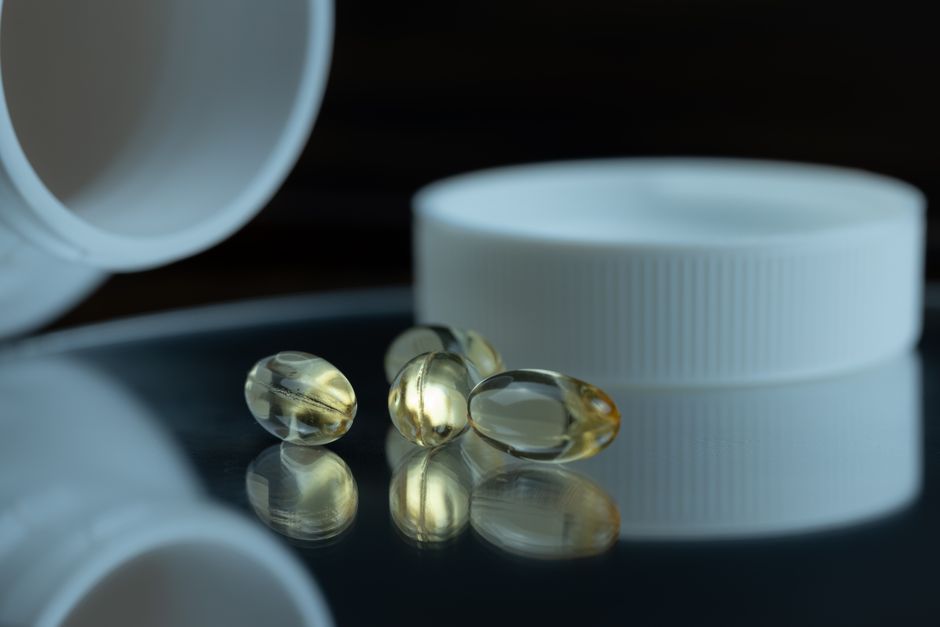
Stearic acid is one of the most common saturated fats in the human diet, found in beef, cocoa butter, dairy, and many plant fats. A stearic acid supplement is usually sold as a powder or capsule, often marketed for appetite control, smoother digestion, or “cellular health.” The honest position is that human evidence for these specific benefits is thin. Stearic acid does have one well-documented property: unlike some other saturated fats, it does not appear to raise LDL cholesterol in controlled feeding studies. That is a real finding, but it is a finding about a nutrient in food, not a reason to take a supplement.
What Is Stearic Acid And What Does It Do In The Body?
Stearic acid is a long-chain saturated fatty acid, 18 carbons long, sometimes written as C18:0. It is one of the most abundant saturated fats in the food supply. Cocoa butter is roughly one-third stearic acid. Beef fat and dairy contain meaningful amounts. It also occurs in smaller amounts in olive oil, palm oil, and shea butter.
In the body, stearic acid is not a foreign molecule. Your cells make it. It is a normal building block of cell membranes and a starting point for the body’s own synthesis of other fatty acids. When you eat it, it is absorbed and either used for energy, stored, or incorporated into tissues. This is ordinary fat metabolism, not a special pathway.
One detail is often misunderstood. Stearic acid is a saturated fat, and saturated fats as a category are associated with higher LDL cholesterol. But stearic acid behaves differently from the others in controlled feeding studies. When researchers swap carbohydrates for stearic acid in the diet, LDL cholesterol tends to stay roughly the same or change little, while other saturated fats such as palmitic acid raise it. The commonly proposed reason is that the body converts a portion of stearic acid to oleic acid, a monounsaturated fat, though this does not fully explain the observed effect.
That is the core of the science. It is a genuinely interesting nutritional finding. It is also frequently stretched into supplement marketing claims that the evidence does not support.
What Are The Benefits Of A Stearic Acid Supplement?
There is no strong human evidence that a stearic acid supplement produces a distinct health benefit. Most of what is known comes from studies of stearic acid in food, not from isolated supplements. Those are different questions.
When stearic acid is eaten as part of a whole food, it arrives with other fats, fiber, protein, and micronutrients. A capsule or powder delivers the fatty acid alone. The body does not necessarily respond the same way. This is a general principle in nutrition: isolating a compound from a food and studying it separately often produces different results, and sometimes no result at all.
Some supplement sellers claim stearic acid supports appetite regulation or a feeling of fullness. No well-designed human trial has confirmed that a stearic acid supplement reduces appetite or food intake in a meaningful way. Some sellers claim it supports “cellular membrane health.” Cell membranes do contain saturated fats, but there is no clinical evidence that taking extra stearic acid improves any measurable health outcome.
The claims that circulate most often are:
- Appetite suppression and weight control — not supported by human trials of the supplement.
- Improved cholesterol profile — the food-based finding does not transfer to a supplement, and stearic acid is not a cholesterol-lowering agent.
- Better “cellular health” — a vague claim with no clinical measurement behind it.
- Reduced inflammation — no human evidence confirms this for stearic acid specifically.
If you see a supplement promising any of these, treat the claim as unproven until human trials say otherwise.
Does Stearic Acid Lower Cholesterol?
Stearic acid does not lower cholesterol. It is more accurate to say it does not raise LDL cholesterol the way some other saturated fats do. That is a neutral finding, not a therapeutic one.
This distinction matters. A fat that fails to raise LDL is not the same as a fat that lowers LDL. The fats and dietary patterns with well-established LDL-lowering effects are unsaturated fats — particularly polyunsaturated fats — and soluble fiber. Replacing some saturated fat with unsaturated fat is a well-supported dietary strategy. Taking a stearic acid capsule is not.
If your goal is a better cholesterol profile, a stearic acid supplement is not the tool. Talk with a clinician about what is appropriate for your situation.




Is Stearic Acid Safe To Take As A Supplement?
Stearic acid is generally recognized as safe as a food ingredient, and it appears on regulatory lists as a direct food substance. That status applies to its use in food. It does not automatically extend to high-dose supplementation, which is a different exposure.
High intakes of isolated fats can cause digestive upset, including loose stools or cramping. This is a general effect of concentrated fat, not a stearic-acid-specific warning. Beyond that, there is no established safety data for long-term, high-dose stearic acid supplementation in healthy adults. No clinical guidelines exist for a supplement dose, because the supplement itself has not been established as a therapy.
If you take any medication, are pregnant or breastfeeding, or have a digestive or heart condition, do not start a stearic acid supplement without talking to a clinician first. For pregnancy and breastfeeding specifically, no clinical guidelines currently exist for stearic acid supplementation.
Should You Get Stearic Acid From Food Instead?
Food sources of stearic acid come packaged with other nutrients, and that context matters. Cocoa butter, for example, is not pure stearic acid — it also contains oleic acid and other fats. Whole foods also bring fiber, protein, and micronutrients that a supplement does not.
This does not mean stearic acid-rich foods are automatically healthy choices. Many are also high in calories and other saturated fats. The point is narrower: if you want stearic acid in your diet, food is where it has been studied, and food is where the cholesterol-neutral finding actually comes from.
A reasonable framing is that stearic acid is one fat among many in a mixed diet. It is not a nutrient you need to seek out, and there is no established deficiency state for it in healthy people eating normal diets.
What Does The Evidence Actually Support?
The clearest supported statement is that stearic acid, when eaten in food, does not raise LDL cholesterol the way some other saturated fats do in controlled feeding studies. That is a nutritional finding about a food component.
Everything beyond that — the supplement claims about appetite, cellular health, inflammation, or weight — rests on weak or absent human evidence. Some of it is extrapolation from the food finding. Some of it is marketing with no trial behind it at all.
The table below separates what is reasonably supported from what is not.
| Claim | Evidence Status |
|---|---|
| Stearic acid in food does not raise LDL like other saturated fats | Supported by controlled feeding studies |
| Stearic acid supplements lower cholesterol | Not supported — stearic acid is not a cholesterol-lowering agent |
| Stearic acid supplements reduce appetite or support weight loss | No well-designed human trials confirm this |
| Stearic acid supplements improve “cellular health” | No clinical measurement supports this claim |
| Stearic acid supplements reduce inflammation | No human evidence confirms this for stearic acid |
| Long-term high-dose supplement safety | Not established in healthy adults |
If a supplement label makes a health claim that is not in the “supported” row above, the claim is not backed by human evidence at this time.
Frequently Asked Questions
What are the benefits of a stearic acid supplement?
Human evidence for specific benefits of a stearic acid supplement is limited, and no well-designed trials confirm appetite, weight, or cholesterol benefits from the supplement form. The one well-supported finding is that stearic acid in food does not raise LDL cholesterol the way some other saturated fats do.
Does stearic acid raise cholesterol?
Stearic acid does not appear to raise LDL cholesterol in controlled feeding studies, unlike some other saturated fats. It also does not lower cholesterol, so it should not be treated as a cholesterol treatment.
Is stearic acid safe to take daily?
Stearic acid is recognized as safe as a food ingredient, but long-term safety data for high-dose daily supplementation in healthy adults does not exist. No clinical guidelines establish a supplement dose.
Can I get enough stearic acid from food?
Yes — stearic acid is abundant in cocoa butter, beef, dairy, and several plant fats, and healthy people eating normal diets are not deficient in it. There is no established need to supplement.
