
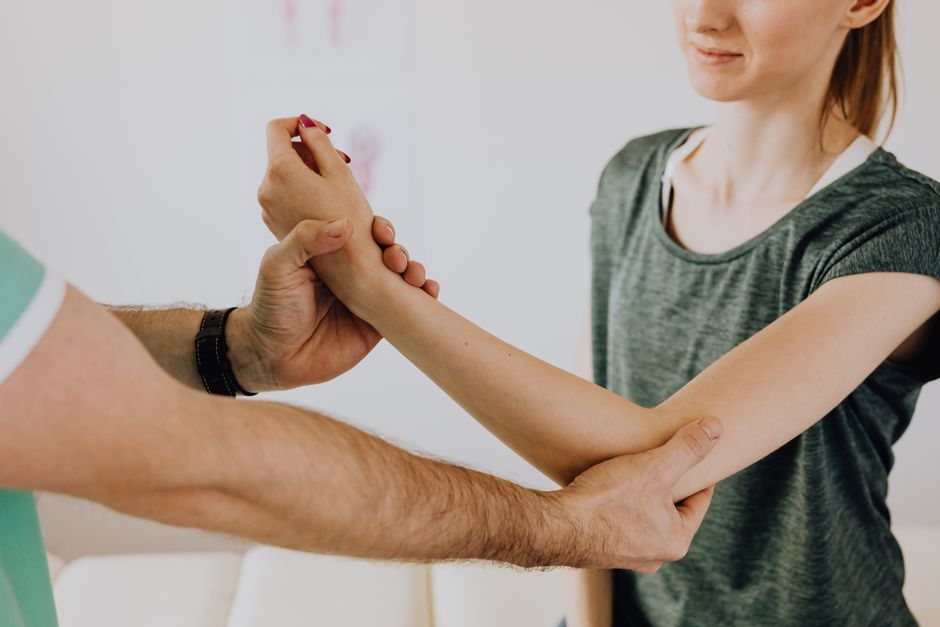
Your bones cannot move on their own. Every step, reach, and breath depends on muscles pulling on bones in a partnership that starts before birth and continues for life. The muscular system works with the skeletal system through attachments called tendons, which connect muscle to bone. When a muscle contracts, it shortens and pulls the bone it is attached to, creating movement at a joint. Bones provide the rigid framework and leverage; muscles provide the force.
How Does The Muscle System Work With The Skeletal System?
The relationship is mechanical and direct. Skeletal muscles attach to bones across joints. When the brain sends a signal through a motor nerve, muscle fibers contract and shorten. That shortening pulls on the tendon, the tendon pulls on the bone, and the bone rotates around the joint. Relax the muscle, and the bone returns or another muscle pulls it the other way.
This is why muscles almost always work in pairs. Your biceps and triceps are the classic example. The biceps bends the elbow. The triceps straightens it. Muscles can only pull, never push. So movement in two directions requires two muscles on opposite sides of the joint.
Bones contribute more than a frame. They act as levers. A joint is the fulcrum. The muscle provides effort. The bone transmits that effort to move a load. This lever arrangement is why a relatively small muscle contraction can lift something much heavier than the muscle itself.
What Connects Muscles To Bones?
Tendons connect muscle to bone. They are tough bands of dense connective tissue made mostly of collagen. Tendons are not passive ropes. They store and release elastic energy, which makes movement more efficient.
Where a tendon meets bone, the fibers blend into the bone tissue itself. This attachment point is called the enthesis. It is a gradual transition from soft tendon to hard bone, which spreads force and reduces the risk of tearing at the connection.
Ligaments are different and often confused with tendons. Ligaments connect bone to bone. They stabilize joints rather than produce movement. A sprained ankle is usually a ligament injury. A torn Achilles is a tendon injury.
- Tendon — connects muscle to bone, transmits force for movement
- Ligament — connects bone to bone, stabilizes the joint
- Cartilage — cushions the ends of bones inside joints
- Bursa — small fluid-filled sac that reduces friction near joints
How Do Muscles And Bones Communicate?
Movement begins in the brain. A signal travels down the spinal cord and out through a motor nerve to a group of muscle fibers. One motor nerve plus all the fibers it controls is called a motor unit. When that nerve fires, every fiber in its unit contracts.
More force requires more motor units. Lifting a pencil uses a few. Lifting a suitcase uses many. The nervous system recruits units in order, from smallest to largest, depending on how much force is needed. This is why fine control and heavy lifting use different patterns of activation.
Bones also send signals back. Bones and muscles are not just mechanical partners. Bone tissue releases signaling molecules that influence muscle, and muscle activity places mechanical stress on bone that drives bone remodeling. This back-and-forth is one reason exercise affects both tissues at once.




Why Do Bones Need Muscles To Stay Strong?
Bone is living tissue that constantly rebuilds itself. Mechanical stress from muscle pulling on bone is one of the main signals that tells bone to stay dense. When muscles are active, they load the skeleton, and bone responds by maintaining or adding tissue.
The reverse is also true. When muscles shrink from disuse, bone tends to lose density too. This is seen after prolonged bed rest, during immobilization in a cast, and in conditions where muscle mass declines. The two tissues rise and fall together in many situations.
This is why weight-bearing and resistance exercise are widely recommended for bone health. The evidence for exercise supporting bone density is strongest for resistance training and impact activities. It is important to be honest here: exercise helps, but it does not fully prevent age-related bone loss, and it is not a replacement for medical treatment in people with osteoporosis.
What Happens To This System As We Age?
Both muscle and bone change with age. Muscle mass and strength tend to decline gradually starting in midlife. Bone density also declines, more sharply in women after menopause. These changes are related but not identical.
Loss of muscle strength raises the risk of falls. Loss of bone density raises the risk of fracture if a fall occurs. Together they are a major reason older adults are more vulnerable to broken hips and other fractures.
Strength training can slow muscle loss and improve balance and function in older adults. The evidence for this is fairly consistent. What is less certain is how much exercise alone can reverse established bone loss. Some studies suggest modest benefit. The effect is real but usually small compared to what medication can do in people with diagnosed osteoporosis.
Protein intake matters too. Many older adults eat less protein than their bodies can use efficiently, which can speed muscle loss. General guidance from health authorities is that most adults need adequate protein daily, and needs may be higher in older adults. Specific targets vary, and anyone with kidney disease should talk to a clinician before increasing protein.
How Do Injuries Affect The Muscle-Bone Connection?
Because muscles, tendons, and bones work as a chain, an injury to one part often affects the others. A torn tendon means the muscle can no longer pull the bone effectively. A fractured bone means the muscle has nothing solid to pull against in that area.
Common injuries at this junction include:
- Strains, which stretch or tear muscle or tendon
- Tendinitis, which is irritation of a tendon
- Avulsion fractures, where a tendon pulls off a small piece of bone
- Stress fractures, from repeated loading without enough recovery
Healing depends on the tissue. Muscle tends to heal well because it has good blood supply. Tendons and bone heal more slowly because they have less blood flow. This is why tendon injuries can take months and why bone fractures often need immobilization.
Does Muscle Activity Change Bone Shape?
Yes, and this is one of the more striking facts about the system. Bone adapts to the loads placed on it. Athletes who train specific movements develop thicker bone in the areas that bear the most stress. Tennis players famously have denser bone in their dominant arm.
The opposite also happens. Astronauts lose bone and muscle in space because there is no gravity load. People who are immobilized lose both. Bone responds to what it is asked to do, and muscles are the main way the skeleton gets that message.
This principle is sometimes summarized as “form follows function” in bone. It is a well-established concept in skeletal biology. What remains less clear is exactly how much of a given activity is needed to produce a specific bone change in a specific person. That varies widely.
How Can You Support This System?
The most reliable way to support the muscle-bone system is regular physical activity that loads the skeleton and challenges the muscles. Resistance training and weight-bearing activity are the main categories. Walking helps, but resistance training does more for muscle strength and bone loading.
Nutrition matters too. Adequate calcium and vitamin D support bone, and adequate protein supports muscle. General recommendations exist for these nutrients in most adults. Specific doses should come from a clinician, especially for people with medical conditions or those taking medications that affect bone.
Sleep and recovery matter more than most people realize. Muscle repair and bone remodeling happen largely during recovery, not during the workout itself. Chronic poor sleep is associated with worse muscle and bone outcomes in some studies, though the exact mechanisms are still being worked out.
If you have osteoporosis, a history of fractures, or a condition affecting muscle or bone, exercise and nutrition decisions should be made with a clinician. The general advice above is not a substitute for individualized medical guidance.
Frequently Asked Questions
How does the muscular system work with the skeletal system to produce movement?
Muscles contract and pull on bones through tendons, which creates movement at joints. Bones provide the lever and framework while muscles provide the force.
What connects muscles to bones?
Tendons connect muscle to bone. Ligaments connect bone to bone and stabilize joints rather than produce movement.
Can muscles move bones without tendons?
No. Without a tendon attachment, a muscle contraction cannot transfer force to the bone efficiently enough to create useful movement.
Why do muscles work in pairs?
Muscles can only pull, not push. Two muscles on opposite sides of a joint are needed to move the bone in two directions.
