
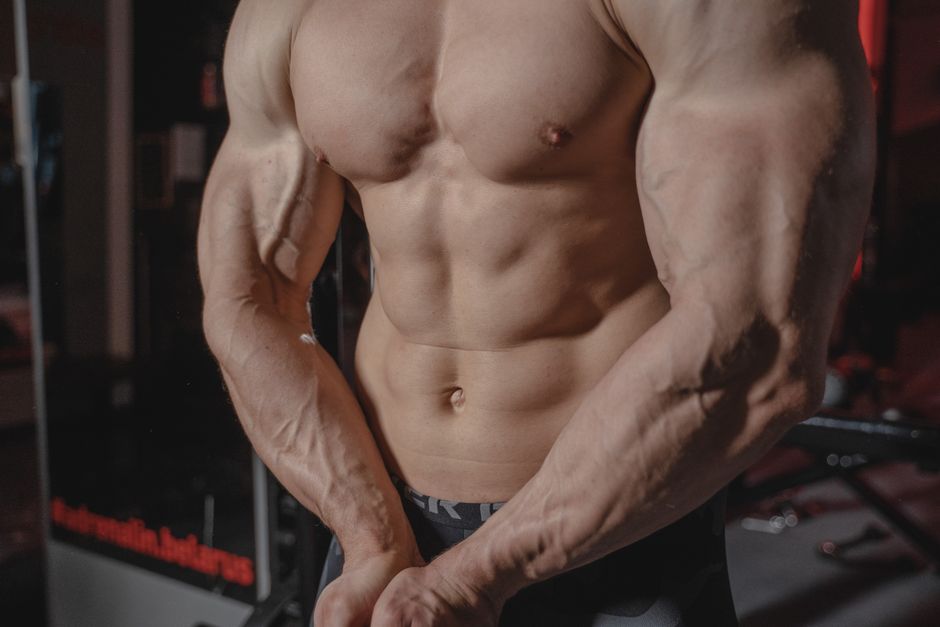
The pectoral muscles are the two large, fan-shaped muscles on the front of your chest. They connect the upper arm bone to the breastbone and collarbone, and they are the primary muscles responsible for pushing movements. You use them whenever you push a door, perform a push-up, or throw a ball, and they also help with breathing by assisting the ribcage during heavy exertion.
What Are the Two Main Pectoral Muscles?
Your chest has two distinct pectoral muscles on each side. They work together but have different jobs and different shapes.
The pectoralis major is the large, thick muscle that gives the chest its shape. It is the one you see when you look in the mirror. It has two parts: the clavicular head (upper chest) and the sternal head (lower chest). Together they pull the arm across the body and rotate it inward.
The pectoralis minor sits underneath the pectoralis major. It is smaller and thinner. It attaches to the shoulder blade and the upper ribs. Its main job is to pull the shoulder blade forward and down, which is important for proper shoulder movement.
Where Exactly Are the Pectoral Muscles Located?
The pectoralis major starts at the inner half of your collarbone, the full length of your breastbone, and the cartilage of the upper six ribs. From those points, the muscle fibers converge and attach to the upper part of the humerus, which is the bone in your upper arm.
The pectoralis minor attaches to the third, fourth, and fifth ribs near the front of your ribcage. It runs upward and outward to attach to the coracoid process, a small hook-shaped bone projection on the front of your shoulder blade.
This arrangement means the pec muscles span from the center of your torso out to your shoulder joint. They are not just surface muscles; they form part of the front wall of your armpit, which is called the anterior axillary fold.
What Do the Pectoral Muscles Actually Do?
The primary function of the pectoralis major is to bring your arm across the front of your body. This movement is called horizontal adduction. It is the motion you use when you clap your hands together in front of you.
The pectoralis major also performs several other important actions:
- Shoulder flexion: Raising your arm forward and upward, such as reaching for a high shelf.
- Shoulder internal rotation: Rotating your arm inward, such as when you swing your arm to throw a ball.
- Shoulder adduction: Bringing your arm down toward your side from an outstretched position.
The pectoralis minor does not move the arm directly. Instead, it stabilizes the shoulder blade. When your arm is fixed in place, such as when you do a push-up, the pectoralis minor helps lift your ribcage, which assists with deep inhalation.





How Do the Pectoral Muscles Differ Between Men and Women?
The pectoral muscles themselves are structurally the same in men and women. The visible difference comes from breast tissue, which sits on top of the pectoralis major. Breast tissue is not muscle, and it does not change shape when you train your chest.
Men typically have larger pectoral muscles because they have higher levels of testosterone, which promotes muscle growth. Women can build the same relative strength and muscle mass in their chest, but the overall size will usually be smaller due to hormonal differences.
One important point: exercises that target the chest do not reduce breast size. Spot reduction of fat is a myth. Fat loss occurs throughout the body as a whole, not in one specific area.
What Are Common Injuries to the Pectoral Muscles?
The most common pectoral injury is a strain, which is a tear in the muscle fibers. These injuries range from mild overstretching to complete ruptures of the muscle tendon.
Pectoralis major tears occur most often during heavy bench pressing or other pushing exercises. They are more common in men than women, especially in athletes who lift heavy weights. Symptoms include sudden sharp pain in the chest or armpit, bruising, swelling, and weakness when pushing.
Pectoralis minor injuries are less dramatic but more common in everyday life. Tightness in this muscle can pull the shoulder blade forward, which contributes to poor posture and shoulder impingement. This is often seen in people who sit at desks for long hours.
If you feel a sudden pop or tearing sensation in your chest during exercise, stop immediately. A complete tear requires surgical repair in most cases, especially in young or active people who want to regain full strength.
How Do You Strengthen the Pectoral Muscles Safely?
Resistance training is the most effective way to strengthen the pectoral muscles. The classic exercises are the bench press, push-up, and chest fly. These movements involve pushing weight away from your body or bringing your arms together.
For balanced development, you should include exercises that target both the upper and lower portions of the chest. Incline presses emphasize the upper chest, while flat and decline presses emphasize the lower chest. However, the muscle works as a whole, and no exercise isolates one head completely.
Start with bodyweight exercises like push-ups if you are new to training. Once you can perform 15 to 20 repetitions with good form, you can add external resistance. Use a weight that allows you to complete 8 to 12 repetitions with controlled form. If you cannot maintain proper form, the weight is too heavy.
Rest is part of training. The pectoral muscles need 48 hours to recover between intense sessions. Training them every day does not produce faster results and increases the risk of injury.
Why Do People Experience Tightness in Their Chest?
Chest tightness is common, but it is important to distinguish between muscle tightness and a medical emergency. If chest tightness comes with shortness of breath, pain in the arm or jaw, sweating, or nausea, call emergency services immediately. That can be a sign of a heart attack.
Muscular tightness in the pectorals is different. It feels like a dull ache or a feeling of tension across the chest. It often develops from poor posture, especially sitting hunched forward for long periods. When your shoulders roll forward, the pectoralis minor shortens and becomes tight.
Stretching can help with muscular tightness. A doorway stretch is simple: place your forearm on a doorframe, keep your elbow at shoulder height, and gently turn your body away from the door. Hold for 20 to 30 seconds. Stop if you feel sharp pain.
However, stretching alone will not fix posture-related tightness. You also need to strengthen the muscles of the upper back, such as the rhomboids and middle trapezius, to pull the shoulders back into a neutral position.
Does Age Affect the Pectoral Muscles?
Yes. Like all skeletal muscles, the pectorals lose mass and strength with age if they are not used. This process is called sarcopenia. It typically begins around age 30 and accelerates after age 60.
The good news is that this decline is not inevitable. Research consistently shows that resistance training can slow or even reverse age-related muscle loss, even in older adults. Studies have found that people in their 70s and 80s can build meaningful muscle strength with regular training.
Maintaining chest strength matters for daily life. It affects your ability to push yourself up from a chair, carry groceries, and maintain good posture. It also supports shoulder health, which is a common problem area in older adults.
Frequently Asked Questions
Can you build pectoral muscles without weights?
Yes, push-ups and their variations can effectively strengthen the pectoral muscles. You can increase difficulty by elevating your feet or using a weighted vest once standard push-ups become easy.
How long does it take to see results in the chest?
Visible muscle growth typically takes 8 to 12 weeks of consistent training. Strength gains can appear sooner, often within 3 to 4 weeks, but visible size changes require more time.
Is it safe to do chest exercises every day?
No, daily chest training is not recommended. The pectoral muscles need at least 48 hours of rest between intense sessions to recover and grow.
What is the difference between the upper and lower chest?
The upper chest is the clavicular head of the pectoralis major, and the lower chest is the sternal head. Different exercises emphasize one head more than the other, but both heads work together in most pushing movements.
