
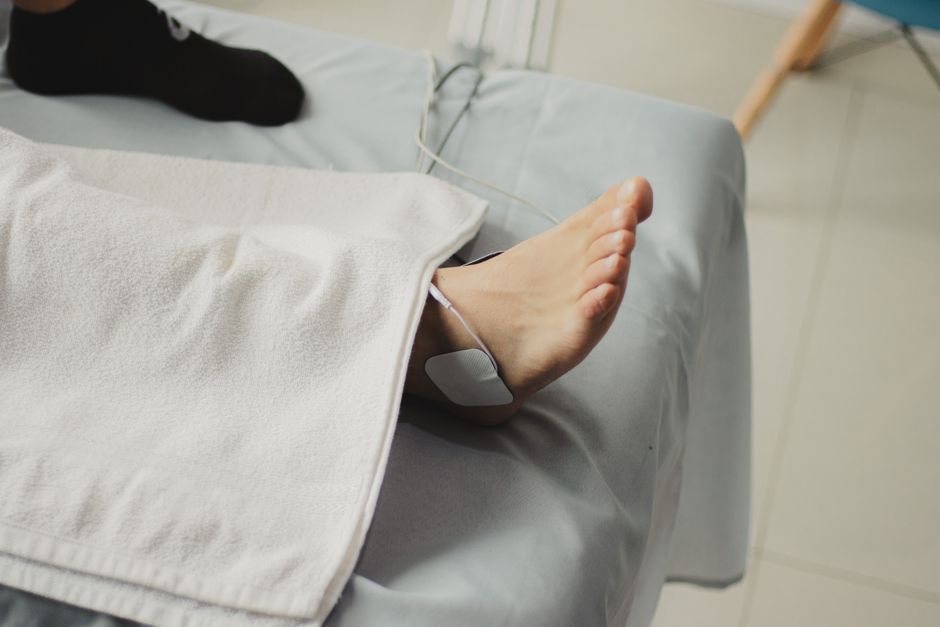
Photodynamic therapy, often shortened to PDT, is a treatment that uses three things together: a light-sensitive drug, a specific type of light, and oxygen already present in your body. None of the three works alone. The drug is inactive until light hits it, and when it does, the reaction produces a form of oxygen that damages nearby cells. PDT is an established medical treatment, not an experimental one. It is used in dermatology, oncology, and several other specialties, and it has been cleared by regulators for specific conditions for decades.
What Are PDTs and How Does Photodynamic Therapy Work?
PDT stands for photodynamic therapy. It works through a sequence of steps that depend on each other.
First, a photosensitizer is applied to the skin, injected, or given by mouth. A photosensitizer is a substance that absorbs light and starts a chemical reaction. Once it is in the body, it tends to collect in certain cells more than others. In cancer treatment, tumors often hold onto these drugs longer than healthy tissue does.
Second, a light source is aimed at the target area. The light has to match the wavelength the drug absorbs. Different photosensitizers respond to different wavelengths, which is why the light source is chosen for the drug, not the other way around.
Third, when the light activates the drug, it transfers energy to oxygen molecules in the tissue. This creates reactive oxygen species — unstable molecules that damage proteins, cell membranes, and other structures. Cells that take up the most drug and receive the most light are the ones most affected.
There is a detail many people miss. PDT does not just kill cells directly. It also damages the blood vessels feeding the target tissue, which cuts off its supply of nutrients and oxygen. And it can trigger an immune response, prompting the body’s own defenses to act against the treated area. Researchers are still working out how much each of these three effects contributes in different conditions.
What Conditions Is Photodynamic Therapy Used to Treat?
PDT has the strongest track record in dermatology and in treating certain early cancers and precancerous growths.
- Actinic keratosis — rough, scaly patches caused by sun damage. These are considered precancerous. PDT is one of several accepted treatments.
- Superficial basal cell carcinoma — a common form of skin cancer that has not spread deeper. PDT is an option for certain superficial cases.
- Barrett’s esophagus — a condition where the lining of the esophagus changes, sometimes as a result of chronic acid reflux. PDT has been used to destroy abnormal tissue in select patients.
- Certain early-stage lung and esophageal cancers — for tumors that are small and have not spread, PDT can sometimes be used to shrink or destroy them.
- Age-related macular degeneration — a specific form of the disease involving abnormal blood vessels. PDT with a drug called verteporfin has been used to close off leaking vessels.
Outside these areas, PDT is being studied for other uses, including some infections and certain non-cancerous skin conditions. But being studied is not the same as being proven. For most of these newer applications, the evidence is still early and not strong enough to call it a standard treatment.
What Happens During a Photodynamic Therapy Session?
The experience depends entirely on where the treatment is being applied. A skin treatment looks nothing like a treatment inside the esophagus.
For skin conditions, a clinician applies the photosensitizer cream to the target area and covers it. The cream needs time to be absorbed — often somewhere between one and several hours, depending on the specific drug and the condition. Then the area is exposed to a light source for a set period. The light may be a laser or a non-laser source. You may feel a burning or stinging sensation during this part. Afterward, the treated area is usually covered with a dressing to protect it from light.
For internal conditions, the process is more involved. The photosensitizer may be injected into a vein. Because the drug circulates throughout the body, the timing matters — the clinician waits until the drug has cleared from most healthy tissue but is still present in the target area. Then a thin tube called an endoscope or bronchoscope is used to deliver light to the right spot inside the body. This is typically done as an outpatient procedure, though it depends on the site and the patient’s overall health.
Session length varies widely. A small skin spot might take minutes of light exposure. A deeper internal treatment could take longer. The number of sessions needed also varies. Some skin conditions respond to a single treatment. Others require a series spaced weeks apart.




What Are the Side Effects and Risks of PDT?
The most common side effects are local to the treated area. For skin treatments, that means redness, swelling, peeling, and a burning or stinging sensation. These usually settle within days to a few weeks, but the exact timeline depends on the drug, the dose, and the size of the area treated.
General light sensitivity is a real concern with systemic photosensitizers — the ones given by injection or by mouth. After treatment, your skin and eyes may react strongly to sunlight and even to some indoor lighting for a period of time. The duration depends on the specific drug. Some clear from the body within days; others can leave you light-sensitive for weeks. Clinicians typically give specific instructions about sun avoidance and protective clothing, and those instructions should be followed exactly.
Pain during treatment is common and can be significant for some people, especially with larger treatment areas. This is worth discussing with your clinician beforehand, because there are ways to manage it.
Less common but more serious risks include scarring, changes in skin color that may be long-lasting, and damage to healthy tissue near the treatment site. For internal treatments, there is a risk of narrowing or perforation in the treated organ, though this is uncommon. These are the reasons PDT is done by specialists who understand the specific anatomy and the specific drug being used.
PDT is not appropriate for everyone. People with certain blood disorders called porphyrias, which make the body unusually sensitive to light, generally cannot receive it. Pregnancy and breastfeeding status also matter, and the guidance here depends on the specific drug and condition. No single set of rules covers every situation, so this is a conversation to have with the treating clinician.
How Does PDT Compare to Other Treatments?
PDT is one option among several. It is not automatically better than surgery, freezing, creams, or radiation. Whether it is a good fit depends on the condition, its location, its size, and the patient.
| Factor | PDT | Surgery | Topical creams |
|---|---|---|---|
| Invasiveness | Minimal to moderate | Invasive | Non-invasive |
| Repeat treatments | Often possible | Possible but limited by tissue | Often possible |
| Scarring | Generally low for skin use | Scarring likely | Generally low |
| Light sensitivity | Yes, with systemic drugs | No | No |
| Best suited for | Superficial, localized areas | Defined tumors, deeper tissue | Surface-level skin conditions |
For some skin conditions, PDT can treat a broader area than surgery can address at once, which matters when sun damage covers a wide patch of skin. It also preserves tissue, which can be important on the face or other visible areas. On the other hand, PDT does not reach deep tumors well. Light only penetrates so far into tissue, and that limits how thick a lesion can be and still respond.
Cost and insurance coverage vary by condition and by country. In the United States, coverage depends on the specific diagnosis and the insurer. This is not something to assume either way.
Is Photodynamic Therapy Safe and Effective?
For the conditions where it is approved and established, PDT has a solid record. It is not experimental for actinic keratosis, superficial basal cell carcinoma, or the specific eye condition mentioned earlier. Research over decades supports its use in these areas.
For newer applications, the picture is different. PDT is being investigated for certain infections, for preventing narrowing in blood vessels after procedures, and for other cancers. Some early studies show promise. But promise in early studies does not mean a treatment is ready for general use. The evidence for many of these applications is limited, and no large human trials have confirmed benefit for all of them.
If someone offers PDT for a condition where it is not an established treatment, it is reasonable to ask what evidence supports that use. That question is fair, and a good clinician will answer it directly. PDT is a real treatment with real mechanisms and real risks. It is not a cure-all, and it is not appropriate for every condition that a light-sensitive drug could theoretically reach.
Frequently Asked Questions
Is photodynamic therapy the same as laser therapy?
No, they are different. PDT uses a light-sensitive drug plus light to create a chemical reaction, while laser therapy uses light alone to remove or destroy tissue.
How long does it take to recover from PDT?
Recovery depends on the treatment site and the specific drug used. Skin treatments often heal within a few weeks, while systemic light sensitivity can last from days to weeks depending on the drug.
Can photodynamic therapy cure cancer?
PDT can destroy certain early, superficial cancers and precancerous growths, and it is an accepted treatment for some of these. It is not a general cure for cancer and does not work well on deep or widespread tumors.
Do you have to stay out of the sun after PDT?
Yes, if you received a systemic photosensitizer. Your skin and eyes can react strongly to sunlight and some indoor light for a period that depends on the drug, so follow your clinician’s instructions exactly.
