
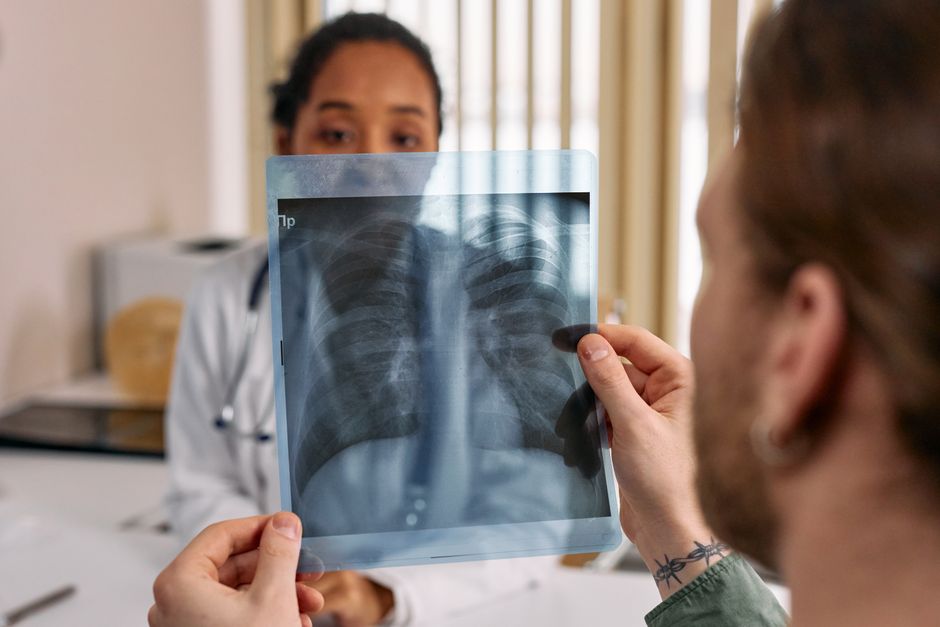
Lung nodules are small spots or growths in the lungs, usually found by accident when a scan is done for another reason. Most are harmless, but a small number can be early lung cancer. The key is figuring out which ones need monitoring and which ones need action.
What Are Lung Nodules?
A lung nodule is a round spot on the lung that shows up on imaging tests like a CT scan or chest X-ray. Doctors also call them pulmonary nodules or coin lesions. They are common — most scans find them more often than not, especially in older adults.
Most nodules are smaller than 3 centimeters. Anything larger than that is called a mass, and masses get a different level of attention. A nodule can be solid, partly solid, or look like ground glass. That texture matters because it affects how doctors estimate risk.
Here is the most important thing to understand: over 90% of lung nodules are benign. They are not cancer. Most are scar tissue, old infections, or harmless growths. But because a small percentage are early cancer, doctors take every nodule seriously until they know what it is.
How Common Are Lung Nodules?
Lung nodules are very common. CT scans pick up nodules in a large number of people who get scanned, particularly smokers and older adults. Many people walk around with nodules and never know it.
One study found that up to half of long-term smokers who get a CT scan will have at least one nodule. Most of those turn out to be nothing dangerous. The challenge is that a CT scan cannot tell for certain whether a nodule is cancer just by looking at it.
That is why guidelines exist. They help doctors decide who needs a follow-up scan, who needs a biopsy, and who can simply be left alone.
What Causes Lung Nodules?
Several things can cause a lung nodule. The most common causes are:
- Infections — bacterial, viral, or fungal infections can leave behind small scars or areas of inflammation that look like nodules.
- Inflammation — conditions like rheumatoid arthritis or sarcoidosis can cause small inflammatory spots in the lungs.
- Benign tumors — hamartomas are the most common type. These are harmless growths made of normal lung tissue that grew in a disorganized way.
- Scar tissue — past surgery, radiation, or healed infections can leave scar tissue that appears as a nodule.
- Cancer — lung cancer is the least common cause of a nodule, but it is the one that matters most.
Sometimes no clear cause is ever found. The nodule just exists, and it stays the same size for years. That stability is a strong sign it is not cancer.





Are Lung Nodules Cancer?
Most are not. The vast majority of lung nodules are benign. But the risk is real, and it depends on several factors.
Size is the biggest factor. Smaller nodules have a much lower chance of being cancer. A nodule under 6 millimeters has a very low risk. Nodules over 8 millimeters need more attention. The risk rises as the size goes up.
Your personal history matters too. A nodule in a non-smoker under 40 is far less worrying than the same nodule in a 65-year-old with a 40-pack-year smoking history. Other risk factors include a family history of lung cancer, prior cancer anywhere in the body, and exposure to asbestos or radon.
Growth over time is also important. A nodule that stays the same size for two years is almost certainly benign. A nodule that grows on follow-up scans raises concern and usually leads to more testing.
What Are the Symptoms of Lung Nodules?
Most lung nodules cause no symptoms at all. They are too small to press on airways or cause discomfort. That is why they are usually found by accident.
When symptoms do occur, they are the same as symptoms of many lung conditions:
- A cough that does not go away
- Coughing up blood
- Shortness of breath
- Chest pain
- Wheezing
- Hoarseness
If you have any of these symptoms, see a doctor. But keep in mind that these symptoms are far more often caused by other conditions like asthma, bronchitis, or acid reflux. They are not specific to nodules.
How Are Lung Nodules Diagnosed?
Most nodules are found on scans done for other reasons. A chest X-ray for a persistent cough, a CT scan for a car accident, or a scan for an unrelated condition — that is how most nodules are discovered.
Once a nodule is found, the next step depends on the nodule’s size, appearance, and your risk factors. Doctors use a combination of these to decide what to do next.
Follow-up imaging is the most common approach. A small nodule in a low-risk person often just gets a repeat CT scan in 6 to 12 months. If it has not grown, the interval may be extended. If it has grown, further testing is needed.
For higher-risk nodules, doctors may order a PET scan. This test looks for areas of increased metabolic activity, which can indicate cancer. But PET scans are not perfect — they can miss some cancers and can light up in areas of infection or inflammation.
A biopsy is the only way to know for certain whether a nodule is cancer. A doctor can take a sample using a needle guided by CT imaging, or through a bronchoscope passed down the airway. In some cases, surgery is needed to remove the nodule entirely.
How Are Lung Nodules Monitored?
Monitoring is the standard approach for most nodules. The goal is simple: watch it over time to see if it changes.
Guidelines from major medical societies give doctors a framework for how often to scan and for how long. The exact schedule depends on the nodule’s size, whether it is solid or ground-glass, and your personal risk level.
In general, a low-risk person with a small nodule might get a follow-up scan in 12 months. A higher-risk person with a larger nodule might get one in 3 to 6 months. If the nodule is stable after two years, monitoring often stops for solid nodules. Ground-glass nodules may need longer follow-up because some slow-growing cancers can take years to show changes.
The important thing is to keep your follow-up appointments. A nodule that is watched properly is almost never a danger. The danger comes from ignoring it and letting it grow unchecked.
When Is Treatment Needed?
Treatment is only needed when a nodule is confirmed as cancer or is highly suspicious for cancer. Benign nodules do not need treatment.
If a nodule grows significantly between scans, or if it has features that strongly suggest cancer, surgery may be recommended. The standard surgery removes just the nodule and a small margin of surrounding tissue. This is called a wedge resection or segmentectomy.
For early-stage lung cancer, surgery alone can be curative. The survival rate for stage 1 lung cancer detected early is very high. That is why finding and watching nodules matters — it catches cancer at a stage where treatment works best.
Some people with small, slow-growing cancers may be candidates for stereotactic body radiation therapy, which delivers high-dose radiation precisely to the tumor. Others may need chemotherapy or immunotherapy, but that is typically for more advanced disease, not for a small nodule caught early.
Can Lung Nodules Be Prevented?
You cannot prevent a lung nodule from forming in most cases. Infections, inflammation, and scar tissue happen regardless of what you do.
What you can do is reduce your risk of the dangerous kind of nodule — lung cancer. The single biggest step is not smoking. If you smoke, quitting reduces your lung cancer risk over time. If you do not smoke, do not start.
Avoiding radon exposure is also important. Radon is a radioactive gas that can build up in homes, and it is the second leading cause of lung cancer. Simple test kits are available to check your home.
There is no diet, supplement, or lifestyle change proven to prevent lung nodules. Anyone who tells you otherwise is selling something.
Frequently Asked Questions
Can a lung nodule disappear on its own?
Yes, some nodules can shrink or disappear without treatment. This often happens when the nodule is caused by an infection or inflammation that resolves on its own.
How fast do lung nodules grow?
Cancerous nodules typically double in size over a period of 30 to 400 days, but the growth rate varies widely by cancer type. That is why follow-up scans are spaced months apart — to catch growth at a meaningful rate.
Is a 5 mm lung nodule serious?
A 5 mm nodule is very small and has a very low risk of being cancer. Most doctors will recommend a follow-up scan in 12 months to confirm it is stable.
Do all lung nodules need a biopsy?
No, most nodules never need a biopsy. Only nodules that grow, look suspicious on imaging, or are large enough to warrant concern are biopsied.
