
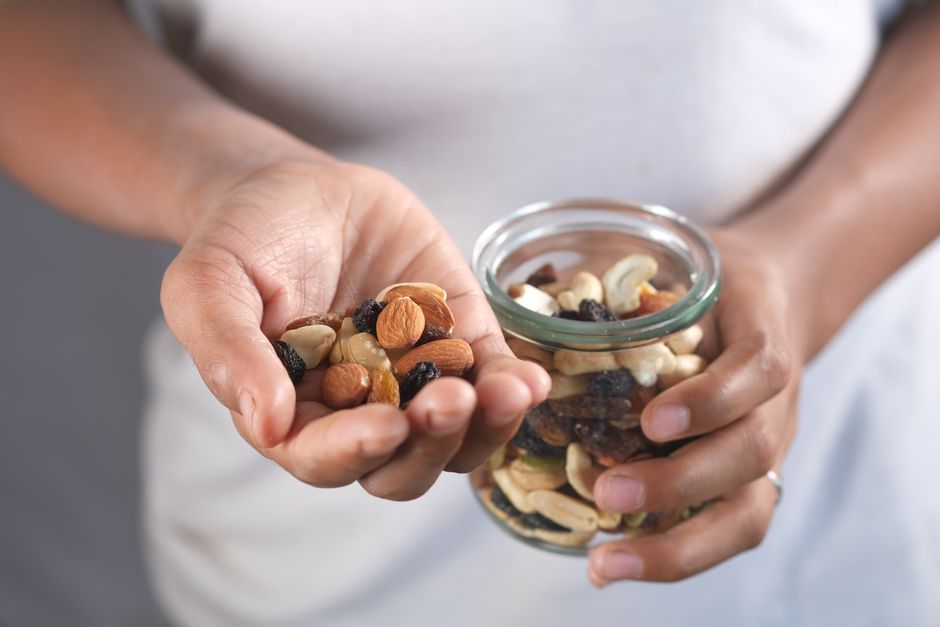
Healthy snacks are foods that provide real nutrients — protein, fiber, vitamins, or healthy fats — without a lot of added sugar, refined grains, or artificial ingredients. They help keep your blood sugar steady between meals and give your body fuel it can actually use. A healthy snack is not about being low-calorie or fat-free. It is about what the food does for you.
What Makes a Snack Healthy or Unhealthy?
The difference between a healthy and unhealthy snack comes down to three things: what is in it, how your body processes it, and how full it keeps you.
Healthy snacks contain whole food ingredients. Think nuts, seeds, fruits, vegetables, yogurt, eggs, or whole grains. They have fiber or protein or both. Fiber slows down digestion so your blood sugar does not spike and crash. Protein helps you feel satisfied for longer.
Unhealthy snacks are usually built around refined flour, added sugar, or industrial seed oils. A package of crackers, a granola bar with chocolate coating, or a bag of pretzels may look harmless. But most of their calories come from fast-digesting carbs with little nutritional return. Your body burns through them quickly, leaving you hungry again within an hour.
The American Heart Association recommends limiting added sugar to no more than 36 grams per day for men and 25 grams for women. A single snack bar can contain half of that. That is not a snack. That is dessert dressed up as something else.
What Are Healthy Snacks for Weight Management?
If your goal is weight management, the right snacks can help. But the evidence does not support snacking for everyone. A 2019 study in the Journal of the Academy of Nutrition and Dietetics found that snacking was linked to higher daily calorie intake overall. That does not mean snacking is bad. It means you have to choose carefully.
Snacks that help with weight control tend to be high in protein and fiber and relatively low in calorie density. Here are examples that research supports:
- Apple slices with almond butter — Fiber from the apple plus protein and healthy fat from the nuts. Keeps blood sugar stable.
- Greek yogurt with berries — Plain Greek yogurt has about 15-20 grams of protein per cup. Berries add fiber and antioxidants without much sugar.
- Hard-boiled eggs — One egg has 6 grams of protein and only 70 calories. No prep needed.
- Carrot sticks with hummus — Vegetables plus chickpea-based dip gives you fiber, protein, and crunch.
- A handful of almonds — About 23 almonds gives you 6 grams of protein and 3.5 grams of fiber. Studies show almonds improve satiety without causing weight gain.
One thing to watch is portion size. Nuts are healthy but calorie-dense. A serving is one ounce, not a full cup. Pre-portion snacks if you tend to eat mindlessly.
What Does Research on Healthy Snacks Show?
Research on snacking is more mixed than most articles suggest. Some studies show snacking helps with appetite control. Others show it adds calories without benefit. The key variable is what people snack on and why.
A 2017 review published in Nutrients found that snacking on nutrient-dense foods was associated with better diet quality. But snacking on high-sugar, low-fiber foods was linked to higher body weight and worse metabolic health. The type of snack matters more than the act of snacking itself.
Another study from Purdue University found that people who ate nuts as snacks did not gain weight over time, despite nuts being high in calories. The reason appears to be that nuts increase satiety and may not be fully absorbed by the body. Some of the fat passes through undigested.
The CDC reports that about 30% of Americans eat fast food on any given day. Many of those fast food meals are snack-sized — drive-through breakfast sandwiches, value menu items, or large sodas. These are not snacks. They are calorie bombs with low nutritional value.




How Do You Tell If a Packaged Snack Is Actually Healthy?
Food companies know people want healthy snacks. So they put words like “natural,” “organic,” or “protein-rich” on boxes that are still mostly sugar and refined flour. You have to read past the front of the package.
Look at the ingredient list first. If sugar is in the first three ingredients, it is not a healthy snack regardless of what the label says. Sugar has many names — cane syrup, brown rice syrup, agave nectar, honey, fruit juice concentrate. They all affect blood sugar similarly.
Check the fiber content. A healthy snack should have at least 3 grams of fiber per serving. Check protein too. Aim for at least 5 grams. And watch sodium. Some “healthy” crackers or vegetable chips pack 300 milligrams of sodium in a single serving.
Here is a quick comparison of common snack options:
| Snack | Protein | Fiber | Added Sugar | What to Know |
|---|---|---|---|---|
| Plain Greek yogurt (3/4 cup) | 15-18g | 0g | 0g | Add your own fruit to avoid added sugar |
| Granola bar (typical) | 2-4g | 1-2g | 8-12g | Often more sugar than a cookie |
| Apple with peanut butter | 7g | 5g | 0g | Natural sugars from apple only |
| Protein shake (pre-made) | 20-30g | 0-1g | 0-5g | Check for artificial sweeteners if that matters to you |
| Trail mix (store-bought) | 4-6g | 2-3g | 6-10g | Many brands add chocolate and yogurt coating |
A general rule: if a snack has more than 10 grams of added sugar, it is not a healthy snack. Save it for a treat instead.
What Are the Best Snacks for Energy Without a Crash?
Blood sugar crashes happen when you eat something that digests too fast. Your body releases a large amount of insulin, which drops your blood sugar below where it started. You feel tired, irritable, and hungry again within an hour.
To avoid this, pair carbohydrates with protein or fat. The protein and fat slow down digestion so glucose enters your bloodstream gradually. This gives you steady energy instead of a spike and fall.
Good combinations include:
- Banana with a tablespoon of peanut butter
- Whole grain crackers with cheese
- Oatmeal made with milk instead of water, topped with nuts
- Cottage cheese with pineapple or peaches
- Edamame — soybeans are high in protein and fiber
Timing matters too. Eating a snack two to three hours after a meal can prevent the energy dip that often hits in the afternoon. But if you eat a snack within an hour of your next meal, you may just be adding calories you do not need.
What Are Common Misconceptions About Healthy Snacks?
Many people believe that “low-fat” or “fat-free” snacks are automatically healthy. That is not true. When manufacturers remove fat, they usually add sugar to make the product taste good. Low-fat yogurt can have more sugar than a candy bar. Check the label.
Another misconception is that dried fruit is as healthy as fresh fruit. Dried fruit is concentrated sugar. A cup of grapes has about 23 grams of sugar. A cup of raisins has about 86 grams. The fiber is still there, but portion control is much harder with dried fruit. A small handful is a serving, not a whole bag.
Some people also think snacking is necessary for weight loss. It is not. Many people do fine with three meals and no snacks. If you are not hungry between meals, you do not need to eat. Forcing yourself to snack because you think you should is not helpful.
Finally, “protein bars” are not all healthy. Some are just candy bars with added protein powder. They can contain 300-400 calories and 20 grams of sugar. Read the label. If the ingredient list looks like a chemistry experiment, put it back.
Frequently Asked Questions
What counts as a healthy snack?
A healthy snack is a small portion of food that provides protein, fiber, or healthy fats with minimal added sugar and refined ingredients. Whole fruits, vegetables, nuts, yogurt, and eggs are common examples.
Is it bad to snack between meals?
Not necessarily, but it depends on what you eat and why. Snacking on nutrient-dense foods can help with hunger, while snacking on processed foods often adds extra calories without benefit.
How many calories should a healthy snack have?
Most healthy snacks fall between 150 and 250 calories. The exact number depends on your activity level, meal size, and overall daily calorie needs.
Are granola bars healthy snacks?
Most store-bought granola bars are high in added sugar and low in fiber. Check the label — if sugar is in the first three ingredients or the bar has less than 3 grams of fiber, it is not a healthy snack.
