
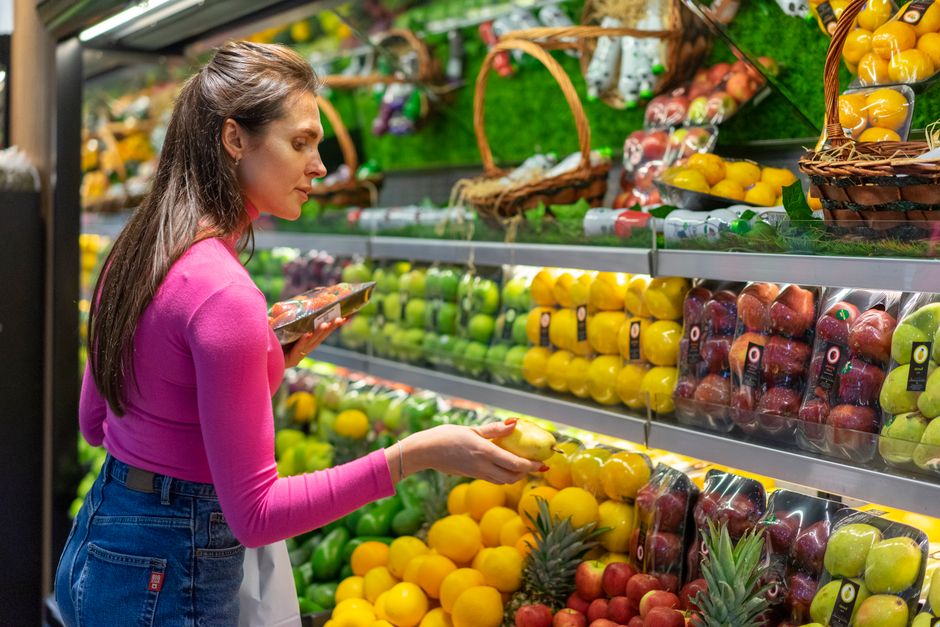
A food web maps who eats whom in an ecosystem. Consumers are the organisms that cannot make their own food, so they must eat other organisms to get energy. In a food web, consumers are the animals, fungi, and many single-celled organisms that feed on plants, other animals, or the remains of living things. They sit above producers — the plants, algae, and some bacteria that make their own food using sunlight — and they move energy through the ecosystem every time they eat.
What Are Consumers In A Food Web?
Consumers are organisms that get their energy by eating other organisms. Unlike producers, they cannot build their own food from sunlight or chemicals. Every animal you can name is a consumer, from a caterpillar to a blue whale.
The term comes from how energy flows. Producers capture energy, usually from the sun. Consumers then pass that energy along by eating. A food web is simply all the connected feeding relationships in one place — and consumers are the links that carry energy from one level to the next.
It helps to separate two ideas that often get mixed up. A food chain is a single straight line: grass to rabbit to fox. A food web is many chains woven together, because most animals eat more than one thing and are eaten by more than one thing. Real ecosystems almost always look like webs, not chains.
What Are The Different Types Of Consumers?
Ecologists sort consumers by what they eat and where they sit in the food web. The main groups are herbivores, carnivores, omnivores, and decomposers.
- Herbivores eat plants or algae. Examples include deer, rabbits, grasshoppers, and many fish.
- Carnivores eat other animals. Examples include wolves, hawks, and ladybugs.
- Omnivores eat both plants and animals. Humans, bears, and raccoons are omnivores.
- Decomposers break down dead plants and animals. Fungi and many bacteria do this work.
There is a second way to sort them: by feeding level, called a trophic level. A primary consumer eats producers. A secondary consumer eats primary consumers. A tertiary consumer eats secondary consumers. These labels are not fixed to a species. The same animal can be a primary consumer in one food chain and a secondary consumer in another, depending on what it happens to eat.
Decomposers are sometimes listed separately because they do not fit neatly into a single level. They feed on dead material from every level at once. Their role is easy to overlook and hard to overstate. Without them, dead plants and animals would pile up and the nutrients locked inside them would never return to the soil or water.
How Does Energy Move Through Consumers?
Energy moves in one direction through a food web, and most of it is lost at every step. This is one of the most important facts in ecology.
When a consumer eats, only a fraction of the energy in its food becomes new body tissue. The rest is used for movement, body heat, and basic life processes, or leaves as waste. In most ecosystems, only about 10 percent of the energy at one level passes to the next. This pattern is often called the 10 percent rule, and it is a widely taught approximation rather than a fixed law — the real figure varies by ecosystem and organism.
Two things follow from this. First, food chains are usually short, often four or five levels at most, because there is not enough energy left to support more. Second, the number of organisms at each level tends to shrink as you move up. It takes a great many plants to feed a smaller number of herbivores, and fewer still to feed the carnivores above them.
This is also why large predators are rare and need vast territories. A single wolf or eagle requires a huge base of plants and prey beneath it. It is a direct consequence of energy loss, not a quirk of any one species.




How Do Consumers Differ From Producers And Decomposers?
Producers, consumers, and decomposers are the three main roles in a food web, and the difference comes down to where each gets its energy.
Producers make their own food. Plants, algae, and some bacteria use sunlight to build sugars through photosynthesis. A smaller group of bacteria use chemical energy instead, in a process called chemosynthesis. Producers form the base of nearly every food web on Earth.
Consumers cannot make their own food, so they eat producers or other consumers. Decomposers also eat other organisms, but they specialize in dead material. They break down fallen leaves, dead animals, and waste, releasing nutrients that producers can use again.
Some organisms blur these lines. A Venus flytrap is a plant that photosynthesizes but also traps insects. Certain single-celled organisms can both photosynthesize and eat. Nature rarely sorts itself into tidy boxes, and food webs are a human model for describing relationships that are often messier in reality.
Why Do Consumers Matter In An Ecosystem?
Consumers keep ecosystems working, and their effects reach well beyond simply eating.
Herbivores control plant growth. Remove them and plants can spread unchecked, crowding out other species. Carnivores control herbivore numbers. Remove the predators and herbivores can overgraze, damaging the plants and everything that depends on them. This pattern has been observed repeatedly in real ecosystems, though the exact outcome depends on the specific species and setting.
Consumers also move nutrients and energy across a landscape. A fish that eats in a lake and is caught by a bird carries nutrients onto land. A whale that feeds in deep water and surfaces to release waste moves nutrients upward. These transfers connect habitats that might otherwise be separate.
Pollinators are consumers too, and their feeding has a direct effect on plant reproduction. Many flowering plants depend on insects, birds, or bats to move pollen. When pollinator numbers fall, those plants can struggle to reproduce.
When a consumer disappears, the effects can ripple through the whole web. This is why ecologists pay close attention to what are called keystone species — organisms whose removal causes outsized change. The concept is well established, though which species qualify in a given ecosystem is often debated.
Where Do Humans Fit In A Food Web?
Humans are omnivores and sit at multiple levels of the food web at once. We eat plants, so we act as primary consumers. We eat animals that ate plants, so we also act as secondary consumers. We eat fish that ate other fish, which makes us tertiary consumers in those chains.
Few species feed at so many levels so flexibly. Humans also do something most consumers cannot: we farm. Agriculture lets us grow producers at scale and raise animals to eat them, which changes how energy flows through the human food supply compared with a wild food web.
Our position near the top of many food chains has a practical consequence. Because energy is lost at each step, eating lower on the food chain generally requires less land and energy to produce the same amount of food. This is a well-established point in food and environmental science, separate from any personal dietary choice.
Humans also accumulate certain pollutants more than organisms below us. Some contaminants build up in body tissue and become more concentrated as they move up a food chain, a process called biomagnification. This is why some large predatory fish carry higher levels of certain contaminants than smaller fish. It is a documented effect, though the specifics depend on the pollutant and the ecosystem.
What Happens When A Consumer Is Removed?
Removing a consumer rarely affects just one other species. Because food webs are interconnected, the change travels along multiple paths.
Sometimes the effect is a cascade. When a top predator is removed, its prey can increase, which then puts more pressure on the plants or animals that prey feeds on. This kind of chain reaction, called a trophic cascade, has been documented in several ecosystems.
Other times the web adjusts. Another species may take over the missing role, or the effect may fade as other relationships shift. The outcome depends on how many connections the lost species had and whether anything else can fill its place.
This is why ecosystems can be both resilient and fragile. A web with many overlapping connections can absorb some losses. A web with few connections can be thrown off by a single change. The number and strength of those connections matter more than the total count of species.
Frequently Asked Questions
What are consumers in a food web?
Consumers are organisms that cannot make their own food and must eat other organisms for energy. They include all animals, plus fungi and many single-celled organisms.
What are the 4 types of consumers?
The four main types are herbivores, carnivores, omnivores, and decomposers. Ecologists also sort consumers by feeding level, such as primary, secondary, and tertiary consumers.
Is a human a consumer?
Yes, humans are consumers and specifically omnivores, meaning we eat both plants and animals. We feed at several trophic levels depending on what we eat.
What is the difference between a food chain and a food web?
A food chain is a single straight line of who eats whom, while a food web is many overlapping chains connected together. Real ecosystems are almost always webs, not single chains.
