
Probiotics are live microorganisms that can offer health benefits when you take enough of them. Whether you should take them with food or on an empty stomach depends on the specific product, the strain, and how your body reacts. The short answer is that taking most probiotics with or just before a meal is the safer and often more effective choice, but the evidence is not the same for every product on the shelf.
Why Does Food Matter for Probiotic Survival?
Probiotics have to survive a harsh journey. They travel through your stomach, which is full of strong acid designed to kill bacteria. Then they enter the small intestine, where bile salts and digestive enzymes create another challenging environment.
Food changes that environment. When you eat, your stomach produces acid to break down the meal. But the food itself also buffers the acid, raising the pH level in your stomach temporarily. A higher pH means a less acidic environment. That gives probiotic bacteria a better chance of passing through alive and reaching the intestines where they can do their work.
Some research suggests that taking probiotics with a meal that contains some fat improves survival rates. Fat may protect the bacteria as they pass through the digestive tract. This is not a universal rule for every strain, but it is a pattern seen in several studies.
What Does the Research Actually Show?
Clinical studies have tested different timing strategies. Some research published in peer-reviewed journals found that taking a specific probiotic strain with a meal or 30 minutes before a meal led to better survival compared to taking it on a completely empty stomach. Other studies have found that certain strains, particularly enteric-coated products, survive well regardless of when you take them.
The evidence is not uniform. Some strains are naturally more resistant to stomach acid than others. Lactobacillus and Bifidobacterium species, the most common probiotic types, generally fare better when taken with food. But even within these groups, individual strains differ.
One important distinction: the research on timing is mostly about survival, not about health outcomes. A probiotic that survives better in the gut does not automatically mean you will feel better or that a specific condition will improve. The link between survival and clinical benefit is assumed but not always proven in large human trials.
Should You Take Probiotics With Food or on an Empty Stomach?
For most over-the-counter probiotic supplements, taking them with a meal is the practical choice. The meal buffers stomach acid and gives the bacteria a protective shield. This is especially true if your probiotic contains Lactobacillus or Bifidobacterium strains, which are common in yogurts, capsules, and powders.
Some manufacturers recommend taking their specific product on an empty stomach. This is usually because they have tested their strain and found it survives well without food, or because their capsule coating protects the bacteria. If the label gives a specific instruction, following it is reasonable since the company likely tested that format.
For Saccharomyces boulardii, a yeast-based probiotic, timing appears less critical. Yeast is naturally more resistant to stomach acid than bacteria. Some clinicians recommend taking it between meals, but the evidence that this matters for outcomes is thin.
The most important factor is consistency. Taking your probiotic at the same time each day, with or without food, helps you build a routine. Missing doses because you are confused about timing is worse than choosing a slightly less optimal time.

What About Probiotic Foods Like Yogurt and Kefir?
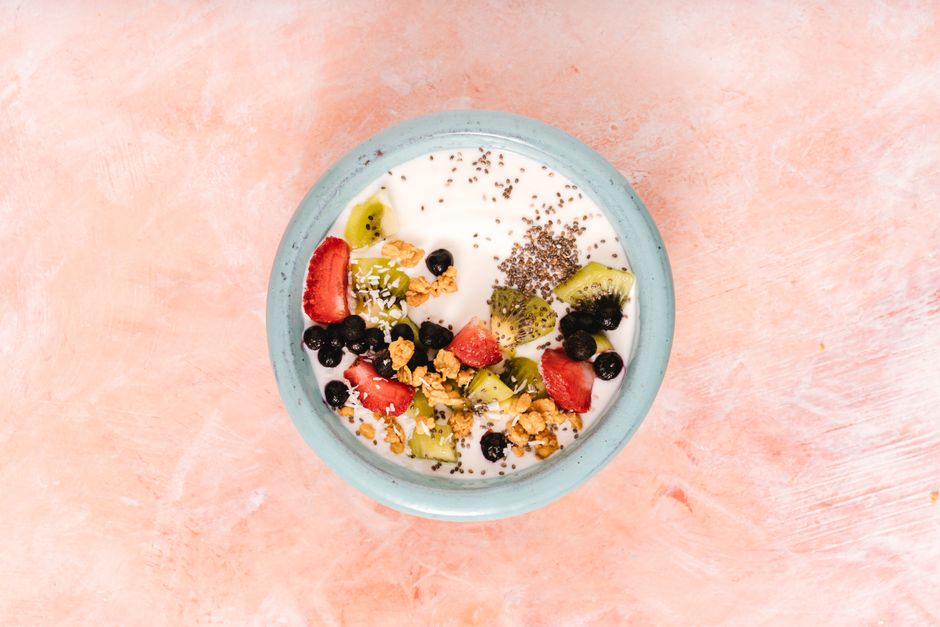
Probiotic foods are a different situation. Yogurt, kefir, and fermented vegetables already contain food matrices. The milk, fat, and proteins in yogurt buffer your stomach acid naturally. You do not need to think about timing with these foods because the food is already part of the delivery system.
Fermented foods also contain a wider variety of live organisms than most supplements. The doses are often lower and less standardized. But for general gut health, incorporating fermented foods into your regular diet is a reasonable approach that does not require the same timing precision as supplements.
Does the Type of Probiotic Change the Answer?
Yes. Probiotic products vary widely in strain, dose, and formulation. A high-quality supplement with an enteric coating may release bacteria directly in the intestines, bypassing the stomach acid problem entirely. In that case, food timing matters less.
Spore-based probiotics, such as Bacillus coagulans, are also more resistant to stomach acid because they exist in a dormant spore form. These products often work well on an empty stomach.
Liquid probiotics and powders that you mix into cold water or food are more vulnerable. Taking these with a meal makes sense because the liquid dilutes the acid and the food provides protection.
Read the label carefully. Some products say “take with food.” Others say “take on an empty stomach.” These instructions are not marketing fluff. They usually reflect how the manufacturer tested the product. When the label is silent, taking the probiotic with a meal is the evidence-based default.
Are There Any Risks With Taking Probiotics With Food?
For healthy adults, taking probiotics with food carries minimal risk. The bacteria are generally considered safe. The most common side effects are mild digestive symptoms like gas, bloating, or changes in bowel habits during the first few days. These usually resolve on their own.
One consideration is that taking certain probiotics with very hot food or drinks can kill the live organisms. Do not mix your probiotic powder into hot tea, coffee, or soup. Cold or room-temperature foods and liquids are safer choices.
People with weakened immune systems, those undergoing chemotherapy, or individuals with severe pancreatitis should talk to their doctor before starting any probiotic. In rare cases, live bacteria can cause infections in these vulnerable populations. This is not a reason to avoid probiotics entirely, but it is a reason to seek medical guidance first.
What If You Take Antibiotics?
Antibiotics kill harmful bacteria, but they also kill beneficial ones. Many people take probiotics during or after a course of antibiotics to reduce digestive side effects and help restore gut flora.
Timing here is important. Taking a probiotic at the exact same moment as your antibiotic dose is counterproductive. The antibiotic will likely kill the probiotic bacteria before they can do any good. A common clinical recommendation is to take the probiotic at least two hours apart from the antibiotic dose. Some clinicians suggest taking the probiotic with a meal and the antibiotic at a different time of day.
The evidence for probiotics reducing antibiotic-associated diarrhea is reasonably strong, particularly for specific strains of Lactobacillus rhamnosus and Saccharomyces boulardii. But the research is not uniform across all products. If you are taking antibiotics, ask your pharmacist or doctor whether a specific probiotic product has evidence behind it.
How Long Should You Take Probiotics?
Probiotics are not like a vitamin you take for a few days. They do not permanently colonize your gut. Most strains pass through your system within one to three weeks after you stop taking them.
For general digestive health, some people take probiotics daily for months or years. For specific conditions like antibiotic-associated diarrhea, a shorter course of one to two weeks may be sufficient. For conditions like irritable bowel syndrome, some clinical trials have used courses of eight to twelve weeks.
No clinical guidelines currently exist that specify an exact duration for most probiotic uses. The evidence base is still developing. A reasonable approach is to take a probiotic consistently for at least four weeks and then assess whether you notice any difference. If you do not notice a benefit, continuing is unlikely to help.
Frequently Asked Questions
Is it better to take probiotics in the morning or at night?
No strong evidence shows that morning versus night matters. What matters more is taking the probiotic with or near a meal to improve bacterial survival.
Can I take probiotics with hot coffee or tea?
No. Hot liquids above about 120°F can kill live probiotic organisms. Take your probiotic with cold or room-temperature food and drink instead.
Should I take probiotics with food if I have acid reflux?
Taking probiotics with a meal is generally fine for people with acid reflux. If you take acid-reducing medications, your stomach is already less acidic, which may help probiotic survival regardless of food timing.
Do I need to refrigerate my probiotics?
Some probiotic strains require refrigeration to stay viable, while others are shelf-stable. Check the label for storage instructions and follow them to ensure the organisms remain alive.
