
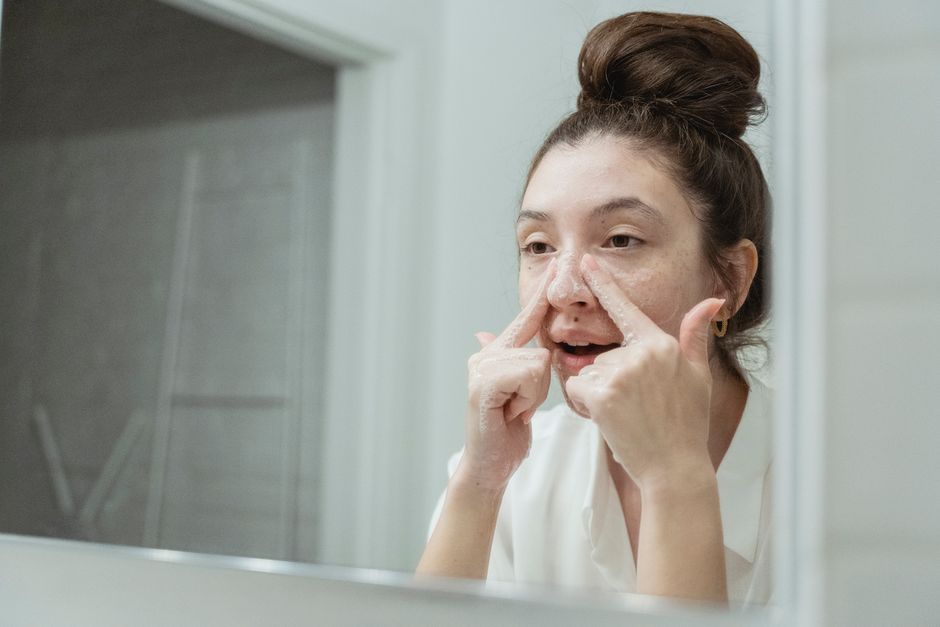
Popping a whitehead is tempting, but it is almost never a good idea. The short answer is no—you should not pop whiteheads. Doing it yourself risks scarring, infection, and making the blemish last longer than it would have if you left it alone. While it feels satisfying in the moment, the visible damage that follows is rarely worth the brief relief.
What Exactly Is a Whitehead?
A whitehead is a type of acne called a closed comedo. It forms when a hair follicle becomes blocked with oil and dead skin cells. The pore stays closed at the surface, which is why it appears as a small white or flesh-colored bump.
The white material inside is not “dirt.” It is a mix of sebum, dead skin cells, and bacteria. Specifically, the bacteria Cutibacterium acnes thrives in this environment. When you squeeze the bump, you are forcing that mixture deeper into the skin or spreading it to surrounding pores.
Not every bump on your face is a whitehead. Milia are tiny, hard, white cysts that look similar but contain keratin, not oil. They do not have a pore opening and cannot be popped at all. If you are unsure what you are dealing with, a dermatologist can tell you in seconds.
What Happens When You Pop a Whitehead?
When you squeeze a whitehead, you are applying physical force to already inflamed tissue. The skin around the pore is fragile. That force does not stay contained to the pore itself—it spreads to the surrounding dermis.
Several things can go wrong:
- Bursting the follicle wall: The contents spill into the deeper skin layers, triggering a larger inflammatory response. A small whitehead can turn into a swollen, red cyst.
- Bacterial spread: Your fingers carry bacteria. Pushing them into an open or irritated pore introduces new microbes and can spread existing ones to adjacent pores.
- Scarring: The collagen in your skin can be damaged by the pressure. This can leave a permanent indented scar or a dark spot called post-inflammatory hyperpigmentation.
- Delayed healing: A popped whitehead often scabs over. That scab takes days to heal, whereas an untouched whitehead typically resolves on its own in a few days.
Dark spots from popped pimples are especially common in people with darker skin tones. These spots can take months to fade, even with treatment.
Is There Ever a Safe Way to Pop One?
Dermatologists do perform extractions in their offices. But the way they do it is different from what you do at home.
A professional extraction uses sterile tools. The skin is cleansed first. The esthetician or dermatologist uses a comedone extractor—a small metal tool with a loop at the end—to apply even, controlled pressure around the pore. They also know when a blemish is ready to be extracted and when it is not.
At home, you do not have that level of control. Your fingernails create uneven pressure points. Even if you wash your hands first, your nails harbor bacteria that soap does not fully remove.
Some dermatologists will tell patients that if they absolutely must pop a whitehead, there is a safer technique. It involves sterilizing a needle, gently piercing the very top of the whitehead, and using clean tissue to apply light pressure. But even this carries risk. The skin is a barrier, and breaking it always introduces some risk of infection.
The honest position is this: no method of self-extraction is risk-free. The safest choice is to let the whitehead run its course.





How Long Do Whiteheads Last If You Leave Them Alone?
An untreated whitehead typically resolves within 3 to 7 days. The body breaks down the contents of the pore and absorbs them. The bump flattens and fades without a trace in most cases.
When you pop it, you reset that timeline. The skin now has to heal a wound, not just clear a blocked pore. That healing process takes longer than the original whitehead would have. You are trading a few days of a small bump for a week or more of a scab, red mark, or scar.
This is the part most people do not realize: popping a whitehead makes it last longer, not shorter. The visible blemish persists after the contents are gone because the tissue damage takes time to repair.
What Should You Do Instead of Popping?
If you want the whitehead to go away faster, there are evidence-based options that do not involve squeezing.
Benzoyl peroxide kills the bacteria inside the pore and helps dry out the oil. It is available over the counter in strengths from 2.5% to 10%. Lower strengths are just as effective as higher ones with less irritation.
Salicylic acid helps dissolve the dead skin cells that block the pore. It is a beta hydroxy acid that penetrates oil, making it useful for whiteheads and blackheads.
Adapalene is a retinoid that was once prescription-only but is now available over the counter. It normalizes how skin cells shed, preventing the blockage from forming in the first place. It takes weeks to work, so it is not a spot treatment—it is a preventive measure.
A warm compress can help. Applying a clean, warm, damp cloth to the area for a few minutes can soften the contents of the pore. This does not guarantee the whitehead will drain, but it can help it resolve more quickly.
Hydrocolloid patches are another option. These small adhesive dressings absorb fluid from the blemish and create a barrier that keeps you from touching it. Evidence for their effectiveness is limited, but many dermatologists recommend them as a physical barrier against picking.
When Should You See a Dermatologist?
Occasional whiteheads are normal and do not require medical attention. But there are situations where a dermatologist is the right call.
If you have persistent acne that does not respond to over-the-counter treatments after several weeks, professional care can help. Prescription options include stronger topical retinoids, antibiotics, or medications like spironolactone for hormonal acne in women.
If a whitehead becomes large, painful, or deeply inflamed, it may be a nodule or cyst. These deeper lesions cannot be popped and often require prescription treatment. Attempting to squeeze them can cause significant scarring.
If you have a bump that does not go away after a few weeks, have it checked. Most bumps are acne, but not all are. A dermatologist can distinguish between a comedo, a cyst, and other skin growths.
Does Popping Whiteheads Cause More Acne?
Yes, in some cases it does. When you squeeze a whitehead, the contents can spread to the surrounding skin. The bacteria that cause acne can colonize adjacent pores, potentially creating new blemishes.
There is also the matter of the inflammation itself. Inflamed skin is more prone to developing new breakouts. The trauma from popping creates inflammation, and inflammation is a precursor to acne formation.
Popping one whitehead can create a chain reaction. The original blemish becomes worse, and two or three new ones appear nearby. This is a common experience among people who pick at their skin, and it is one reason dermatologists emphasize hands-off care.
What About the “Satisfying” Factor?
There is a psychological component to popping pimples. Many people report feeling a sense of relief or satisfaction when they extract the contents of a whitehead. This is a real phenomenon, and it is why so many people continue to do it despite knowing the risks.
For some people, this becomes a compulsive behavior called skin picking disorder, or excoriation disorder. If you find yourself unable to stop picking at your skin even when it causes visible damage, it may be worth discussing with a healthcare provider. This is not about vanity—it is a recognized condition that can be treated.
For most people, the urge to pop is momentary. Distraction, covering the blemish with a patch, or simply leaving the room can help break the cycle.
The Bottom Line on Popping Whiteheads
Popping a whitehead is never the medically recommended choice. It increases the risk of scarring, infection, and new breakouts. The whitehead will resolve on its own in a matter of days.
If you want to speed up the process, use an over-the-counter treatment containing benzoyl peroxide or salicylic acid. If acne is frequent or severe, see a dermatologist rather than managing it with your fingernails.
Your skin heals better when you leave it alone. That is not a marketing line—it is basic dermatology.
Frequently Asked Questions
Can popping a whitehead cause a scar?
Yes, popping a whitehead can cause a permanent scar. The pressure from squeezing damages collagen in the deeper layers of skin.
How long does a whitehead last if you do not pop it?
An untreated whitehead typically resolves within 3 to 7 days. Popping it usually makes the visible blemish last longer because the skin has to heal a wound.
Is it safe to pop a whitehead with a needle?
No method of self-extraction is risk-free. Even with a sterilized needle, you are breaking the skin barrier and introducing infection risk.
What is the fastest way to get rid of a whitehead without popping it?
Over-the-counter benzoyl peroxide or salicylic acid can help dry out the whitehead and speed up resolution. A warm compress may also help it clear more quickly.
