
Knowing your body fat percentage gives you a clearer picture of your health than the scale alone. The scale tells you total weight, but it cannot tell you how much of that weight is muscle and how much is fat. Body fat percentage measures the proportion of fat in your body compared to everything else, including muscle, bone, and water. This number is a more direct marker of health risks and fitness progress than body weight alone.
How Do You Work Out Body Fat Percentage at Home?
Several methods exist for estimating body fat at home. None of them are perfectly precise, but they all offer useful tracking data when used consistently. The key is to use the same method each time and take measurements under similar conditions.
Skinfold calipers are a common home option. They measure the thickness of fat at specific sites on the body, such as the abdomen, thigh, and chest. These measurements are then plugged into a formula to estimate total body fat. Accuracy depends heavily on how well you pinch the skin and how consistently you measure the same spots. It takes practice to get reliable results.
Smart scales and handheld bioelectrical impedance devices are also popular. These send a very low electrical current through the body. Fat resists the current more than muscle and water do, so the device estimates fat based on how quickly the signal travels. Hydration levels, recent food intake, and skin temperature can all shift the readings. The numbers can vary by several percentage points from day to day for reasons unrelated to actual fat loss.
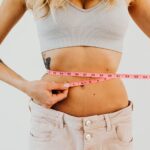
Measuring tape is the simplest tool. You can use it to calculate your waist-to-hip ratio, which is a strong indicator of where you carry fat. This ratio is not a direct body fat percentage, but it is a powerful predictor of health risk. Fat stored around the abdomen raises the risk of metabolic problems more than fat stored in the hips and thighs.
What Is the Most Accurate Way to Measure Body Fat?
The most accurate methods are not available at home. They require specialized equipment and trained personnel. These clinical methods are the gold standard for research and medical assessment.
Dual-energy X-ray absorptiometry, commonly called DEXA, is widely considered one of the most precise methods. It uses low-dose X-rays to measure bone density, lean mass, and fat mass separately. The scan takes about ten minutes and gives a detailed breakdown of where fat is distributed. DEXA is available at many medical imaging centers and some fitness facilities, but it is not a routine test.
Hydrostatic weighing is another highly accurate method. You are submerged in a tank of water while sitting on a scale. Since fat floats and muscle sinks, the technician can calculate your body density and estimate fat percentage from that. This method is very accurate but requires access to specialized equipment and is less comfortable than other options.
Air displacement plethysmography, known by the brand name Bod Pod, works on a similar principle to hydrostatic weighing. Instead of water, it uses air pressure to measure body volume. The machine calculates body density and estimates fat percentage. It is accurate and more comfortable than water submersion, but the equipment is expensive and found mainly at universities and specialized clinics.
These clinical methods are accurate, but they are not necessary for most people. If you are tracking progress over time, a consistent home method is sufficient. The goal is to see trends, not to know your exact percentage to the decimal point.
What Is a Healthy Body Fat Percentage?
Healthy ranges differ between men and women because women naturally carry more essential fat for reproductive function. Age also plays a role. Body fat tends to increase naturally as people get older even when weight stays stable.
For men, essential fat is about 2 to 5 percent of body weight. Athletes typically range from 6 to 13 percent. Fit men are often between 14 and 17 percent. Acceptable ranges for general health are 18 to 24 percent. Above 25 percent is generally considered overweight, and above 30 percent is considered obese.
For women, essential fat is about 10 to 13 percent. Athletes usually fall between 14 and 20 percent. Fit women range from 21 to 24 percent. Acceptable ranges are 25 to 31 percent. Above 32 percent is generally considered overweight, and above 38 percent is considered obese.
These numbers are general guidelines, not strict rules. A very fit person might fall above the athletic range and still be in excellent health. An older adult might be in the acceptable range but have low muscle mass. Body fat percentage is one piece of the picture, not the whole picture.
Body mass index, or BMI, is a different measurement that is often confused with body fat percentage. BMI is calculated from height and weight alone. It does not distinguish between muscle and fat. A muscular athlete can have a high BMI and a low body fat percentage. BMI is useful for population-level screening, but it cannot tell you your individual body composition.



Why Does Body Fat Distribution Matter?
Where you carry fat matters as much as how much you carry. Fat around the abdomen, called visceral fat, surrounds your internal organs. This type of fat is metabolically active and releases inflammatory substances into the bloodstream. High levels of visceral fat are linked to heart disease, type 2 diabetes, and high blood pressure.
Subcutaneous fat sits directly under the skin. It is the fat you can pinch with your fingers. While excess subcutaneous fat is not healthy, it is less dangerous than visceral fat. People who carry fat in their hips and thighs tend to have lower metabolic risk than people who carry fat in their midsection.
Measuring your waist circumference is a practical way to assess visceral fat risk. For men, a waist measurement above 40 inches indicates increased risk. For women, the threshold is 35 inches. These numbers are well-established clinical guidelines used by healthcare providers to screen for metabolic risk.
Waist-to-hip ratio is another useful calculation. Divide your waist measurement by your hip measurement. A ratio above 0.90 for men and above 0.85 for women indicates increased health risk. This measurement is simple, requires only a tape measure, and is a strong predictor of cardiovascular risk.
How Often Should You Measure Body Fat?
Once per week is a reasonable frequency for tracking. Measuring more often than that introduces noise from daily fluctuations in water weight, food intake, and hydration. These daily swings can easily mask real changes in body fat.
Take measurements at the same time of day, ideally in the morning before eating or drinking. If you are using a smart scale, use it before exercise and after using the bathroom. Consistency in timing matters more than the specific time you choose.
Look at the trend over four to eight weeks rather than focusing on any single reading. Body fat changes slowly. A healthy rate of fat loss is about one to two pounds per week, which translates to roughly one percent of body fat per month for most people. Faster loss is usually water weight or muscle loss, not fat loss.
Photographs and how your clothes fit are useful complements to numbers. The scale might not move for weeks while your body composition shifts. Progress photos taken under consistent lighting and wearing the same clothing can show changes that the numbers miss.
What Method Should You Actually Use?
For most people, a smart scale or measuring tape is the most practical option. Smart scales are convenient and track automatically. Measuring tape is free and requires no equipment beyond a tape measure you likely already own.
Skinfold calipers are more accurate than smart scales when used correctly, but they require practice and a consistent technique. If you are willing to learn the proper pinch sites and practice regularly, they can be a reliable home method.
DEXA scans are worth considering if you want a detailed baseline measurement. Getting one scan can tell you exactly where you stand. Repeating it every six to twelve months can track changes with high precision. The cost is typically not covered by insurance and can range from 50 to 150 dollars per scan.
Choose one method and stick with it. Switching between methods makes it impossible to compare results. The specific number matters less than the direction of the trend. A consistent method used over months will show you whether you are moving in the right direction.
Frequently Asked Questions
What is the easiest way to measure body fat at home?
A measuring tape for waist circumference is the easiest and most reliable home method. Smart scales are convenient but can vary with hydration levels.
Is BMI the same as body fat percentage?
No. BMI is calculated from height and weight only and does not distinguish between muscle and fat. Body fat percentage directly measures the proportion of fat in your body.
How fast can you realistically lower your body fat percentage?
Most people can expect to lose about one percent of body fat per month with consistent diet and exercise. Faster rates usually involve losing water weight or muscle mass.
What is the most accurate body fat measurement available?
DEXA scans are widely considered the most accurate clinical method available. Hydrostatic weighing and air displacement plethysmography are similarly precise but less commonly available.
