
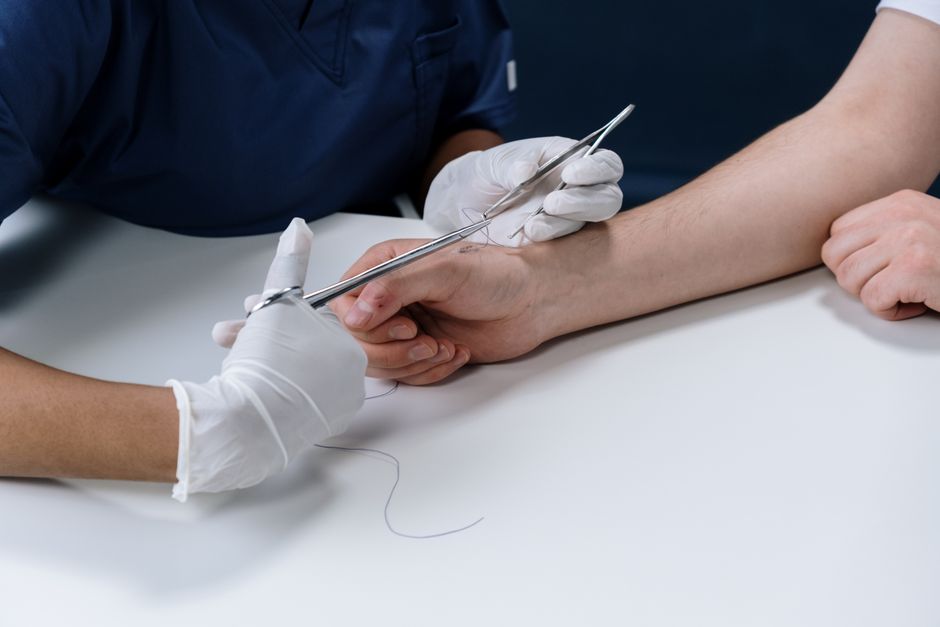
Most doctors and wound care specialists recommend keeping stitches covered for the first 24 to 48 hours. After that, the answer depends on the wound location, how it is healing, and what your doctor instructed. The old advice to let stitches “air out” is mostly outdated. Keeping a wound covered protects it from dirt and bacteria while it builds new tissue.
Why Keeping Stitches Covered Helps Healing
A covered wound stays moist. That moisture matters more than most people realize. Research consistently shows that wounds heal faster in a moist environment than when they dry out and form a hard scab. A scab is not a sign of ideal healing. It is a sign the wound dried out.
Covering stitches also serves a basic purpose: it blocks bacteria. Your hands touch door handles, phones, and counters all day. If you touch your stitches, you transfer those germs directly into an open wound. A clean bandage is a physical barrier between your healing skin and the world.
Another reason to keep stitches covered is protection from friction. Clothing rubs against wounds. A bandage reduces that rubbing. It also prevents you from scratching or picking at the stitches, which is a common cause of infection and scarring.
When You Can Leave Stitches Uncovered
There are situations where leaving stitches uncovered is fine. If your doctor says the wound is sealed and dry, you may not need a bandage. This often happens after a few days.
Small wounds on areas that stay clean and dry can go uncovered. A tiny stitch line on your face, for example, may not need a bandage once the initial healing period passes. The face has excellent blood flow, which speeds healing.
The key question is whether the wound is fully closed. Once the skin has sealed together and there is no drainage, the risk of infection drops significantly. At that point, covering becomes optional. But even then, many doctors still recommend a light bandage to protect the area from sun and friction.
Should I Keep My Stitches Covered Or Uncovered Overnight
Keep stitches covered while you sleep. During sleep, you do not control your movements. You may roll over, rub your face on a pillow, or scratch without waking up. A bandage protects the wound from all of that.
Sleep is also when your body does most of its repair work. Keeping the wound covered overnight maintains that moist healing environment for eight straight hours. That uninterrupted coverage supports tissue growth.
If your doctor gave you specific instructions about overnight care, follow those. Some wounds need to stay covered until the stitches come out. Others only need a few days of coverage. The instructions you received after the procedure are based on your specific situation.





How Often Should You Change the Bandage
Change the bandage as often as your doctor instructed. If you do not have specific instructions, once a day is a reasonable standard. Change it sooner if the bandage gets wet, dirty, or soaked through with drainage.
When you change the bandage, wash your hands first. Then gently clean the wound with mild soap and water. Pat it dry with a clean towel. Do not rub. Apply a thin layer of antibiotic ointment only if your doctor recommended it. Not all wounds need ointment, and overuse can cause skin irritation.
Watch for signs of infection during each change. Redness spreading beyond the immediate wound edge, warmth, swelling, pus, or increasing pain are warning signs. A small amount of clear or slightly pink drainage in the first day or two is normal. Anything yellow, green, or foul-smelling is not.
What Happens If You Get Stitches Wet
You can shower with stitches, but you cannot soak them. Standing under running water is generally fine after the first 24 hours. Taking a bath, swimming, or sitting in a hot tub is not fine. Soaking can soften the skin, open the wound, and introduce bacteria.
Keep the area as dry as possible during showers. Some doctors recommend covering stitches with a plastic bag or a waterproof bandage. If the bandage gets wet, remove it, dry the area, and put on a fresh one. Do not leave a wet bandage against the wound. A wet bandage is a breeding ground for bacteria.
If your stitches are in a place that gets wet often, like your hands, be extra careful. Dry the area thoroughly after washing. Change the bandage any time it becomes damp.
How Long Do Stitches Need to Stay In
Stitches stay in for different lengths of time depending on where they are. Facial stitches often come out in 3 to 5 days. Stitches on the scalp may stay for 7 to 10 days. Stitches over joints, like knees or elbows, may stay for 10 to 14 days because those areas are under tension.
Your doctor will tell you when to have them removed. Do not remove your own stitches. Do not leave them in longer than instructed. Stitches left in too long can leave permanent marks. Stitches removed too early can let the wound split open.
The type of stitch matters too. Dissolvable stitches break down on their own over time. Non-dissolvable stitches need to be removed by a healthcare professional. Your doctor will tell you which kind you have.
What Not to Do With Stitches
Do not pick at the stitches or the scab. Picking pulls the wound edges apart and increases scarring. Do not apply hydrogen peroxide or rubbing alcohol directly to the wound. These can damage new tissue and slow healing. Mild soap and water is the safest cleaning method.
Do not use makeup, lotion, or other cosmetics on or near the stitches unless your doctor approved it. These products can introduce bacteria and irritate the healing skin. Do not expose fresh stitches to direct sunlight. Sun exposure can darken scar tissue permanently. Keep the area covered or use sunscreen once the wound is closed.
Do not ignore signs of infection. If the area becomes increasingly red, swollen, painful, or starts draining pus, contact your doctor. An infected wound needs medical attention. Waiting can turn a minor problem into a serious one.
Frequently Asked Questions
How long should I keep my stitches covered?
Keep stitches covered for at least 24 to 48 hours after the procedure. After that, follow your doctor’s specific instructions, which may depend on the wound location and healing progress.
Can I leave my stitches uncovered to let them breathe?
Wounds do not need to “breathe” to heal properly. Keeping stitches covered protects them from bacteria and maintains the moist environment that supports faster healing.
Is it safe to shower with stitches?
Showering is generally safe after the first 24 hours, but soaking in a bath, pool, or hot tub is not. Keep the wound as dry as possible and change the bandage if it gets wet.
What are the signs of an infected stitch wound?
Watch for spreading redness, warmth, swelling, pus, or increasing pain around the stitches. Contact your doctor if any of these signs appear.
