
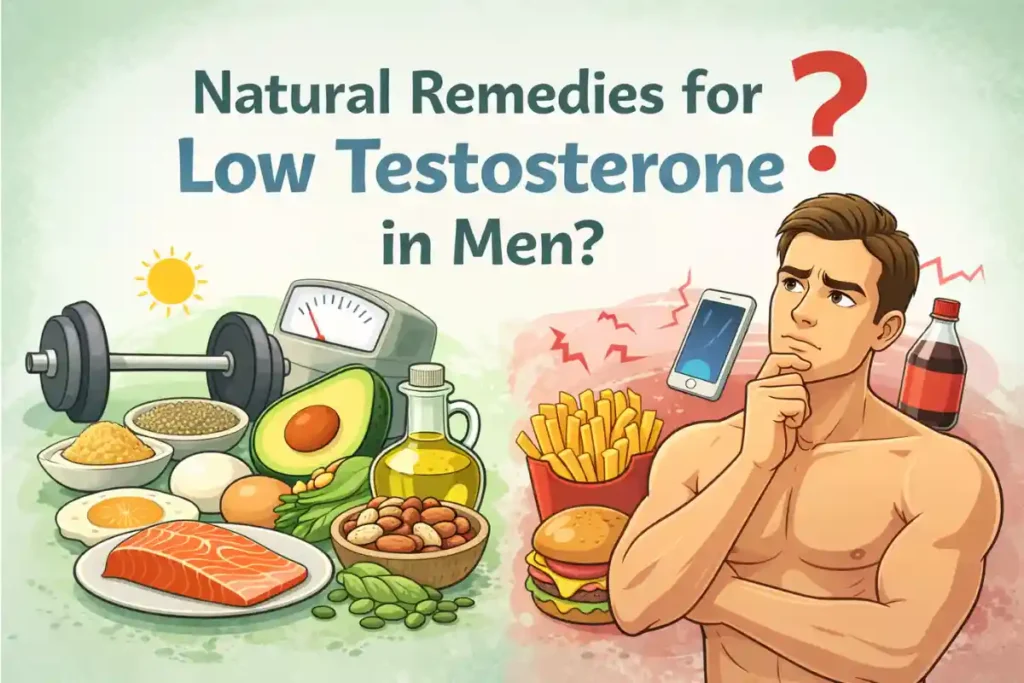
Natural remedies for low testosterone in men include sleep improvement, resistance training, fat loss, and correcting nutrient deficiencies. These methods support the body’s natural hormone production rather than artificially increasing levels. Most changes improve testosterone gradually over weeks, not instantly.
Key Takeaways
- Testosterone is restored, not artificially boosted — most natural methods remove suppression rather than increase levels beyond normal.
- Sleep and body fat have the biggest impact because they directly control hormone production and balance.
- Strength training works only when structured — random workouts without progression do not trigger meaningful hormonal changes.
- Diet supports production but cannot override poor habits like sleep deprivation or chronic stress.
- Supplements matter only when correcting deficiencies — they are not a primary solution.
- Consistency over weeks beats intensity over days — hormone changes follow patterns, not quick fixes.
What are the most effective natural remedies for low testosterone in men?
The most effective natural remedies are not supplements or quick fixes. They are lifestyle changes that directly influence hormone production at the biological level.
Here are the only methods that consistently show real impact:
1. Sleep 7–8 Hours Consistently
Testosterone is produced mostly during deep sleep. Cut sleep short, and production drops fast.
A study in the Journal of the American Medical Association (2011)1Effect of 1 Week of Sleep Restriction on Testosterone Levels in Young Healthy Men, Jama Network. found that men sleeping 5 hours per night had up to a 10–15% drop in testosterone within one week. That’s not subtle.
Most people ignore this because it sounds simple. That’s a mistake.
2. Strength Training (Not Just “Exercise”)
Lifting weights signals the body to maintain and produce testosterone.
- Focus on compound lifts (squats, deadlifts, presses)
- Train 3–4 times per week
- Use moderate to heavy loads
Random gym sessions don’t do much. Structure matters.
A review in Sports Medicine (2012)2Hormonal Responses and Adaptations to Resistance Exercise and Training, Sports Medicine. shows resistance training produces a measurable hormonal response, especially when intensity is high.
3. Reduce Body Fat Percentage
Excess body fat is not just stored energy. It actively disrupts hormones.
Fat tissue converts testosterone into estrogen through an enzyme called aromatase. The higher the body fat, the stronger this effect.
Research from Endocrine Reviews (2018)3The Science of Obesity Management: An Endocrine Society Scientific Statemente, Endocrine Reviews. shows a clear link between obesity and lower testosterone levels.
Even a 5–10% weight loss can improve levels noticeably.
4. Fix Vitamin D and Zinc Deficiency
These are not “boosters.” They are baseline requirements.
- Vitamin D acts like a hormone in the body
- Zinc is required for testosterone production
If levels are low, testosterone often drops. Fixing the deficiency brings it back toward normal.
5. Reduce Chronic Stress (Lower Cortisol)
Stress doesn’t just affect mood. It directly suppresses testosterone.
Cortisol and testosterone have an inverse relationship. When one stays high, the other stays low.
This is why:
- Poor sleep
- Overworking
- Constant mental pressure
…often show up as low energy and low libido.
Quick Comparison: What Actually Works vs What’s Overhyped
| Method | Impact Level | Reality |
|---|---|---|
| Sleep | ⭐⭐⭐⭐⭐ | Most powerful and ignored |
| Fat loss | ⭐⭐⭐⭐⭐ | Direct hormonal effect |
| Strength training | ⭐⭐⭐⭐ | Requires consistency |
| Diet & nutrients | ⭐⭐⭐ | Support role |
| Supplements | ⭐⭐ | Minimal unless deficient |
Here’s the part most articles avoid saying clearly: You are not “boosting” testosterone beyond normal levels. You are restoring what your lifestyle is suppressing.
That distinction matters.
Quick Takeaway: Sleep, fat loss, and resistance training drive most testosterone improvement; everything else plays a smaller supporting role.
How can I increase my testosterone levels naturally?
You increase testosterone naturally by removing the things that suppress its production and supporting the conditions your body needs to produce it.
That’s it. No tricks. No hacks.
The Simple System Most People Miss
This is called the HPT axis (hypothalamic–pituitary–testicular axis).
- The brain sends a signal (LH hormone)
- The testes respond by producing testosterone
- The system adjusts constantly based on your environment
When your lifestyle is off, this system downregulates. Most men don’t have a production failure. They have a signal problem.
Sleep loss weakens the signal. Body fat shifts hormone balance. Chronic stress blocks production through cortisol. Nutrient deficiencies limit output even when signaling is intact. Each factor alone matters. Combined, they compound.
This is where common advice falls apart. Lists of “10 ways to boost testosterone” treat every factor equally. The body does not.
What actually works follows a clear order:
- Sleep stabilizes hormonal signaling
- Fat loss reduces hormonal disruption
- Training reinforces production demand
- Diet supports the system
- Supplements fill gaps if needed
Reversing this order is why people see no results. They start with supplements and ignore the system that controls everything.
There’s a consistent pattern across research: small improvements in sleep or body composition can produce measurable hormonal changes. But inconsistent effort across multiple areas produces almost nothing.
What foods boost testosterone?
Foods support testosterone production. They do not directly increase it.
The role of diet is often exaggerated because it’s easier to sell “foods that boost testosterone” than to explain hormonal regulation properly.
The only categories that matter are those tied to hormone production.
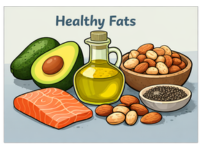
Healthy Fats
Healthy fats come first. Testosterone is a steroid hormone derived from cholesterol, which means extremely low-fat diets can reduce production.
A study in The Journal of Clinical Endocrinology & Metabolism (2016) found that men consuming higher-fat diets maintained better testosterone levels compared to those on very low-fat intake. This doesn’t mean high-fat diets increase testosterone indefinitely. It means cutting fats too aggressively can lower it.
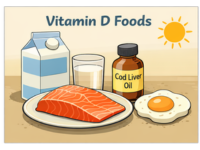
Vitamin D
Vitamin D functions more like a hormone than a vitamin. Low levels are strongly associated with lower testosterone.
Research in Hormone and Metabolic Research (2011) showed higher testosterone levels in men with adequate vitamin D status. Food helps, but sunlight remains the most effective source.
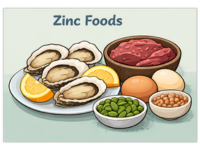
Zinc
Zinc supports testosterone synthesis, but only up to a point. Deficiency reduces production. Adequate intake restores it. Excess intake does not keep increasing levels.
Magnesium
Magnesium plays an indirect role by improving sleep and reducing stress. Its effect is secondary, but still relevant.
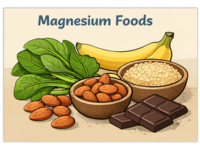
| Food Category | Function | Real Impact |
|---|---|---|
| Healthy fats | Hormone building | Necessary baseline |
| Vitamin D | Hormone regulation | Moderate |
| Zinc | Production support | Only if deficient |
| Magnesium | Sleep/stress support | Indirect |
| “Superfoods” | Marketing term | Minimal |
The real issue isn’t food selection. It’s diet structure.
Men trying to lose weight often reduce calories too aggressively, cut fats, and increase training volume at the same time. That combination suppresses testosterone quickly. Short-term fat loss improves hormones. Extreme dieting damages them.
Balanced diets outperform extreme ones. Not because they are perfect, but because they are sustainable.





What are the best exercises to boost testosterone naturally?
The best exercises for testosterone are short, intense, resistance-based movements that recruit large muscle groups.
- Strength training: Strength training is the primary driver. Compound lifts such as squats, deadlifts, and presses create a stronger hormonal response than isolated movements. The goal is not exhaustion. It is a stimulus. A typical structure—3 to 4 sessions per week using moderate to heavy loads—works because it balances intensity with recovery. Without recovery, even effective training becomes stressful.
- HIIT: High-intensity interval training can support testosterone, but only in moderation. Short bursts of effort under controlled volume are effective. Excessive HIIT shifts the body toward stress, which cancels the benefit. Where most people fail is not in what they do, but in what they overdo.
- Cardio: Long-duration cardio, especially when frequent, can increase cortisol and reduce testosterone over time. This is well-documented in endurance athletes. The issue is not cardio itself, but volume and recovery.
Random training is another problem. Without progression or structure, there is no signal for the body to adapt.
| Training Type | Effect | Reality |
|---|---|---|
| Strength training | High | Most effective long-term |
| HIIT | Moderate | Useful in moderation |
| Light cardio | Neutral | Minimal effect |
| Long endurance cardio | Negative | Can suppress levels |
| Unstructured workouts | None | No adaptation |
Intensity matters more than duration. Consistency matters more than variety.
How to build testosterone naturally step by step?
Building testosterone naturally requires a sequence. Not effort. Not motivation. Sequence.
Start with sleep. Seven to eight hours per night, consistent timing. This stabilizes hormonal signaling quickly, often within days.
Once sleep improves, add structured strength training. Three to four sessions per week focused on compound lifts are enough. Longer sessions do not produce better results.
Diet comes next. Avoid aggressive calorie restriction. Include healthy fats, maintain adequate protein, and keep intake consistent. Most hormonal issues during fat loss come from doing too much too fast.
Stress management is ongoing. Daily movement, sunlight, and breaks from constant work are enough. No complex routines are required.
Supplements come last, and only if deficiencies exist.
The timeline is slower than most expect:
- Sleep changes → noticeable within days
- Energy → 1–2 weeks
- Strength → 3–6 weeks
- Testosterone → 4–12 weeks
This delay is where most people quit. Not because the system doesn’t work, but because they stop before it does.
There is a clear pattern: fix sleep, training improves; training improves, body composition improves; body composition improves, testosterone rises. Break that chain, and progress slows.
Most people fail by doing everything at once and sustaining nothing.
Final Thought
Most men looking for natural remedies for low testosterone are chasing the wrong solution. The problem is rarely a lack of supplements. It’s a lifestyle that suppresses production. Fix that, and testosterone usually follows.
FAQs
Can you increase testosterone naturally?
Yes, lifestyle changes like sleep improvement, resistance training, and fat loss can increase testosterone if levels are suppressed. These methods restore natural production rather than push levels beyond normal biological limits.
What is the fastest way to boost testosterone?
Improving sleep is the fastest change, with measurable effects within days. However, meaningful and lasting increases typically take several weeks as body composition and hormonal balance adjust gradually.
Do testosterone boosters actually work?
Most over-the-counter testosterone boosters show limited evidence of significant impact. Some ingredients may help if a deficiency exists, but lifestyle changes consistently produce stronger and more reliable results.
At what age does testosterone start to drop?
Testosterone levels typically begin to decline after age 30 at a gradual rate. The decline becomes more noticeable after 40, especially when combined with poor sleep, increased body fat, and chronic stress.
Scientific References
- 1Effect of 1 Week of Sleep Restriction on Testosterone Levels in Young Healthy Men, Jama Network. ↩︎
- 2Hormonal Responses and Adaptations to Resistance Exercise and Training, Sports Medicine. ↩︎
- 3The Science of Obesity Management: An Endocrine Society Scientific Statemente, Endocrine Reviews. ↩︎
