
The Ishihara test is the most widely used screening tool for color vision deficiency in the world. It uses a series of plates filled with colored dots to reveal numbers or shapes that people with normal color vision can see, but those with a deficiency cannot. The test is quick, simple, and effective at identifying the most common forms of color blindness, particularly red-green deficiencies.
How Do Ishihara Plates Work?
Each Ishihara plate is built on a specific visual trick. The background is made of many small dots in various colors and sizes. Within that background, a number or shape is formed by dots of a different color. The trick is that the colors chosen are ones that people with normal vision can easily separate, but people with certain color deficiencies cannot.
For example, one common plate shows a number formed by red dots against a background of green dots. To someone with normal vision, the number pops out clearly. To someone with a red-green deficiency, the dots all blend together into a single confusing field. The number simply disappears.
There are also “hidden digit” plates and “transformation” plates. In a hidden digit plate, only a person with a color deficiency can see the number. In a transformation plate, a person with normal vision sees one number, while a person with a deficiency sees a different one. These variations help the test catch different types and severities of color blindness.
What Does the Ishihara Test Actually Diagnose?
The Ishihara test screens for red-green color vision deficiency. This is the most common type, affecting about 8 percent of men and 0.5 percent of women of Northern European descent. It is an inherited condition linked to the X chromosome, which explains why it is far more common in males.
The test does not screen for blue-yellow color vision deficiency, which is much rarer. It also does not diagnose complete color blindness, known as achromatopsia, where a person sees no color at all. Those conditions require different testing methods.
It is important to understand that the Ishihara test is a screening tool, not a full diagnostic workup. It tells you whether a red-green deficiency is likely present. It does not tell you exactly how severe the deficiency is or precisely which type of cone cells are affected. For that level of detail, a more comprehensive test like the Farnsworth-Munsell 100 Hue test is used.
How Is the Test Performed?
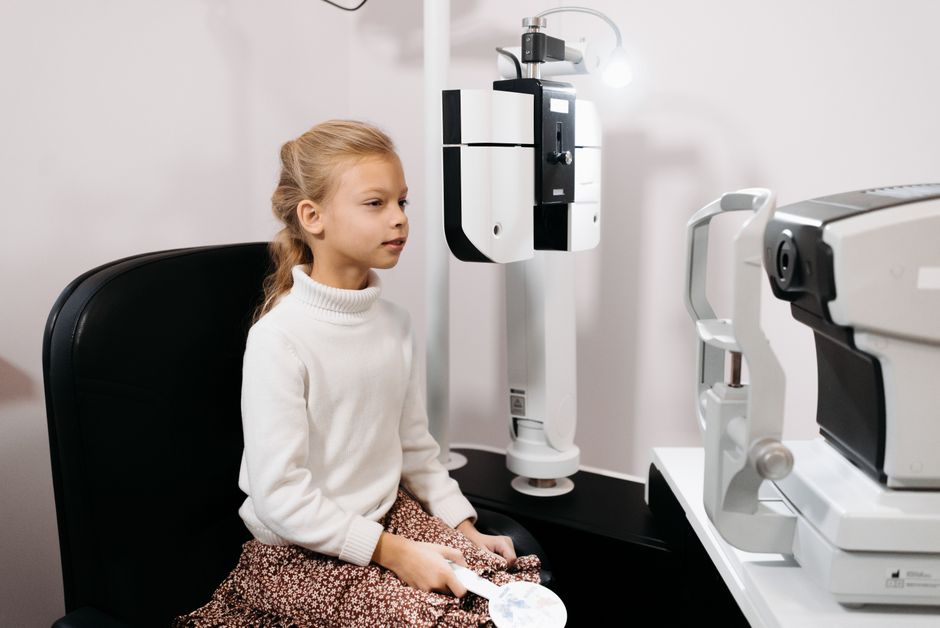
The test is usually done in a doctor’s office, an optometrist’s clinic, or a school health screening. You sit in a chair with the test booklet placed at a comfortable reading distance. Each plate is shown one at a time, and you are asked to identify the number or shape you see.
You have only a few seconds for each plate. This is intentional. The test is designed to catch your first, automatic response rather than a carefully reasoned guess. If you pause and study the plate for a long time, you may start to see patterns that are not actually there, which can skew the results.
The full test has 38 plates, but most screenings use a shorter version with around 14 plates. The shorter version is sufficient for most purposes, including occupational screenings. The examiner records which plates you read correctly and which ones you miss, then scores the results according to the manual.




Who Should Be Tested for Color Vision Deficiency?
Color vision testing is standard for children in many school systems. Early detection matters because color deficiency can affect learning. A child who cannot distinguish red from green may struggle with color-coded worksheets, maps, or science experiments without anyone understanding why.
Adults may need testing for specific jobs. Pilots, electricians, railway workers, and certain military roles require normal color vision for safety reasons. If you are applying for one of these positions, you will likely need to pass the Ishihara test as part of the medical examination.
Some people seek testing on their own because they suspect they see colors differently than others. This often comes up in everyday situations, like realizing you cannot tell if a traffic light is red or green at night, or discovering that a friend sees a color in a shirt that you simply cannot find.
What Are the Limitations of the Ishihara Test?
The Ishihara test is excellent at what it does, but it has real limitations. First, it only screens for red-green deficiency. If you have a blue-yellow deficiency, which is much rarer, the Ishihara test will likely show you as normal. You would need a different test to catch that condition.
Second, the test cannot measure the degree of deficiency precisely. It can tell you that a deficiency exists, and it can roughly categorize it as mild, moderate, or severe based on how many plates you miss. But it does not give a precise quantitative score of your color discrimination ability.
Third, the test requires good lighting. The plates are calibrated for standard daylight conditions. If the lighting is too dim or too yellow, the results can be unreliable. Modern LED lighting can also cause issues because the color spectrum is different from traditional incandescent bulbs.
Finally, the test is not suitable for people with low vision or certain eye conditions that affect the clarity of vision. If you cannot see the dots clearly in the first place, the test results will not be meaningful. In these cases, an eye care professional will use alternative testing methods.
Can Color Vision Deficiency Be Treated or Corrected?
There is no cure for inherited color vision deficiency. It is a genetic condition that affects the cone cells in your retina. These cells are responsible for detecting color, and if they are missing or malfunctioning, no medication or surgery can fix them.
Some companies sell color-correcting glasses that claim to improve color perception for people with red-green deficiency. These glasses work by filtering out specific wavelengths of light to enhance the contrast between red and green. Some users report that they do help in certain situations, particularly outdoors in bright light.
However, the evidence for these glasses is mixed. Some studies show modest improvements in color discrimination, while others show no significant benefit. They do not restore normal color vision. They simply shift the way colors appear, and the effect varies greatly from person to person. If you are considering these glasses, it is important to have realistic expectations and try them before making a significant investment.
For practical purposes, people with color vision deficiency learn to adapt. They use position and brightness to distinguish traffic lights, read labels carefully, and rely on patterns and textures rather than colors. These adaptations are effective, and most people with color deficiency live completely normal lives without significant impairment.
Are There Different Types of Color Vision Deficiency?
Yes, and the Ishihara test can distinguish between the two main types of red-green deficiency. The first is protan type, where the red-sensitive cones are missing or malfunctioning. The second is deutan type, where the green-sensitive cones are affected. The test plates are designed so that a person with protan deficiency will miss certain plates, while a person with deutan deficiency will miss different ones.
Within each type, there is a range of severity. Some people have a mild deficiency where they can see most colors but confuse certain shades. Others have a complete absence of one type of cone cell, meaning they see the world in a fundamentally different way. The Ishihara test can give a rough idea of severity based on how many plates are missed, but it cannot pinpoint the exact genetic cause.
There is also a much rarer form called tritan deficiency, which affects blue-yellow vision. This is not inherited in the same way as red-green deficiency and is often acquired later in life due to aging, eye disease, or certain medications. The Ishihara test does not screen for this condition.
Frequently Asked Questions
Can I take the Ishihara test online?
Online versions exist, but they are not reliable for a formal diagnosis. Screen calibration, ambient lighting, and display quality all affect the colors you see, which can produce false results.
Is color vision deficiency more common in men than women?
Yes, red-green color blindness is significantly more common in men, affecting about 8 percent of men compared to about 0.5 percent of women. This is because the genes responsible are located on the X chromosome.
Does color vision deficiency get worse with age?
Inherited red-green color deficiency is stable and does not worsen over time. However, acquired color vision problems, such as those from cataracts or diabetes, can develop and progress with age.
Can children be tested for color vision deficiency?
Yes, children can be tested as young as age four or five. The test requires the child to recognize numbers or trace shapes, so they need to be old enough to follow simple instructions.
