
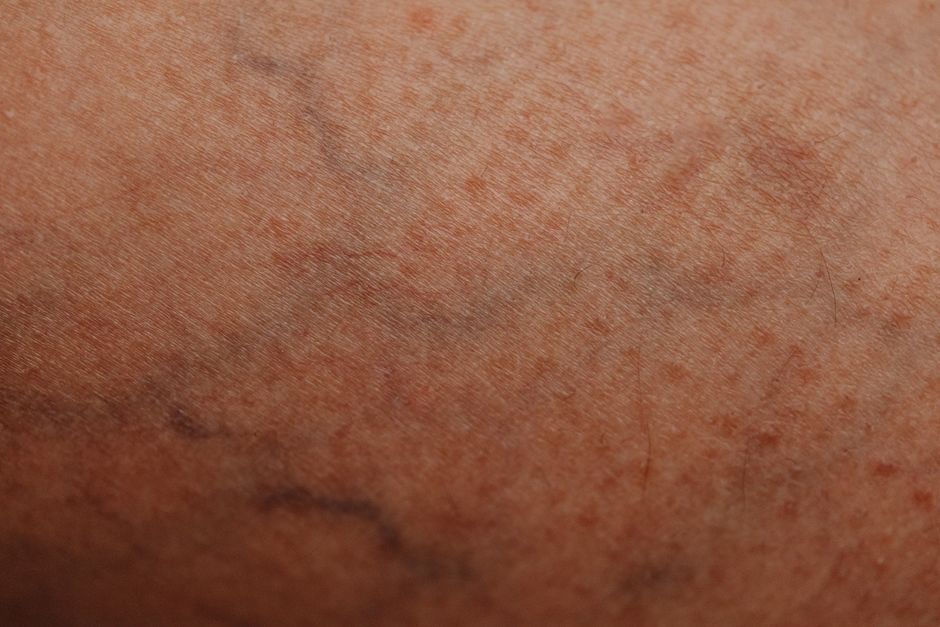
Your blood is red. Your veins look blue. Both of those things are true at the same time, and the reason has nothing to do with blue blood. Veins appear blue because of how light behaves as it passes through your skin, not because of what is actually flowing inside them. The color you see is created by physics, and your eyes play a part in it too.
Why Veins Are Blue In Colour? The Science Behind It
Light has to travel through your skin before it reaches a vein. Skin scatters and absorbs different wavelengths of light in different ways. Red light penetrates deeper into tissue. Blue light scatters and bounces back near the surface.
When red light travels through skin, it gets absorbed along the way. Blue light does not penetrate as deeply, so more of it reflects back to your eye from the upper layers of skin above the vein. That reflected blue light is what you see.
The vein itself is not emitting blue light. It is not blue. The color is a product of how light interacts with skin, blood, and the tissue in between. This is an optical effect, not a biological one.
The deeper the vein sits, the more skin light has to pass through, and the more pronounced the blue appearance tends to be. Veins close to the surface may look more purple or greenish depending on skin tone and lighting.
Is Blood In Veins Actually Blue?
No. Blood inside your veins is red. It is always red.
Blood gets its color from hemoglobin, a protein in red blood cells that carries oxygen. When hemoglobin is bound to oxygen, it appears bright red. When it has released oxygen to your tissues, it appears a darker, duller red. But it never turns blue.
This is one of the most persistent myths in human biology. The idea that deoxygenated blood is blue likely comes from medical diagrams and textbooks that color-code veins blue and arteries red for clarity. Those colors are teaching tools, not literal representations.
If you have ever had blood drawn from a vein, you have seen the proof. The blood that fills the tube is dark red, not blue. It was never blue inside your body either.
Some people point to the bluish appearance of veins under the skin as evidence. But that appearance is created by light and skin, as explained above. The blood itself does not change color based on whether it is carrying oxygen or not. It only changes shade of red.
What Role Does Skin And Light Play?
Skin is not transparent. It is a layered, light-scattering material. When white light from the sun or a room lamp hits your skin, some of it reflects off the surface, some gets absorbed, and some scatters in different directions.
Red and blue wavelengths behave differently in this environment. Red light has a longer wavelength. It can travel further through skin and tissue before being absorbed. Blue light has a shorter wavelength. It scatters more easily and does not penetrate as deeply.
When red light passes through the skin over a vein, much of it gets absorbed by the blood and surrounding tissue. Blue light, meanwhile, scatters back out before it reaches the vein. So what returns to your eye is mostly blue.
This is similar to why the sky looks blue. Short wavelengths of light scatter more in the atmosphere. The same principle applies at a much smaller scale in your skin.
Skin tone affects how noticeable this effect is. Lighter skin scatters and reflects more light, which can make veins appear more blue or green. Darker skin may make veins less visible because there is more melanin absorbing and scattering light. But the underlying principle is the same.





Why Do Some Veins Look Green Or Purple?
Vein color as it appears through skin can vary. Some people see blue. Others see green, purple, or a mix.
This variation comes from several factors working together:
- Skin tone and undertone. Skin with warm undertones may make veins look more green. Cool undertones may make them look more blue or purple.
- Lighting. Natural daylight, fluorescent bulbs, and warm indoor lamps all change how colors appear through skin.
- Vein depth. Deeper veins may appear more blue. Superficial veins may look more green or purple.
- Oxygen levels in the blood. Blood that has released more oxygen is a darker red, which can shift the apparent color when filtered through skin.
None of these variations mean anything is wrong. They are normal differences in how light, skin, and blood interact.
Why Do Veins Sometimes Look More Visible?
Vein visibility changes from person to person and even from moment to moment. Several factors influence how prominent veins appear through the skin.
Thinner skin makes veins easier to see. This is why veins often appear more visible on the backs of the hands, the wrists, and the inner arms, where skin tends to be thinner.
Body fat also plays a role. People with less subcutaneous fat have less tissue between the vein and the skin surface, so veins show more clearly. This is one reason why veins may become more visible after weight loss or with age, as skin loses some of its thickness and elasticity over time.
Temperature matters too. In warm conditions, veins widen to release heat. When veins dilate, they hold more blood and become more visible. In cold conditions, veins narrow, and they may be harder to see.
Physical activity can also make veins more prominent temporarily. Exercise increases blood flow and can cause veins to dilate. After the activity ends, they typically return to their usual appearance.
None of these changes indicate a health problem on their own. Visible veins are a normal part of human anatomy.
Does Blue Vein Color Mean Anything About Your Health?
The blue appearance of veins is not a sign of poor circulation, low oxygen, or any medical condition. It is how veins normally look through skin.
That said, changes in vein appearance can sometimes be worth paying attention to. If veins become suddenly more prominent, painful, swollen, or change color in a way that is new and persistent, that is a reason to talk to a doctor. But the routine blue or green color of veins is not a warning sign.
Some people worry that blue veins mean their blood is not getting enough oxygen. This is not how it works. Blood oxygen levels are measured with a pulse oximeter or a blood test, not by looking at vein color. Vein color through skin tells you nothing reliable about how much oxygen is in your blood.
Varicose veins are a different matter. They are enlarged, twisted veins that can appear blue or purple and may bulge above the skin surface. They are common and can cause discomfort. But their color is not the issue. Their size, shape, and symptoms are what matter. If you have concerns about varicose veins, a doctor can assess them.
Why Did The Blue Blood Myth Start?
The myth that deoxygenated blood is blue likely started with medical illustrations. For centuries, anatomical drawings have used red to represent arteries and blue to represent veins. This color-coding makes diagrams easier to read. It was never meant to be taken literally.
Over time, the convention became so familiar that many people assumed it reflected reality. Textbooks, posters in doctor’s offices, and even children’s educational materials reinforced the idea. But the colors were chosen for clarity, not accuracy.
Another factor: veins can look blue through skin. If you see a blue line on your arm and you have been told veins carry blue blood, the conclusion seems obvious. But the logic is backwards. The vein looks blue because of light and skin, not because the blood inside is blue.
This is a good example of how visual conventions can shape what people believe about their own bodies. The truth is simpler and stranger than the myth.
Frequently Asked Questions
Is blood ever blue in the human body?
No. Human blood is always red, whether it is carrying oxygen or not. It may be bright red or dark red, but never blue.
Why do veins look blue if blood is red?
Veins look blue because of how light travels through skin. Red light is absorbed, while blue light scatters back to your eye, creating the blue appearance.
Does blue vein color mean low oxygen in the blood?
No. Vein color through skin does not indicate blood oxygen levels. Oxygen levels are measured with medical tests, not by looking at veins.
Why do some people have more visible veins than others?
Skin thickness, body fat, age, temperature, and physical activity all affect how visible veins are. These are normal differences and not a sign of a health problem.
