
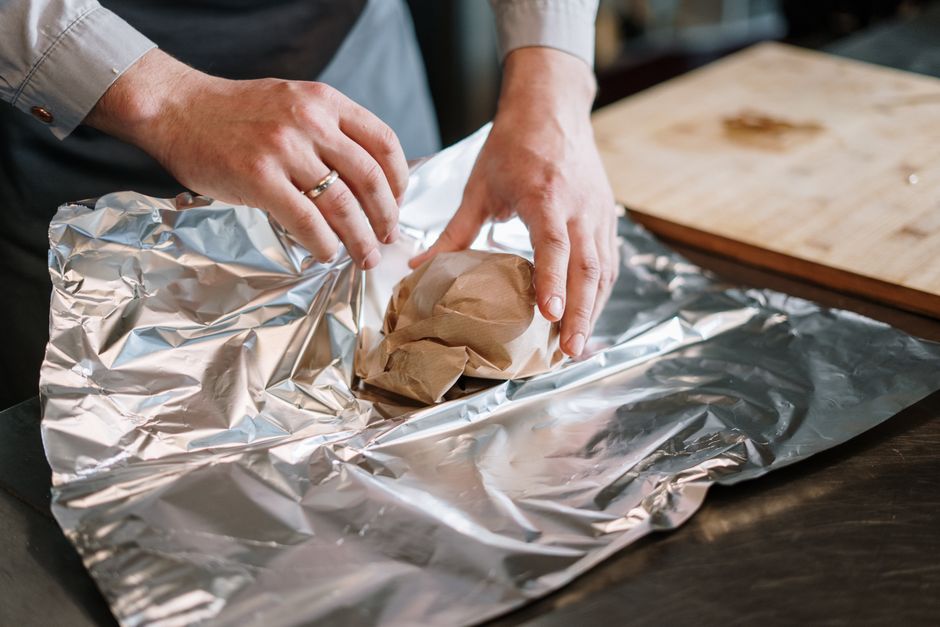
Aluminum foil is a staple in most kitchens. You use it to cover leftovers, line baking sheets, and wrap fish or vegetables for grilling. But questions about its safety keep coming up. The short answer is that wrapping food in aluminum foil is generally safe for everyday use. However, there are specific situations where you should think twice before reaching for the roll.
How Much Aluminum Actually Gets Into Your Food?
Aluminum is everywhere. It is in soil, water, air, and many foods naturally. When you cook with foil, small amounts of aluminum can transfer into your food. The key question is how much.
Studies have found that cooking with aluminum foil increases the aluminum content of food. The amount depends on several factors. Acidic foods like tomatoes and citrus pull more aluminum from the foil. Salt also increases the transfer. High heat makes it worse too.
Research published in peer-reviewed journals shows that foil-wrapped fish and meat can contain higher aluminum levels than the same foods cooked without foil. The increases are measurable but usually small. For most people, this extra aluminum is not a health concern.
Your body is good at filtering out aluminum. Your kidneys remove it through urine. Healthy adults process and eliminate the small amounts that come from normal cooking and eating.
What Do Health Agencies Say About Aluminum?
The World Health Organization and the Food and Agriculture Organization have established a tolerable weekly intake for aluminum. This is the amount they consider safe to consume over a lifetime without health problems.
Research suggests that most people get far less aluminum from their diet than this safety limit. Even with regular foil use, you are unlikely to come close to that threshold. The European Food Safety Authority has reached similar conclusions.
Health agencies do not warn against using aluminum foil for normal cooking. They focus on the bigger sources of aluminum exposure, which are not kitchen foil. Antacids and buffered aspirin contain much higher amounts of aluminum than any food cooked in foil ever will.
That said, no regulatory body has formally declared foil use completely risk-free. The evidence simply shows that typical use falls within acceptable safety margins.
Who Should Be Careful With Aluminum Foil?
Some people need to limit aluminum exposure more than others. People with chronic kidney disease are the main group. Damaged kidneys cannot filter aluminum efficiently. Aluminum can build up in their bodies and cause bone or brain problems over time.
If you have kidney disease, talk to your doctor about aluminum exposure from all sources. This includes foil, cookware, and medications. Your doctor can give you specific advice based on your kidney function.
Infants are another group that may need extra caution. Their kidneys are still developing. Baby food is rarely cooked in foil, but pureed homemade meals prepared in foil could be a concern. If you are making food for a baby, use other cooking methods to be safe.
For healthy adults and older children, the evidence does not show that normal foil use causes health problems.




Does Aluminum Foil Cause Alzheimer’s Disease?
This is the most common fear about aluminum foil. The idea that aluminum causes Alzheimer’s disease has been around for decades. It started in the 1960s and 1970s when researchers found aluminum in the brains of people who died from the disease.
That finding sparked widespread concern. Aluminum cookware and foil sales dropped. People threw away their pots and pans.
Since then, large studies have not confirmed a direct link between dietary aluminum and Alzheimer’s disease. The medical community now considers the aluminum-Alzheimer’s theory largely unsupported. The aluminum found in those early brain studies may have been contamination from laboratory equipment or dyes used in the tests.
Major health organizations, including the Alzheimer’s Association, do not list aluminum as a confirmed cause of the disease. Genetics, age, and cardiovascular health play much larger roles in Alzheimer’s risk.
Some research continues to explore whether aluminum could contribute to cognitive decline in vulnerable people. But no study has shown that using foil in your kitchen increases your risk of dementia.
Is It Safe to Cook With Aluminum Foil at High Heat?
High-heat cooking with foil raises different concerns. When foil reaches very high temperatures, it can react with certain foods in ways that increase aluminum transfer.
Grilling and broiling are the main situations to watch. The combination of high heat, acidic marinades, and direct contact with foil creates the highest aluminum transfer. If you regularly grill fish or vegetables wrapped in foil with lemon or tomato-based marinades, you are getting more aluminum than someone who uses foil only for storage.
This is not a reason to panic. The amounts are still small. But if you want to reduce your exposure, change how you use foil at high heat.
Use parchment paper instead of foil for baking and roasting. For grilling, consider a grill basket or reusable silicone mat. When you do use foil, avoid adding acidic ingredients directly against the foil. Marinate first, then wrap.
Never use foil to line the bottom of your oven. This is a fire hazard and can damage the oven. It also exposes the foil to extreme heat that no food contact should involve.
Does Cooking With Foil Leach Into Acidic Foods More?
Yes, it does. Acid is the biggest factor in aluminum transfer. Foods like tomatoes, vinegar-based sauces, lemon juice, and rhubarb are all acidic. When these foods touch foil during cooking, they pull more aluminum into the food.
Salt has a similar effect. Salty foods cooked in foil absorb more aluminum than unsalted foods. This is why many studies on foil and aluminum use salted, acidic foods as their test subjects.
The transfer happens through a simple chemical process. Acid and salt break down the thin oxide layer on the foil surface. This exposes the aluminum underneath, allowing it to migrate into the food.
This does not mean you must stop using foil with acidic foods. It means you should be aware that this combination increases aluminum exposure. If you use foil often with acidic foods, consider switching to parchment paper or glass bakeware for those meals.
What Are the Best Alternatives to Aluminum Foil?
Several alternatives work well for most foil uses. Parchment paper is the closest substitute for baking and roasting. It is non-stick, heat-safe, and does not add any metal to your food. It is not ideal for grilling because it can burn at very high temperatures.
Silicone baking mats and reusable silicone bags are good options. They handle heat well and last for years. They are more expensive upfront but save money over time.
Glass containers with lids work perfectly for storing leftovers. They are microwave-safe, dishwasher-safe, and do not react with acidic foods. Ceramic and stoneware dishes are also good choices.
For grilling, use a metal grill basket or skewers. These let you cook vegetables and fish without any wrapping. You lose the steaming effect of foil, but you gain a better sear and no aluminum exposure.
Wax paper is not a substitute for foil in cooking. It is not heat-safe and should only be used for cold food storage or wrapping.
Is It Safe to Store Food in Aluminum Foil?
Storing leftovers in foil is common. The safety depends on what you are storing and how long you keep it.
Cold storage in foil is generally safe. The aluminum transfer is minimal at refrigerator temperatures. Covering a bowl with foil or wrapping a sandwich for lunch is not a concern.
The bigger issue is food safety, not aluminum. Foil does not create an airtight seal. Oxygen can still reach the food. For leftovers you plan to keep more than a day or two, use airtight containers instead.
Do not store highly acidic or salty foods in foil for extended periods. The longer the contact, the more aluminum can transfer. A few hours is fine. Several days is less ideal.
Never store food in foil that contains tomato sauce, citrus, or pickled items overnight. Transfer these to glass or plastic containers instead.
What Does the Research Actually Show About Long-Term Exposure?
Long-term aluminum exposure studies focus on occupational exposure and contaminated water, not foil use. Workers in aluminum smelting plants and people drinking water with high aluminum levels are the groups studied most.
These studies show that very high aluminum exposure over many years can affect the lungs and nervous system. But the exposure levels in these situations are thousands of times higher than what you get from cooking with foil.
Some research has explored whether aluminum accumulates in bone tissue over a lifetime. There is evidence that aluminum can deposit in bones, but no study has shown that this causes bone disease in healthy people.
The scientific consensus is that the aluminum from normal kitchen use is not a health risk for the general population. The body handles it well, and the amounts are too small to cause harm.
This could change if new research emerges. Science is never final. But based on the current evidence, aluminum foil is safe for most people in most situations.
Frequently Asked Questions
Is it safe to cook with aluminum foil every day?
Yes, for healthy adults, daily use of aluminum foil for cooking is considered safe. The amount of aluminum that transfers to food is small and well below established safety limits.
Does aluminum foil cause cancer?
No evidence links aluminum foil to cancer. Aluminum is not classified as a carcinogen by major health agencies, and no studies show that cooking with foil increases cancer risk.
Can you put aluminum foil in the microwave?
No, you should not put aluminum foil in a microwave. The metal can spark and cause a fire. Use microwave-safe containers or parchment paper instead.
Is aluminum foil safe for wrapping hot food?
Yes, wrapping hot food in foil is safe for brief periods. If you plan to hold the food for more than an hour, move it to an airtight container to maintain proper food safety.
