

West Nile virus is an infection spread by mosquitoes, and most people who get it never know they had it. For roughly 8 in 10 people, the virus causes no symptoms at all. The infection becomes dangerous when it reaches the brain or spinal cord, which happens in less than 1 percent of cases. That small group is where deaths occur, and it is why understanding who faces the highest risk matters.
Is West Nile Virus Deadly?
Yes, West Nile virus can be deadly — but the death rate is low, and serious outcomes are concentrated in a small number of cases. The virus is not usually life-threatening. The danger comes from a rare complication called neuroinvasive disease, where the infection spreads to the nervous system.
When the virus stays in the bloodstream, the immune system clears it and the person recovers. When it crosses into the brain or spinal cord, it can cause encephalitis (inflammation of the brain) or meningitis (inflammation of the membranes around the brain and spinal cord). These are the cases that can lead to death or long-term disability.
Among people who develop neuroinvasive West Nile disease, the risk of death is substantial. The CDC has reported that roughly 1 in 10 people with neuroinvasive disease die from it. That figure applies only to the severe form, not to all infections. When you include the large number of mild and asymptomatic cases, the overall death rate across all infections is far lower — well under 1 percent.
There is no specific antiviral treatment for West Nile virus and no approved vaccine for humans. Care for severe cases focuses on supporting the body through the illness: hospitalization, intravenous fluids, breathing support if needed, and management of complications. This is why prevention — avoiding mosquito bites — carries most of the weight.
Who Is Most At Risk From West Nile Virus?
Age is the single strongest risk factor for severe West Nile disease. People over 60 face a meaningfully higher risk of neuroinvasive illness than younger adults. The immune system’s response changes with age, and older adults are more likely to develop the dangerous form of the infection.
Certain medical conditions also raise the risk. People who have received an organ transplant, those with cancer (especially blood cancers like leukemia and lymphoma), and people taking medications that suppress the immune system are at higher risk. Diabetes and kidney disease have also been associated with more severe outcomes in some studies, though the evidence is not as consistent as it is for age and immune suppression.
Healthy children and younger adults can still get neuroinvasive disease, but it is much less common in these groups. Being young and healthy does not make someone immune to a severe case — it simply makes it less likely.
It is also worth noting that risk is not the same as outcome. Many people in high-risk groups recover fully. The elevated risk means the odds of a serious case are higher, not that a serious case is certain.
How Does West Nile Virus Spread?
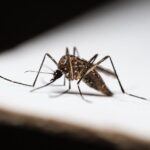
West Nile virus spreads primarily through the bite of an infected mosquito, most commonly of the Culex genus. These mosquitoes pick up the virus by feeding on infected birds, which are the natural reservoir for the virus. The virus then replicates in the mosquito and can be passed to humans and other animals when the mosquito bites again.
Humans are considered dead-end hosts. This means the level of virus in a person’s blood is usually too low to infect another mosquito that bites them. As a result, West Nile virus does not spread from person to person through casual contact, coughing, or touching.
There are rare exceptions. Transmission has been documented through blood transfusion, organ transplantation, and from mother to baby during pregnancy, delivery, or breastfeeding. These routes are uncommon, and blood donations in the United States are screened for the virus. Still, they are real and worth knowing.
The virus was first identified in Uganda in 1937 and reached the United States in 1999, when it appeared in New York City. It has since spread across the country. Cases typically peak in late summer and early fall, when mosquito populations are highest.




What Are the Symptoms and Warning Signs?
Most West Nile infections produce no symptoms. About 1 in 5 people develop what is called West Nile fever — a milder illness that can include fever, headache, body aches, joint pain, vomiting, diarrhea, or a rash. These symptoms usually appear between 2 and 14 days after a bite from an infected mosquito, though they can take up to 14 days to show.
Even West Nile fever can leave people feeling unwell for weeks. Fatigue and muscle weakness sometimes linger well after the fever breaks. Most people with this form recover on their own, though the recovery can be slow.
The severe form — neuroinvasive disease — produces more alarming signs. These include:
- Severe headache that does not improve
- High fever
- Stiff neck
- Confusion, disorientation, or trouble thinking clearly
- Muscle weakness, tremors, or partial paralysis
- Seizures
- Vision changes
- Loss of consciousness
These symptoms require immediate medical attention. Neuroinvasive West Nile disease is a medical emergency. Anyone experiencing confusion, severe headache with stiff neck, sudden weakness, or seizures should seek emergency care right away.
A detail many people miss: the incubation period matters for timing. If someone feels fine two days after a mosquito bite, that does not rule out infection. Symptoms generally take several days to two weeks to appear, so a bite from last week is still relevant.
How Is West Nile Virus Diagnosed and Treated?
Diagnosis usually happens through blood tests that detect antibodies the body produces against the virus. For cases involving the nervous system, a doctor may test cerebrospinal fluid obtained through a spinal tap. Because many infections cause no symptoms, most cases are never diagnosed at all.
There is no antiviral medication that treats West Nile virus specifically. Treatment is supportive, meaning it addresses symptoms and complications while the body’s immune system works to clear the infection. For mild cases, rest, fluids, and over-the-counter pain relief are typically enough. For severe cases, hospitalization is often required for monitoring, intravenous fluids, and support with breathing or other functions if the nervous system is affected.
Recovery from neuroinvasive disease can be long and incomplete. Some people regain full function. Others deal with lasting problems such as muscle weakness, fatigue, memory difficulties, or mood changes. The degree of recovery varies widely, and there is no reliable way to predict it at the outset.
How Can You Reduce Your Risk?
Prevention centers on avoiding mosquito bites. No vaccine for humans is available in the United States, and no medication prevents infection, so reducing exposure is the main protective step.
Effective measures include:
- Using EPA-registered insect repellent, which may contain DEET, picaridin, IR3535, or oil of lemon eucalyptus
- Wearing long sleeves and pants during peak mosquito hours, especially at dawn and dusk
- Removing standing water around the home, since mosquitoes breed in it — this includes buckets, flower pots, bird baths, and clogged gutters
- Making sure window and door screens are in good repair
- Using air conditioning when possible, since it reduces the need to open windows
Community-level mosquito control programs also play a role. Local health departments monitor mosquito populations and apply control measures when the virus is detected in local birds or mosquitoes.
If you live in an area where West Nile virus is active and you are in a higher-risk group, these steps are worth taking seriously. The virus is not going away, and cases appear every year across much of the country.
How Common Is West Nile Virus in the United States?
West Nile virus is now the leading cause of mosquito-borne disease in the continental United States. Cases are reported every year, though the numbers vary depending on weather, mosquito populations, and reporting practices. Most human infections occur between June and September.
The vast majority of infections are mild or silent. Severe neuroinvasive cases represent a small fraction of total infections. Because so many cases go unreported or unnoticed, the true number of infections each year is much higher than the number of confirmed cases.
This gap matters for how people think about risk. The chance of any individual mosquito bite leading to a serious illness is very low. But the chance is not zero, and for older adults and people with weakened immune systems, the stakes are higher.
Frequently Asked Questions
Is West Nile virus deadly?
West Nile virus can be deadly, but deaths occur mainly in the rare cases where the infection reaches the brain or spinal cord. Among people with that severe form, roughly 1 in 10 die.
Who is most at risk from West Nile virus?
People over 60 and those with weakened immune systems — including organ transplant recipients and people with certain cancers — face the highest risk of severe disease. Healthy younger adults and children are at much lower risk of the dangerous form.
What are the first signs of West Nile virus?
Most people have no symptoms, but about 1 in 5 develop fever, headache, body aches, joint pain, vomiting, or a rash. Symptoms usually appear 2 to 14 days after a bite from an infected mosquito.
Can West Nile virus be cured?
There is no specific antiviral treatment or cure for West Nile virus. Care focuses on managing symptoms and supporting the body, and severe cases may require hospitalization.
