
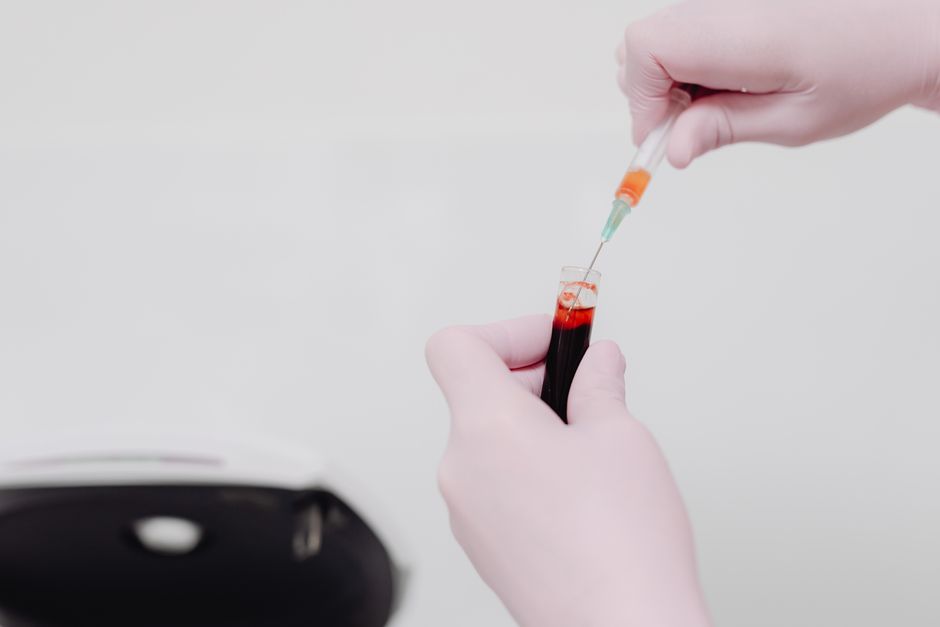
No, there is no standard blood test to check serotonin levels in the brain. Serotonin in the brain and serotonin in the blood are two largely separate systems, and a blood draw cannot tell you what is happening in your brain. This is one of the most common misunderstandings in mental health, so it is worth explaining clearly.
Serotonin is a chemical messenger, or neurotransmitter, that helps nerve cells communicate. It is involved in mood, sleep, appetite, digestion, and many other functions. Because serotonin is so central to how we think about depression and anxiety, it seems logical that measuring it would be useful. The problem is that the biology does not work that way.
Why Is There No Blood Test For Brain Serotonin?
Serotonin does not move freely between your blood and your brain. There is a physical barrier — the blood-brain barrier — that controls what passes between the bloodstream and the brain. Serotonin itself does not cross this barrier in any meaningful way. That means the serotonin floating in your blood tells you almost nothing about the serotonin being used in your brain.
Roughly 90% of the body’s serotonin is made and stored in the gut, where it helps regulate digestion. Most of the rest is in platelets, the cell fragments in blood that help with clotting. Only a small fraction is in the brain, where it acts as a neurotransmitter. These are separate pools serving separate jobs.
Even if a lab measured blood serotonin accurately, the number would reflect gut and platelet activity, not brain signaling. Brain serotonin is also not a single fixed quantity. It is released, reabsorbed, and recycled moment to moment. A single snapshot could not capture that dynamic process even if we could measure it directly.
Can Serotonin Levels Actually Be Measured At All?
Yes, but only in specific situations and only for specific purposes. A test called a blood serotonin test does exist. It measures serotonin in the blood, usually in the platelets. It is used to help evaluate a rare condition called carcinoid syndrome, in which certain tumors release large amounts of serotonin. This is a digestive and hormonal disorder, not a psychiatric one.
Urine tests can also measure a serotonin breakdown product called 5-HIAA. Again, this is used for suspected carcinoid tumors, not for depression or anxiety.
Researchers can estimate brain serotonin activity using specialized techniques. These include PET scans with certain tracers and, in some cases, analyzing serotonin metabolites in cerebrospinal fluid obtained through a spinal tap. These methods are used in research settings. They are invasive, expensive, and not part of routine clinical care. They also measure indirect signals rather than giving a simple “level.”
None of these approaches is used to diagnose or manage common mental health conditions.
Why Do People Believe A Serotonin Test Should Exist?
The idea that low serotonin causes depression has been repeated so often that many people treat it as settled fact. It is not. This is where the science has shifted, and it is worth being honest about that.
For decades, the dominant explanation for depression was a chemical imbalance, specifically low serotonin. That framing was simple and easy to communicate. But a growing body of research has not supported it as a complete explanation. A widely discussed review published in 2022 examined the evidence and found no consistent link between serotonin levels or activity and depression.
That does not mean serotonin is irrelevant to mental health. It means the story is more complicated than a simple deficiency. Depression likely involves many factors, including genetics, brain circuitry, stress, inflammation, life circumstances, and more. Serotonin is part of the picture, but not the whole picture.
This matters for the question at hand. If low serotonin were the straightforward cause of depression, a blood test might make sense. Because the relationship is far more complex, no such test exists.



What About Serotonin Syndrome?
Serotonin syndrome is a real and potentially serious condition. It happens when serotonin activity becomes excessive, usually because of medications that increase serotonin. It can occur when someone takes two or more serotonin-boosting drugs together, or takes too high a dose of one.
Symptoms can include agitation, confusion, rapid heart rate, high blood pressure, muscle stiffness, sweating, and in severe cases, fever and seizures. This is a medical emergency.
Here is the important point: serotonin syndrome is diagnosed by recognizing the symptoms and reviewing the medications a person takes. It is not diagnosed with a blood test. No lab value confirms it. If you or someone you know develops these symptoms while taking serotonergic medications, seek emergency care right away. Do not wait for a test result that does not exist.
How Are Serotonin-Related Conditions Actually Diagnosed?
Mental health conditions like depression and anxiety are diagnosed through conversation and clinical assessment, not lab work. A clinician asks about symptoms, how long they have lasted, how they affect daily life, and whether there is a family history. Standardized questionnaires may be used to help organize the information.
Blood tests are sometimes ordered, but not to measure serotonin. They are used to rule out other causes of symptoms that can look like depression. These can include:
- An underactive thyroid, which can cause low mood and fatigue
- Low vitamin B12 or vitamin D
- Anemia
- Blood sugar problems
- Kidney or liver issues
Finding and treating one of these conditions can improve symptoms. That is the real value of blood work in this context. It is about ruling out other causes, not confirming a serotonin level.
What Does This Mean For Treatment Decisions?
Medications that affect serotonin, such as SSRIs, are widely prescribed for depression and anxiety. They help many people. But how they work is not fully understood, and their benefit is not explained by simply “raising serotonin.” Some people respond well to them. Others do not. Researchers cannot yet predict who will respond based on any lab measurement.
Because there is no test, treatment decisions rest on careful trial and observation. A clinician may recommend a medication, then check in over several weeks to see whether symptoms improve. If one approach does not help, another may be tried. This process can feel slow and frustrating, and that is a fair criticism. But it reflects genuine uncertainty in the field, not a lack of effort.
If you are considering or taking a serotonin-affecting medication, do not stop or change it on your own. Withdrawal effects can be significant. Talk with your prescriber first.
Are There Tests You Can Buy Online?
Some companies sell at-home tests that claim to measure neurotransmitters like serotonin, often from urine or saliva. Be cautious. These tests generally measure serotonin or its breakdown products in the body, not in the brain. Their results have not been shown to diagnose or guide treatment for mental health conditions.
No major medical organization recommends these tests for evaluating depression or anxiety. The evidence does not support using them to make treatment decisions. If a company claims its test can reveal your brain’s serotonin level or tell you which antidepressant to take, that claim is not backed by established clinical evidence.
If you are unsure whether a test is legitimate, ask your doctor. A clinician can tell you whether a specific test has a recognized medical purpose.
What Should You Do If You Are Worried About Your Serotonin?
If you are struggling with mood, sleep, appetite, or anxiety, the useful step is to talk with a healthcare provider. Describe your symptoms honestly and ask what they might mean. Ask whether any blood tests are worth doing to rule out other causes.
You do not need a serotonin level to get help. Diagnosis and treatment for mental health conditions rely on your symptoms, your history, and how you respond to care over time. That is how the field works, and it is more reliable than a single number that does not exist.
Frequently Asked Questions
Is there a blood test to check serotonin levels in the brain?
No, there is no blood test that measures serotonin in the brain. Serotonin in the blood comes mostly from the gut and platelets, and it does not reflect brain serotonin activity.
What does a blood serotonin test actually measure?
It measures serotonin in the blood, usually in platelets, and is used mainly to help evaluate a rare tumor condition called carcinoid syndrome. It is not used to diagnose depression or anxiety.
Can low serotonin be detected by any routine lab test?
No routine lab test detects low brain serotonin. Mental health conditions are diagnosed through clinical assessment, and blood work is used only to rule out other causes of symptoms.
Are at-home serotonin tests worth buying?
No major medical organization recommends at-home neurotransmitter tests for mental health, and their results have not been shown to guide treatment. Talk with your doctor before relying on any such test.
