
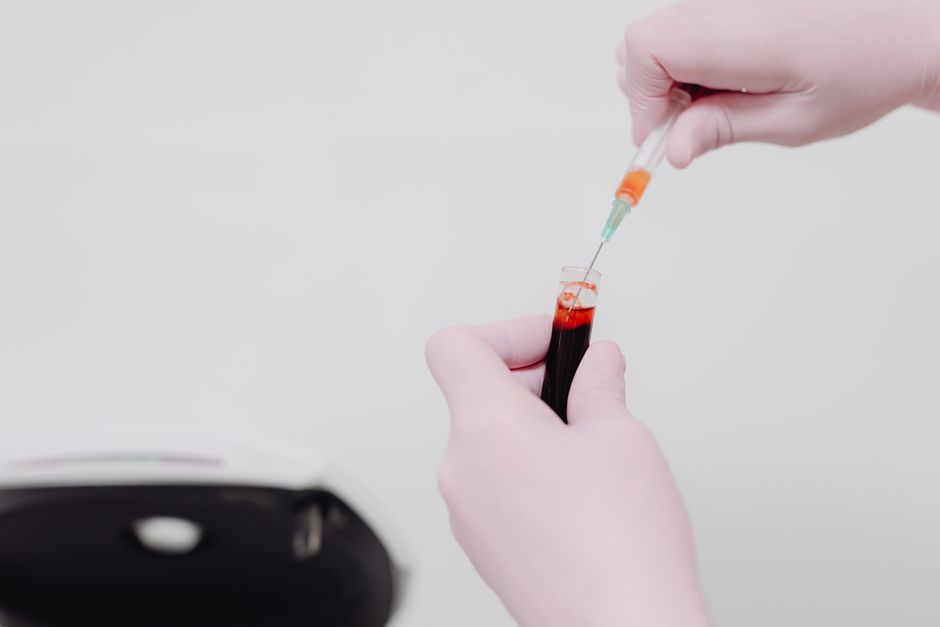
Yes, there is a blood test for allergies. It is called a specific IgE test, and it measures antibodies in your blood that react to certain allergens. It is one of two main ways doctors test for allergies, alongside the skin prick test.
If you have ever had a skin test and wondered why there is also a blood option, the answer is practical. Some people cannot have skin tests. Others take medications that interfere with them. The blood test solves both problems, though it works on a different timeline and has its own limits.
Is There A Blood Test For Allergies How It Works?
Your immune system makes antibodies called immunoglobulin E, or IgE. In people with allergies, IgE attaches to specific proteins from things like pollen, pet dander, or peanuts. When you encounter that protein again, the IgE triggers the release of histamine and other chemicals. That is what causes sneezing, itching, hives, or in severe cases, anaphylaxis.
The blood test measures how much allergen-specific IgE is floating in your bloodstream. A lab mixes a sample of your blood with a known allergen. If your blood contains IgE that recognizes that allergen, the test detects it and reports a number. That number is called the specific IgE level.
The test goes by a few names. You may hear it called a specific IgE test, a RAST test (an older term), or an immunoassay. Modern labs use methods that are more precise than the original RAST, but the name stuck in common use.
The key point is what the test measures. It measures sensitization, which means your immune system has made IgE against a substance. Sensitization is not the same as a clinical allergy. You can have a positive blood test and never react to that substance in real life. This is one of the most misunderstood parts of allergy testing.
What Is The Difference Between A Blood Test And A Skin Test?
Both tests look for the same thing: specific IgE. The difference is where they look for it. A skin prick test introduces a tiny amount of allergen into the top layer of your skin and watches for a reaction. A blood test looks for the antibody directly in your blood.
Neither test is clearly better than the other for most people. Research generally shows they produce similar results, though they do not always agree perfectly. A doctor may choose one based on your situation rather than on which test is superior.
| Feature | Skin Prick Test | Blood Test (Specific IgE) |
|---|---|---|
| Where it is done | Usually in the clinic | Blood draw, then lab |
| Time to results | About 15 to 20 minutes | Usually a few days |
| Medication interference | Antihistamines can block results | Not affected by antihistamines |
| Skin conditions | Eczema or sensitive skin can complicate it | Not affected by skin condition |
| Discomfort | Small scratches, possible itching | Standard blood draw |
| Risk of reaction | Small but present | Very low |
The blood test is often the better choice when someone has widespread eczema, cannot stop taking antihistamines, or has had a severe reaction where exposing them to an allergen again feels risky. It is also common for young children, where a single blood draw may be easier than many small skin scratches.
What Does A Positive Allergy Blood Test Actually Mean?
A positive result means your blood contains IgE that binds to that allergen. It does not automatically mean you are allergic in the everyday sense. This distinction matters more than almost anything else in allergy testing.
Many people have positive tests for foods or pollens they eat or breathe without any trouble. Their immune system has made the antibody, but their body does not mount a reaction. Doctors call this sensitization without clinical allergy.
Because of this, results are always interpreted alongside your history. A test result on its own is not a diagnosis. If you have never had symptoms after eating shrimp, a positive shrimp test does not mean you need to avoid shrimp. If you break out in hives every time you eat shrimp, that same positive result means something very different.
The size of the number matters less than you might expect. Higher specific IgE levels are loosely linked to a greater chance of reacting, but the relationship is not clean. A high number does not guarantee a reaction, and a low number does not rule one out. Some labs report a class from 0 to 6, but these ranges are not standardized across every lab, which is why comparing numbers between different labs can be misleading.




When Is An Allergy Blood Test Worth Doing?
The test is most useful when your history suggests a real allergy and your doctor wants to confirm which allergen is responsible. It helps connect symptoms to a specific trigger.
Common situations where it is used include:
- Persistent hay fever or asthma symptoms where the trigger is unclear
- Suspected food allergy, especially after a reaction
- Possible allergy to insect stings
- Eczema that may be driven by an allergen
- Evaluating a reaction to a medication, in some cases
- When skin testing is not practical or not safe
It is less useful as a broad screening tool. Ordering a large panel of tests on someone with vague symptoms tends to produce false positives and confusion. A positive result for something that has never caused a problem can lead to unnecessary avoidance and worry.
Some clinicians offer what is marketed as food sensitivity testing, which is a different thing entirely. These tests often measure IgG antibodies rather than IgE. The evidence does not support using IgG tests to diagnose food allergy or intolerance. Major allergy organizations have advised against them. If a company claims a blood test can identify dozens of food sensitivities at once, that is a claim the science does not back.
How Accurate Is The Allergy Blood Test?
The test is reliable at detecting specific IgE when it is present. Its weakness is not in the measurement but in the interpretation. A test can be analytically accurate and still lead you to the wrong conclusion about your health.
Two problems drive most errors. The first is false positives, where the test flags an allergen that never causes symptoms. The second is that the test cannot tell you how severe a reaction would be. A positive result does not predict whether you would get a mild rash or a life-threatening reaction.
There is also the matter of what the test cannot detect. Non-IgE reactions, which involve other parts of the immune system, will not show up on a specific IgE test. Some food reactions and certain drug reactions fall into this category. A negative blood test does not rule out every kind of allergy.
This is why the oral food challenge remains the most definitive way to confirm a food allergy. Under medical supervision, a person eats small amounts of the suspected food and is watched for a reaction. It carries some risk, so it is done carefully, but it answers the question the blood test cannot.
What Should You Expect From The Test Process?
A blood test for allergies is straightforward. A nurse or phlebotomist draws a sample from a vein in your arm, usually in a few minutes. You do not need to fast. Antihistamines do not interfere with the results, unlike with skin testing.
The sample goes to a lab, and results typically come back within a few days. Your doctor reviews the numbers along with your symptom history before making any recommendation.
One practical note: the test is ordered for specific allergens, not everything at once. Your doctor decides what to test based on what you have been exposed to and what symptoms you have had. Testing for things you have never encountered rarely adds useful information.
If you are considering allergy testing, the most important step is a clear conversation with your doctor about your symptoms, your history, and what you hope to learn. The test is a tool. Its value depends entirely on how well it is matched to your actual situation.
Frequently Asked Questions
Can a blood test tell me if I am allergic to a food?
It can show whether your blood carries IgE against that food, which is called sensitization. It cannot confirm a true allergy on its own, because many people test positive without ever reacting.
Do I need to stop taking antihistamines before an allergy blood test?
No, antihistamines do not interfere with a specific IgE blood test. This is one advantage it has over skin prick testing, where antihistamines can suppress the results.
How long does it take to get allergy blood test results?
Results usually come back within a few days, depending on the lab. This is slower than a skin test, which gives results in about 15 to 20 minutes.
Can a blood test rule out an allergy?
A negative test makes an IgE-mediated allergy less likely, but it does not rule out every type. Reactions that do not involve IgE will not appear on this test.
