
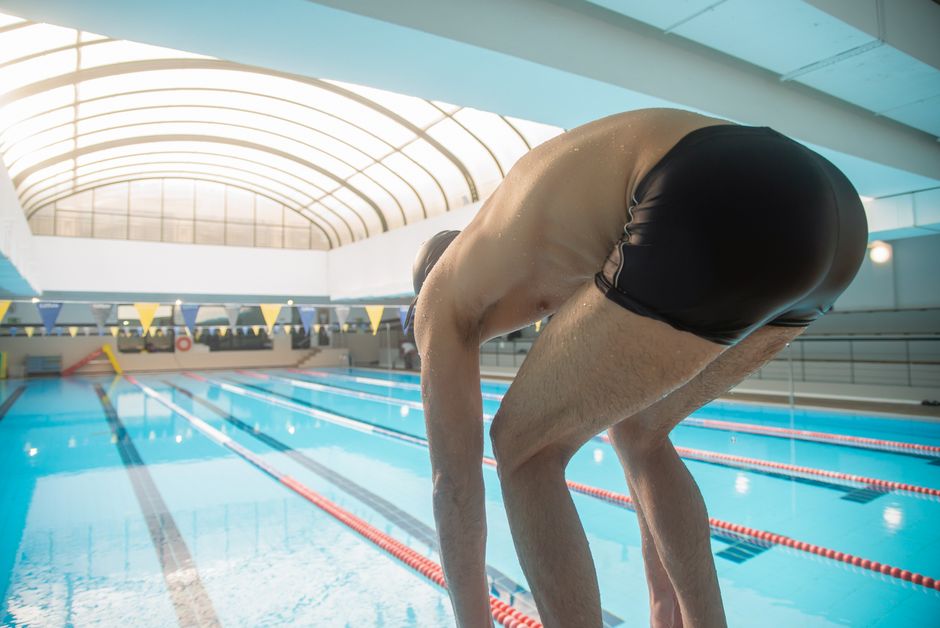
If you live with lower back pain, you have probably heard that swimming is a safe way to exercise. For many people, that advice is correct. Water supports your body weight, which takes pressure off your spine and joints. This makes swimming and water exercise a practical option when land-based movement hurts. However, swimming is not automatically good for every back condition. The right stroke, the right technique, and the timing of when you start all matter.
Why Water Exercise Feels Different for Your Back
Standing on land puts your full body weight through your spine. In waist-deep water, your spine carries about half that load. In chest-deep water, the load drops to roughly a quarter of your body weight. This buoyancy is the main reason doctors and physical therapists often recommend water therapy for back pain.
The water also provides gentle resistance in every direction. That resistance helps strengthen muscles without needing heavy weights. Your core, back, and hip muscles all work to keep you stable in the water, but the water supports you if you tire. For someone who cannot tolerate standing or walking, this combination of support and resistance is a genuine advantage.
Warm water adds another benefit. Many therapy pools are kept between 88 and 92 degrees Fahrenheit. Heat increases blood flow to muscles and can reduce stiffness and muscle spasm. The warmth alone does not fix the underlying problem, but it can make movement more comfortable while you work on strength and mobility.
Is Swimming Good for Lower Back Pain? What the Research Says
Studies have examined water-based exercise for chronic lower back pain. The findings generally show that supervised aquatic exercise programs reduce pain and improve function compared to no exercise at all. Some research suggests that water-based exercise and land-based exercise produce similar improvements in pain and disability over time.
That is an important point. Swimming does not outperform physical therapy or structured land exercise in most comparisons. It is a valuable option, not a superior cure. The best exercise for your back is usually the one you can do consistently without making your pain worse. For many people, that is swimming.
The evidence is less clear for acute pain that has lasted only days or weeks. If your back pain came on suddenly, swimming is not necessarily the first step. Resting briefly, gentle movement, and guidance from a clinician are typically more appropriate before you start a new exercise routine.
Which Swimming Strokes Are Safest for a Sore Back
Not all strokes are equal when your back hurts. Some strokes put your spine in positions that can aggravate pain. Others are generally well tolerated.
Backstroke is often the easiest on the spine. You float on your back, your neck stays in a neutral position, and your spine remains relatively straight. The flutter kick works your legs without twisting your torso. For most people with mechanical lower back pain, backstroke is the safest starting point.
Freestyle (front crawl) can work well if you use good technique. The key is breathing to both sides or using a snorkel. Breathing only to one side repeatedly causes your body to rotate more on that side, which can strain the lower back over time. A gentle, relaxed freestyle with steady breathing is usually fine. A hard, competitive freestyle with aggressive rotation may not be.
Breaststroke requires more caution. The leg motion involves bending your knees up toward your chest and then kicking outward. This movement can stress the sacroiliac joints and the lower back, especially if your hips are tight. Some people tolerate breaststroke well. Others find it flares their pain within a few laps.
Butterfly is generally not recommended. The undulating dolphin kick and the forceful arm motion place significant demand on the lumbar spine. If you have lower back pain, this stroke is best avoided unless a physical therapist has cleared you for it.
-
 Is Swimming Good for Si Joint Pain? Here’s What to Know
 -
Is Biking Good for Lower Back Pain? What the Research Says
-
What Causes Back Pain in the Lower Back? The Real Answer
-
How to Sleep to Reduce Lower Back Pain? Steps You Can Start Today
-
Joint Genesis Reviews 2026: Honest Look at Complaints & Results





Practical Tips for Swimming With Lower Back Pain
How you swim matters as much as which stroke you choose. Start with these practical guidelines.
- Warm up slowly. Swim easy laps or walk in the water for five to ten minutes before increasing effort.
- Keep your core gently engaged. Think about bracing your abdominal muscles as if preparing for a light cough. This supports your spine during strokes.
- Use a kickboard with caution. Holding a kickboard forces your lower back into an arched position. If that position hurts, skip the kickboard and use a pull buoy between your legs instead.
- Breathe bilaterally in freestyle. Alternate your breathing side every three or five strokes to keep your body rotation balanced.
- Stop if pain increases. Muscle fatigue and mild soreness are normal. Sharp pain, pain that radiates down your leg, or numbness are not. Stop and check with a clinician.
Swimming technique matters more than distance. Twenty minutes of well-paced, relaxed swimming with good form is better than an hour of poor technique that leaves you sore.
When Swimming Might Make Your Back Pain Worse
Swimming is not universally safe. Certain conditions can be aggravated by swimming, and it is important to know the difference between normal discomfort and a problem.
People with spinal stenosis often feel better when they lean forward. Swimming on your back keeps your spine in a neutral or slightly extended position, which may not be comfortable. Freestyle with a snorkel, which keeps your head down and your spine in a more flexed position, can sometimes feel better.
People with spondylolisthesis, a condition where one vertebra slips forward over another, may find that strokes involving repeated extension or rotation are irritating. The backstroke and butterfly both involve some degree of spinal extension.
If you have osteoporosis or have had a compression fracture, the twisting movements in strokes like freestyle and backstroke can place unwanted torque on weakened vertebrae. A physical therapist should guide which strokes are appropriate.
The most common problem is simply doing too much too soon. Swimming is low impact, so people often overdo it. The muscles still fatigue, and the next day you can feel sore in ways that mimic a back flare-up. Build up your time in the water gradually, just as you would with any new exercise.
Water Walking and Aquatic Therapy as Alternatives
You do not need to swim laps to benefit from water exercise. Water walking is one of the most underrated options for lower back pain. Walking in chest-deep water provides buoyancy support while still loading your spine gently through your legs. The water resistance strengthens your hip and leg muscles, which support your lower back.
Aquatic physical therapy is a structured option led by a trained therapist. These sessions often include specific exercises for your core, hips, and back, performed in the water. Research has shown that supervised aquatic therapy can improve pain and function in people with chronic lower back pain.
Some clinics offer underwater treadmills. These allow you to walk or run with precise control over speed and water depth. This can be an excellent way to maintain cardiovascular fitness while recovering from a back injury.
How to Start Swimming for Back Pain Safely
Before you start, consider where your pain falls on the spectrum. If you have chronic pain that has lasted more than three months, swimming is a reasonable option to try. If your pain is acute and severe, or if it radiates down your leg with numbness or weakness, see a clinician first.
Start with one short session. Swim for ten to fifteen minutes using a stroke that feels comfortable. Pay attention to how your back feels during the swim and over the next 24 hours. Some mild soreness is expected when you use muscles you have not used recently. If your pain is significantly worse the next day, reduce the duration or change strokes.
If swimming consistently makes your pain worse, stop. No exercise is worth aggravating a back condition. A physical therapist can assess your movement patterns and recommend specific strokes or water exercises that fit your particular situation.
Remember that swimming is one tool, not the whole answer. Most back pain benefits from a combination of strengthening, mobility work, and aerobic exercise. Swimming can be the aerobic piece. Core strengthening and hip mobility work on land remain important components of a complete back care plan.
Frequently Asked Questions
Is swimming better than walking for lower back pain?
Both can help, but swimming provides more support because water reduces the load on your spine. If walking on land aggravates your pain, swimming or water walking is often the better choice.
How many times a week should I swim for back pain?
Two to three sessions per week is a reasonable starting point for most people. This gives your body recovery time between sessions while still providing consistent exercise.
Can swimming make a herniated disc worse?
It can if you choose strokes that involve forceful twisting or extension of the spine. Gentle backstroke or freestyle with good technique is usually safe, but you should get guidance from a clinician before swimming with a herniated disc.
Should I swim if my back pain is acute?
If your pain is severe or came on suddenly, check with a clinician before starting swimming. Gentle movement is often helpful, but too much activity too early can prolong recovery.
