
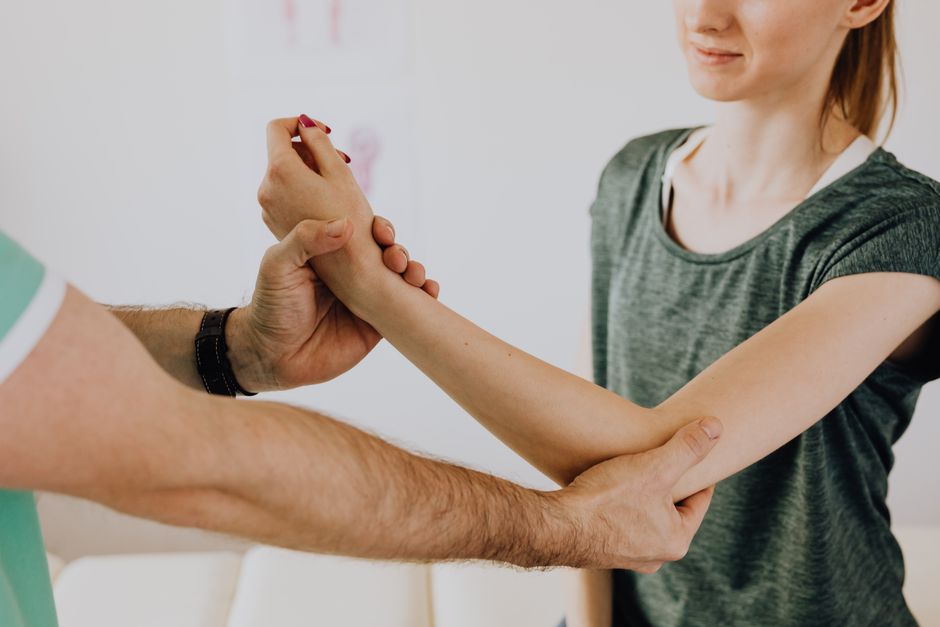
Skeletal muscle is voluntary muscle. You control it with conscious thought. When you decide to lift your arm, walk across a room, or smile, skeletal muscle does the work. This is different from cardiac muscle and smooth muscle, which work automatically without your conscious input.
What Makes Skeletal Muscle Voluntary?
The key difference comes down to nervous system control. Skeletal muscles connect to the central nervous system through somatic motor neurons. These nerves carry signals from your brain that you generate on purpose.
Think about the process. You decide to reach for a glass. Your brain sends a signal down your spinal cord. The signal travels along a motor neuron to your arm muscles. The muscle fibers contract. The glass is in your hand.
Every step of that chain starts with your conscious decision. That is what makes the muscle voluntary.
Skeletal Muscle vs. Smooth Muscle vs. Cardiac Muscle
Your body has three types of muscle tissue. Only one is under voluntary control.
- Skeletal muscle: Attached to bones. Voluntary. Used for movement, posture, and breathing.
- Smooth muscle: Found in blood vessels, the digestive tract, and the bladder. Involuntary. You cannot consciously control it.
- Cardiac muscle: Found only in the heart. Involuntary. It contracts continuously without your awareness.
This distinction is not academic. It explains why you can choose to run a marathon but cannot consciously speed up your digestion or slow down your heartbeat with direct effort.
Why Does Skeletal Muscle Look Different Under a Microscope?
Skeletal muscle has a striped appearance when viewed under a microscope. That striping comes from the arrangement of two proteins: actin and myosin. These proteins slide past each other to create contraction.
Cardiac muscle also has stripes. Smooth muscle does not. But the striping alone does not explain voluntary control.
The real difference is in how the muscle receives signals. Skeletal muscle fibers each connect to a single motor neuron at a structure called the neuromuscular junction. When that neuron fires, the muscle fiber contracts. When it stops firing, the muscle relaxes.
This direct one-to-one wiring gives you precise control. You can contract a single finger muscle or a few fibers within a larger muscle. Smooth muscle and cardiac muscle do not have this same direct voluntary wiring.


Are There Exceptions to Voluntary Control?
Yes. Skeletal muscle is not entirely under conscious control in every situation.
Reflexes are the clearest example. When you touch something hot, your hand pulls away before you consciously decide to move it. A reflex arc in your spinal cord processes the signal and triggers contraction without waiting for your brain.
The muscle itself is still skeletal muscle. It still contracts through the same mechanism. But the signal bypasses conscious thought. This is a protective response that happens faster than voluntary reaction time.
Breathing is another interesting case. The diaphragm is skeletal muscle. You can control it voluntarily — you can hold your breath or take a deep breath on command. But when you stop thinking about it, your brainstem keeps sending rhythmic signals to keep you breathing automatically.
This is why you do not stop breathing when you fall asleep. The automatic control takes over.
Can You Train Voluntary Control?
Yes. Training changes how effectively you recruit muscle fibers.
When you first try a new movement, your brain activates more muscle fibers than necessary. This is inefficient. With practice, your nervous system learns to activate only the fibers needed for the task. This is a major reason why strength increases quickly in the first weeks of a new training program — the muscles are not necessarily bigger yet, but the brain has learned to coordinate them better.
This neural adaptation is why skilled movements feel awkward at first and smooth later. Playing an instrument, typing, or learning a sport all depend on improving voluntary motor control.
Some research suggests that even imagining a movement can strengthen the neural pathways involved. This is called motor imagery. It is not a substitute for physical practice, but it can complement training in some settings.
What Happens When Voluntary Control Is Lost?
Loss of voluntary muscle control is a serious medical symptom. It can happen gradually or suddenly.
Stroke is a common cause. When blood flow to part of the brain is interrupted, the motor cortex may be damaged. This can weaken or paralyze muscles on one side of the body. The muscles themselves are often healthy — the problem is the signal from the brain never arrives.
Spinal cord injury works similarly. Damage to the spinal cord interrupts the pathway between the brain and the muscles below the injury level. Voluntary control is lost even though the muscles and their local nerve connections remain intact.
Other conditions affect the connection between nerve and muscle. Amyotrophic lateral sclerosis (ALS) destroys motor neurons. This leads to progressive weakness and loss of voluntary movement.
Peripheral neuropathy can also impair voluntary control. Diabetes is a common cause. Damaged nerves carry signals poorly, leading to weakness, numbness, or both.
If you notice new weakness or loss of control over any muscle group, seek medical evaluation promptly. Sudden weakness on one side of the body is a medical emergency.
Is Skeletal Muscle Voluntary During Exercise?
Exercise is a voluntary activity, but it involves significant automatic processing.
When you decide to run, that decision is voluntary. But your body makes many adjustments without your conscious input. Your heart rate increases. Your breathing deepens. Blood flow shifts toward working muscles.
These adjustments involve smooth muscle and cardiac muscle, which remain involuntary. The skeletal muscles you are using for the run are voluntary, but the supporting systems operate automatically.
Fatigue also changes the picture. When muscles fatigue, the signal from your brain becomes less efficient at producing force. You may feel like your muscles will not respond even though you are trying hard. This is a complex process involving both the muscle fibers and the nervous system.
There is no single cause of fatigue. Reduced fuel availability, buildup of metabolic byproducts, and changes in nerve signaling all play a role. The exact balance depends on the type, intensity, and duration of exercise.
Can Skeletal Muscle Contract Without Your Permission?
Yes. Not all skeletal muscle contractions are voluntary.
Muscle cramps are involuntary contractions of skeletal muscle. They can happen during exercise or at rest. The cause is not always clear. Dehydration, electrolyte imbalances, and muscle fatigue are often mentioned, but the evidence for each is limited.
Spasms and twitches are also involuntary. A muscle twitch — called a fasciculation — is a brief, spontaneous contraction of a small group of muscle fibers. Most people experience these occasionally. They are usually harmless.
Tremors are another example. These are rhythmic, involuntary oscillations of a muscle group. They can be caused by neurological conditions, medications, or other factors.
These involuntary contractions do not change the fundamental classification. Skeletal muscle is still considered voluntary because its primary control pathway is conscious. But it can be activated by other mechanisms as well.
Why Does This Matter for Your Health?
Understanding that skeletal muscle is voluntary helps you interpret your body’s signals.
If you can voluntarily control a muscle, weakness in that muscle points to a problem in the voluntary pathway: the brain, spinal cord, motor nerve, or the muscle itself. This helps doctors narrow down possible causes.
It also explains why rehabilitation works. After an injury or stroke, physical therapy focuses on retraining voluntary control. The brain and spinal cord can adapt — a property called neuroplasticity. Repeated practice strengthens neural pathways and can restore function even when some damage is permanent.
This is why therapists emphasize consistent, specific practice rather than generic activity. The brain learns specific movements, not general fitness.
The Bottom Line
Skeletal muscle is voluntary muscle. You control it consciously through signals from your brain and spinal cord. This is what allows you to speak, walk, lift, and perform every deliberate movement you make.
It is not perfectly voluntary in every situation. Reflexes, cramps, and automatic breathing show that skeletal muscle can act without conscious thought. But these are exceptions to the rule.
The distinction matters medically. It shapes how doctors evaluate weakness, how therapists design rehabilitation, and how you understand your own body. Knowing which muscles you control — and which you do not — is a basic but essential piece of health knowledge.
Frequently Asked Questions
Is skeletal muscle voluntary or involuntary?
Skeletal muscle is voluntary. You control it through conscious signals from your brain.
What muscles are involuntary?
Smooth muscle and cardiac muscle are involuntary. They work automatically without your conscious control.
Why is skeletal muscle called voluntary muscle?
It is called voluntary because you can consciously decide to contract it. The signal starts in your brain and travels through motor neurons to the muscle.
Can skeletal muscle move without your control?
Yes. Reflexes, cramps, and twitches can activate skeletal muscle without conscious thought. These are involuntary contractions of voluntary muscle tissue.
