
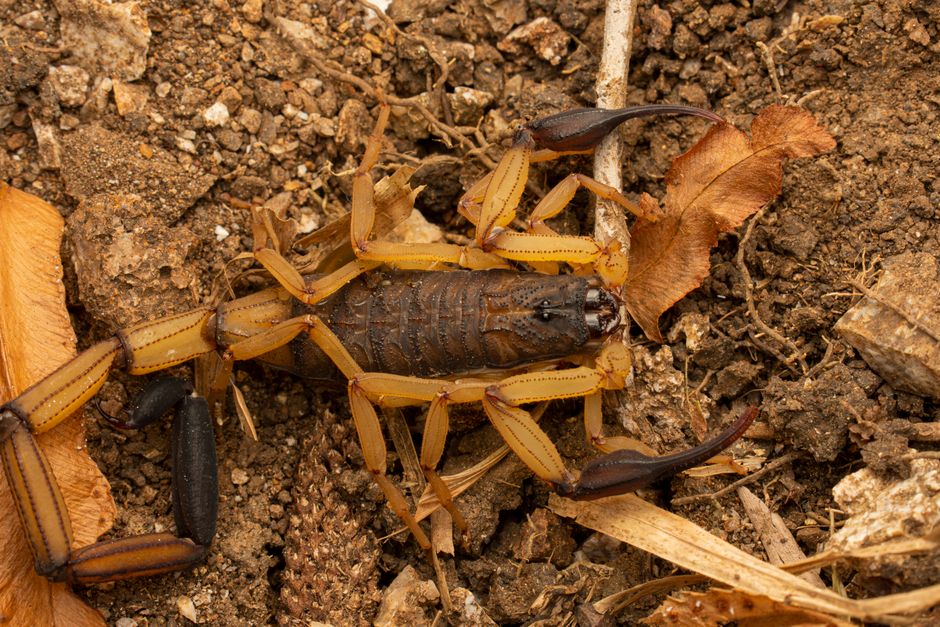
Scorpion stings are common in many parts of the world, and most are no more dangerous than a bee sting. However, certain species carry venom potent enough to cause serious illness or death, particularly in children and the elderly. The danger depends almost entirely on the species of scorpion and where you are in the world.
Is Scorpion Venom Deadly?
Yes, but only from specific species. Of the roughly 2,500 known scorpion species, only about 25 to 30 have venom that can kill a healthy adult human. These dangerous species are mostly found in North Africa, the Middle East, India, Mexico, and parts of South America.
In the United States, the only medically significant scorpion is the Arizona bark scorpion (Centruroides sculpturatus). Its sting is painful and can cause serious symptoms, but deaths are extremely rare. Since the development of antivenom, deaths from scorpion stings in the U.S. have become almost unheard of.
The most lethal scorpions in the world belong to the Androctonus genus, often called fat-tailed scorpions, and the Leiurus genus, which includes the deathstalker. These are found in North Africa and the Middle East. In Mexico, the Centruroides species are responsible for most severe stings and deaths.
What Does Scorpion Venom Do to the Body?
Scorpion venom is a complex mixture of toxins. The primary dangerous components are neurotoxins, which attack the nervous system. These toxins bind to sodium channels in nerve cells and keep them open.
Normally, a nerve fires, sends its signal, and rests. Scorpion venom disrupts this cycle. The nerve keeps firing repeatedly and uncontrollably. This causes a flood of nerve signals that lead to muscle spasms, pain, and dysfunction of organs controlled by those nerves.
This is why severe scorpion stings affect the heart, lungs, and muscles. The nervous system goes into overdrive. The body’s autonomic nervous system, which controls involuntary functions like heart rate and breathing, becomes overstimulated. This can lead to high blood pressure, irregular heart rhythms, and fluid buildup in the lungs.
In severe cases, the venom can cause pancreatitis, a dangerous inflammation of the pancreas. It can also cause a condition called pulmonary edema, where fluid fills the lungs and makes breathing difficult.
What Are the Symptoms of a Scorpion Sting?
Symptoms range from mild local pain to life-threatening systemic effects. The severity depends on the species, the amount of venom injected, and the victim’s size and health.
Most scorpion stings cause only local symptoms. These include:
- Immediate sharp burning pain at the sting site
- Numbness or tingling that spreads from the sting
- Swelling and redness
- Warmth at the sting area
These symptoms usually resolve within a few hours. For most healthy adults, a scorpion sting is painful but not dangerous.
Severe symptoms indicate envenomation that requires medical attention. These include:
- Rapid eye movements or uncontrolled jerking of the eyes
- Excessive drooling or frothing at the mouth
- Muscle twitching or jerking, especially in children
- Sweating and restlessness
- Nausea and vomiting
- High blood pressure
- Rapid heart rate or irregular heartbeat
- Difficulty breathing
- Slurred speech
- Confusion or agitation
Children are at much higher risk of severe symptoms. Their smaller body mass means the venom is more concentrated. A sting that causes mild symptoms in a 150-pound adult can be life-threatening in a 40-pound child.



What Should You Do If Stung by a Scorpion?
If you are stung and develop any symptoms beyond local pain, seek emergency medical care immediately. This is especially important for children, the elderly, and anyone with pre-existing heart or lung conditions.
For mild stings, home care is usually sufficient. Clean the wound with soap and water. Apply a cool compress to reduce pain and swelling. Over-the-counter pain relievers like acetaminophen or ibuprofen can help. Antihistamines may reduce itching.
There are things you should not do. Do not apply ice directly to the skin, as this can cause frostbite. Do not cut into the wound or try to suck out the venom. These old methods do not work and can cause infection. Do not apply a tourniquet. This restricts blood flow and can cause tissue damage.
Keep the affected limb elevated if possible. Stay calm. Panic increases heart rate and can spread the venom faster through the bloodstream.
When Is Scorpion Venom an Emergency?
Emergency care is needed if the sting victim is a child, especially under age 10. Emergency care is also needed if the victim develops any of the severe symptoms listed above.
Specific warning signs that require immediate hospital care include:
- Numbness spreading beyond the sting site
- Muscle spasms or uncontrolled jerking
- Difficulty breathing or swallowing
- Excessive drooling
- Rapid eye movements
- Vomiting
- Signs of shock such as pale skin, rapid pulse, or fainting
In the emergency room, doctors may administer antivenom. Antivenom is the only treatment that directly neutralizes the venom. It is most effective when given soon after the sting.
Severe stings may require additional hospital care. This can include intravenous fluids, medications to control blood pressure, and respiratory support. Patients with severe envenomation may need to be monitored in an intensive care unit.
What Is the Treatment for a Scorpion Sting?
Treatment depends entirely on symptom severity. For mild stings, supportive care at home is sufficient. For severe stings, antivenom is the definitive treatment.
Antivenom for scorpion stings is produced by immunizing animals, usually horses or sheep, with scorpion venom. The animal’s immune system produces antibodies against the venom. These antibodies are then harvested and purified.
There are different antivenoms for different scorpion species. An antivenom effective against a Mexican scorpion may not work for a North African species. This is why it is critical to know which scorpions are dangerous in your region.
In the United States, an antivenom called Anascorp is approved for the Arizona bark scorpion. It has been shown to rapidly reverse symptoms. Studies have found that most children treated with this antivenom show improvement within hours.
Doctors may also use sedatives to control agitation and muscle spasms. Pain medications may be given intravenously. In severe cases, medications to support blood pressure and heart function are used.
How Common Are Scorpion Sting Deaths?
Globally, scorpion stings cause an estimated several thousand deaths per year. The exact number is difficult to determine because many stings occur in rural areas with limited reporting.
The highest death rates are in North Africa, the Middle East, and India. In these regions, scorpion stings are a significant public health problem. Children account for most of the deaths.
In the United States, deaths from scorpion stings are extremely rare. The last confirmed death in Arizona, where the bark scorpion is common, was in 2004. With prompt medical care and antivenom, the risk of death is very low.
Global mortality rates have declined significantly in recent decades. This is due to better antivenom production, improved access to emergency care, and public education about prevention.
How Can You Prevent Scorpion Stings?
Prevention is straightforward. Scorpions are nocturnal and hide during the day. They seek out cool, dark, damp places.
Around the home, you can reduce scorpion habitat by removing piles of rocks, wood, and debris. Keep grass trimmed short. Seal cracks in walls and around doors and windows. Install weather stripping on doors.
Scorpions can enter homes through plumbing. Keep drains covered. Check shoes, boots, and clothing that have been left outside before putting them on. Shake out towels and bedding that have been on the floor.
When hiking or camping in scorpion territory, wear closed-toe shoes and long pants. Shake out sleeping bags and tents before use. Do not reach into crevices or under rocks without looking first.
In areas with dangerous scorpions, some pest control companies offer scorpion-specific treatments. These can be effective in reducing populations around the home.
Frequently Asked Questions
Can a scorpion sting kill a healthy adult?
Only stings from certain species can kill a healthy adult, and these are found mainly in North Africa, the Middle East, India, and parts of Latin America. In the United States, the Arizona bark scorpion can cause severe symptoms but death is extremely rare with prompt medical care.
How long after a scorpion sting do symptoms appear?
Pain is immediate, and severe symptoms usually develop within 30 minutes to a few hours. If serious symptoms have not appeared within several hours, the sting is likely to remain mild.
What is the treatment for a severe scorpion sting?
Antivenom is the only treatment that directly neutralizes scorpion venom. Hospital care may also include intravenous fluids, sedatives, pain medication, and support for blood pressure and breathing.
Are scorpion stings dangerous for children?
Yes, children are at significantly higher risk of severe symptoms because their smaller body size means the venom is more concentrated. Any child stung by a scorpion should be evaluated by a doctor.
