
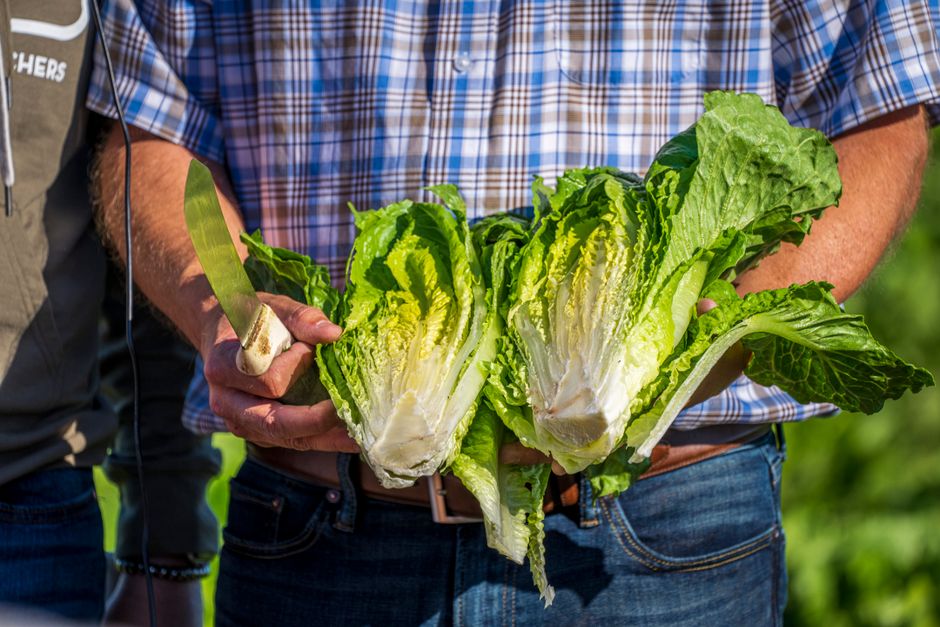
Romaine lettuce is genuinely good for you. It is low in calories, high in water, and provides a meaningful amount of several vitamins, especially vitamin K and vitamin A. It is not a “superfood” in the marketing sense, but it is a solid, everyday vegetable that most people would benefit from eating more of.
What Are the Main Nutrients in Romaine Lettuce?
Romaine is a leafy green vegetable. Like most leafy greens, its nutritional value comes from vitamins, minerals, and plant compounds rather than calories or protein.
A standard serving of romaine lettuce is about two cups, which is roughly 85 grams. That serving contains around 15 calories. It also provides a significant portion of your daily vitamin K needs, which is important for normal blood clotting and bone health.
The same serving offers a good amount of vitamin A in the form of beta-carotene. Your body converts beta-carotene into vitamin A, which supports vision, immune function, and skin health. Romaine also contains folate, a B vitamin that is especially important during pregnancy because it helps prevent certain birth defects.
Other nutrients found in smaller amounts include vitamin C, potassium, and iron. None of these are present in huge quantities, but they contribute to overall intake. The water content is high, around 95 percent, which is why the vegetable is so low in calories.
Is Romaine Lettuce Good For You Nutrition And Benefits Compared to Other Greens?
Romaine sits somewhere in the middle of the leafy green spectrum. It is more nutritious than iceberg lettuce, which is mostly water and provides very little beyond a small amount of vitamin K and folate. But it is less nutrient-dense than darker, more robust greens like kale, spinach, or collard greens.
Spinach and kale contain more iron, calcium, and vitamin C per serving than romaine. They also contain more antioxidants. However, romaine has advantages that those greens do not. It has a milder flavor and a crisp texture, which makes it easier for many people to eat in large amounts. A salad made with romaine is often more appealing than a salad made entirely with raw kale.
Romaine also contains a compound called lactucin, which is found in several types of lettuce. Some research suggests this compound may have mild sedative properties, but the evidence is limited and mostly from animal studies. No clinical evidence currently confirms that eating romaine will help you sleep.
How Does Romaine Lettuce Support Hydration and Digestion?
Because romaine is mostly water, it contributes to daily fluid intake. This matters more than people realize. Many adults do not drink enough water, and eating water-rich foods like romaine helps close that gap.
The vegetable also provides dietary fiber. A two-cup serving contains roughly 1.5 to 2 grams of fiber. That is not a large amount, but it adds up when combined with other vegetables, fruits, and whole grains. Fiber supports regular bowel movements and feeds the beneficial bacteria in your gut.
For people trying to manage their weight, romaine is useful because it adds volume to meals without adding many calories. You can eat a large salad and feel full while consuming very few calories. This is a well-established strategy for weight management. The fiber and water content both contribute to this feeling of fullness.





What Are the Health Risks of Romaine Lettuce?
The main health risk associated with romaine lettuce is foodborne illness. Romaine has been linked to outbreaks of E. coli infections in the United States, particularly the strain O157:H7. These outbreaks have been traced to leafy greens grown in certain regions, and they have led to large recalls.
This risk is real but manageable. The FDA has stated that leafy greens are a leading source of foodborne illness in the country. Washing romaine thoroughly under running water reduces surface contamination, but it does not eliminate all risk because bacteria can enter the plant through its root system or through cuts in the leaves.
Cooking romaine eliminates the bacteria, but most people eat it raw. If you are in a high-risk group, such as pregnant women, older adults, young children, or people with weakened immune systems, you should be more cautious. Pay attention to recall announcements and avoid romaine from regions with active outbreak investigations.
Another consideration is oxalates. Romaine contains oxalates, which are naturally occurring compounds found in many plants. For most people this is not a problem. But for people who form calcium oxalate kidney stones, high oxalate intake can be a concern. Romaine is not the highest-oxalate food, but it is not negligible either.
Is It Safe to Eat Romaine Lettuce Every Day?
For most healthy adults, eating romaine every day is safe and beneficial. It is a low-calorie, nutrient-dense food that can be part of a varied diet. The main concern is variety. Eating the same vegetable every day means you miss out on nutrients found in other vegetables.
A better approach is to rotate your greens. Use romaine for some salads, but also include spinach, arugula, or cabbage in your rotation. Each green has a slightly different nutrient profile. Variety is the most reliable way to get a broad range of vitamins and minerals.
If you take blood thinners, such as warfarin, talk to your doctor about your leafy green intake. These medications work by interfering with vitamin K. Eating a consistent amount of vitamin K-rich foods, including romaine, helps your doctor manage your dose. The problem is not eating romaine; it is eating wildly different amounts from week to week.
How to Choose and Store Romaine Lettuce
When buying romaine, look for crisp leaves with no signs of wilting, browning, or sliminess. The leaves should be firm and the cut end should look fresh. Avoid heads with bruised or discolored outer leaves.
Store romaine in the refrigerator. The crisper drawer is ideal because it maintains higher humidity. Keep it dry. Moisture accelerates spoilage. If you wash the leaves before storing, dry them thoroughly with a salad spinner or clean towel first.
Whole heads of romaine last longer than pre-cut bags. Pre-cut lettuce has more surface area for bacteria to grow on and tends to spoil faster. If you buy pre-cut romaine, check the expiration date and use it within a few days.
For food safety, wash romaine right before eating, not before storing. Run water over each leaf and rub the surface gently. A salad spinner removes excess water, which also helps dressing cling better to the leaves.
How to Add More Romaine to Your Diet
Romaine is versatile. It is the standard base for Caesar salad, but it works in many other dishes.
Use whole romaine leaves as a substitute for tortillas or bread. They hold fillings well and add crunch. Romaine hearts are particularly good for this because they are crisp and have a mild flavor.
Chop romaine and add it to soups or stir-fries at the end of cooking. It wilts quickly and adds color and texture. You can also grill romaine halves. Grilling caramelizes the edges and gives the lettuce a smoky flavor that works well with a simple vinaigrette.
For a quick side dish, toss chopped romaine with olive oil, lemon juice, and grated parmesan. This is simple, fast, and does not require a full salad dressing.
If you are trying to increase your vegetable intake, romaine is one of the easiest vegetables to eat in large quantities. The mild taste and crisp texture make it approachable for most people, including those who do not typically enjoy vegetables.
Frequently Asked Questions
Is romaine lettuce better than iceberg lettuce?
Yes. Romaine contains more vitamin A, vitamin K, and folate than iceberg lettuce.
Can romaine lettuce cause food poisoning?
Yes, romaine has been linked to E. coli outbreaks in the United States, so washing it thoroughly and checking for recalls is important.
Is romaine lettuce good for weight loss?
Yes, it is very low in calories and high in water and fiber, which helps you feel full with very few calories.
Does romaine lettuce have protein?
It contains a small amount, roughly one gram per two-cup serving, but it is not a meaningful source of protein.
