
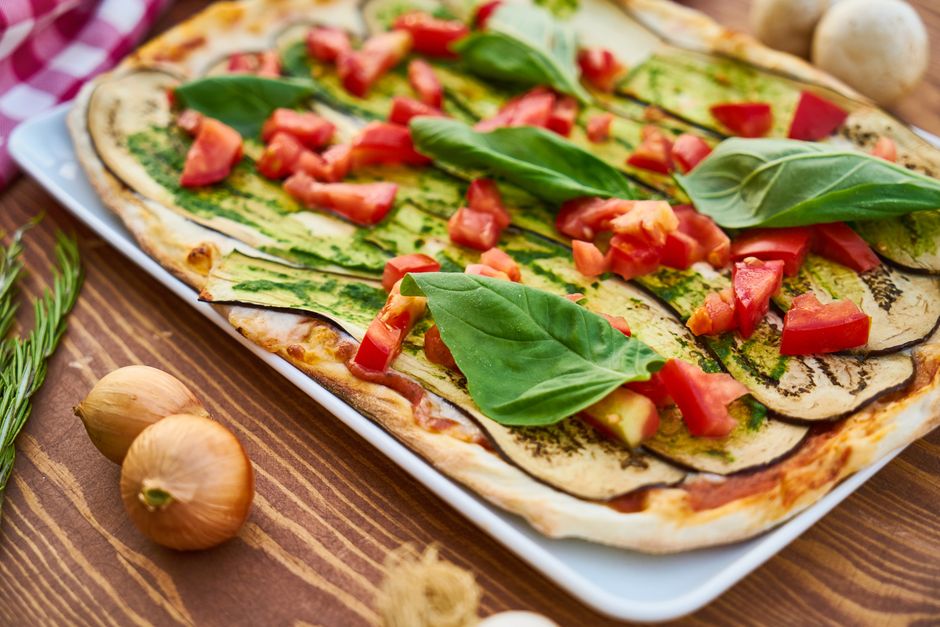
Pinsa is often marketed as a healthier alternative to traditional pizza, but the truth depends on what you compare and how it is made. Compared to a standard wheat-flour pizza, a traditional Roman pinsa generally has fewer calories per serving, less fat, and a lighter texture because of its unique flour blend and high hydration dough. However, the nutritional difference narrows significantly once you add cheese, cured meats, and oil, so the real answer is that pinsa can be healthier, but it is not automatically so.
What Is Pinsa and How Is It Different From Pizza?
Pinsa is an ancient Roman flatbread that has become popular in recent years. The dough is made with a blend of wheat flour, rice flour, and soy flour, which is different from the standard wheat flour used in most pizza dough. The rice flour makes the crust lighter, and the soy flour adds a small amount of protein.
The most important difference is hydration. Pinsa dough contains much more water than pizza dough — often around 80 percent hydration compared to pizza dough at roughly 60 percent. More water means the dough bakes into a lighter, airier crust. That air takes up volume, so a pinsa of the same size as a pizza weighs less and contains fewer carbohydrates and calories per slice.
Pinsa is also shaped differently. It is typically oval, with a thicker center that puffs up and a thinner, crispier edge. Traditional pizza is round and flat. These shape differences affect how toppings sit and how much dough you eat per bite.
Is Pinsa Healthier Than Pizza Nutrition Compared?
When you compare equal weights of plain crust, pinsa is nutritionally similar to pizza but slightly lower in calories and carbohydrates. The rice flour and soy flour blend changes the protein content modestly, and the higher water content means you get more volume for fewer calories. A standard serving of plain pinsa crust has roughly 200 to 250 calories, while a comparable slice of plain pizza crust has about 250 to 300 calories. These numbers vary by recipe, so they are estimates, not fixed values.
The bigger difference is satiety. Because pinsa contains more air and water, a full pinsa looks and feels like a full pizza but delivers fewer calories. For someone trying to manage portions, this can make a real difference. You get the visual satisfaction of a large meal without the calorie load of a dense pizza crust.
However, the crust is only part of the meal. A margherita pinsa with fresh mozzarella, tomato sauce, and basil is genuinely lighter than a pepperoni pizza with extra cheese. But a pinsa loaded with four cheeses, prosciutto, and a drizzle of honey can easily match or exceed the calorie count of a standard pizza. The crust advantage disappears when toppings are heavy.
What Are the Main Nutritional Differences in the Crust?
The flour blend is the key nutritional distinction. Traditional pizza dough is made with refined wheat flour, which is mostly starch with a small amount of protein. Pinsa dough adds rice flour, which is also refined starch, and soy flour, which adds protein and a little fiber. The soy flour is the only ingredient that meaningfully changes the nutrient profile.
Because the soy flour is a small percentage of the total blend, the protein difference is minor. A plain pinsa crust might have 2 to 4 grams more protein than a plain pizza crust of equal weight. That is not enough to make pinsa a high-protein food, but it is a small improvement.
The hydration also affects the glycemic response. A higher-water dough tends to digest more slowly than a dense, dry dough, which may lead to a smaller blood sugar spike after eating. Some research suggests that food structure and water content influence glucose absorption, but the effect is modest and not a substitute for balanced meal planning.
There is no evidence that pinsa is gluten-free. The wheat flour in the blend contains gluten, and people with celiac disease or gluten sensitivity should not assume pinsa is safe. Some pizzerias offer gluten-free versions, but a traditional pinsa is not one of them.



How Do Toppings Change the Comparison?
Toppings are where the health comparison gets complicated. A pinsa with fresh vegetables, light mozzarella, and tomato sauce is a balanced meal. A pinsa with sausage, extra cheese, and garlic oil is not meaningfully healthier than the same pizza.
Cheese is the largest calorie contributor on most pizzas and pinsas. A standard serving of mozzarella adds roughly 80 to 100 calories per ounce, and most restaurant pizzas use far more than one ounce. Cured meats like pepperoni and prosciutto add calories, sodium, and saturated fat. The crust difference between pinsa and pizza is small compared to the difference between a vegetable topping and a meat-heavy topping.
One practical advantage of pinsa is portion control. Because the crust is lighter, a whole pinsa is often less filling than a whole pizza of the same size. That means you may eat less total food before feeling satisfied. But this works only if you stop when full. If you eat an entire large pinsa out of habit, the calorie savings shrink.
Is Pinsa Lower in Sodium or Fat?
The crust itself is not lower in sodium or fat. Both pinsa and pizza dough are made with salt, and neither contains meaningful fat unless oil is added to the dough. The fat content of both dishes comes almost entirely from toppings.
Some recipes add olive oil to pinsa dough for flavor and texture. Olive oil is a heart-healthy fat, but it still adds calories. A tablespoon of olive oil contains about 120 calories, and it is easy to use more than that when brushing the crust or drizzling it on top.
If you are comparing a plain pinsa to a plain pizza, the sodium levels are roughly similar. Both rely on salt for flavor and dough structure. The sodium difference becomes significant only when you compare specific toppings, such as anchovies or cured meats, which are high in sodium regardless of the base.
What Does the Evidence Actually Show?
There is no large clinical trial comparing pinsa to pizza as a health intervention. The nutritional differences are based on ingredient analysis and standard food composition data, not on studies of people eating these foods over time. That does not mean the differences are false — it means the claims are modest and should be understood as such.
What the evidence supports is straightforward: a higher-water dough with a small amount of soy flour produces a crust that is slightly lower in calories and carbohydrates per serving than a standard wheat crust. This is a real but small difference. It is not a nutritional breakthrough, and it does not change the fact that both foods are carbohydrate-based and should be eaten in reasonable portions.
Some marketing claims go further, suggesting pinsa is easier to digest or better for blood sugar. The digestion claim is plausible because the airier texture may reduce how much dough you eat, but no clinical study has confirmed it. The blood sugar claim has some biological basis in the higher water content, but the effect has not been measured in a controlled trial. These are reasonable hypotheses, not established facts.
How to Make a Healthier Choice at the Pizzeria
If you are choosing between pinsa and pizza, focus on the toppings and portion size first. A vegetable-heavy pinsa with light cheese is a better choice than a meat-heavy pizza, and vice versa. The crust difference matters, but it is smaller than the topping difference.
Ask for sauce on the side, choose one cheese instead of a blend, and avoid cured meats if you are watching sodium or saturated fat. A simple pinsa with tomato sauce, fresh basil, and a moderate amount of mozzarella is a balanced meal. Adding a side salad or vegetables can increase fiber and volume without adding many calories.
Be aware that restaurant portions are often larger than a standard serving. A typical pinsa is designed for one person, but it can easily provide two meals worth of calories when loaded with toppings. Splitting a pinsa and adding a salad is a practical way to keep the meal moderate.
Is Pinsa Healthier for People With Specific Conditions?
For people with type 2 diabetes or prediabetes, the lighter crust may produce a smaller blood sugar response than a dense pizza crust, but the evidence is not strong enough to make a firm recommendation. The safest approach is to test your own blood sugar response or work with a dietitian to understand how your body reacts.
For people with high blood pressure, the sodium content of the toppings matters more than the crust. Choose vegetable toppings and limit cured meats, olives, and extra cheese.
For people with celiac disease, traditional pinsa is not safe. The wheat flour contains gluten, and cross-contamination in a pizzeria is a real risk. If a restaurant offers a gluten-free pinsa, ask how it is prepared and whether separate equipment is used.
For people trying to lose weight, the lighter crust can help with portion control, but the total calorie count of the meal still depends on what you put on top. A pinsa is not a free pass, and it is not a low-calorie food by any standard.
Frequently Asked Questions
Is pinsa dough actually healthier than pizza dough?
Pinsa dough is slightly lower in calories and carbohydrates per serving because it contains more water and a small amount of soy flour. The difference is real but modest, and it disappears if toppings are heavy.
Can I eat pinsa if I am gluten intolerant?
Traditional pinsa contains wheat flour and is not gluten-free. If you have celiac disease or gluten sensitivity, you need a specifically gluten-free version made with safe ingredients.
Is pinsa lower in calories than pizza?
A plain pinsa crust has fewer calories than a plain pizza crust of the same size because it is lighter and contains more air. Once you add cheese and toppings, the calorie difference becomes small.
Does pinsa taste like pizza?
Pinsa has a lighter, crispier texture and a slightly different flavor from the rice and soy flour blend. It is similar to pizza but not identical, and many people find it less filling per slice.
