
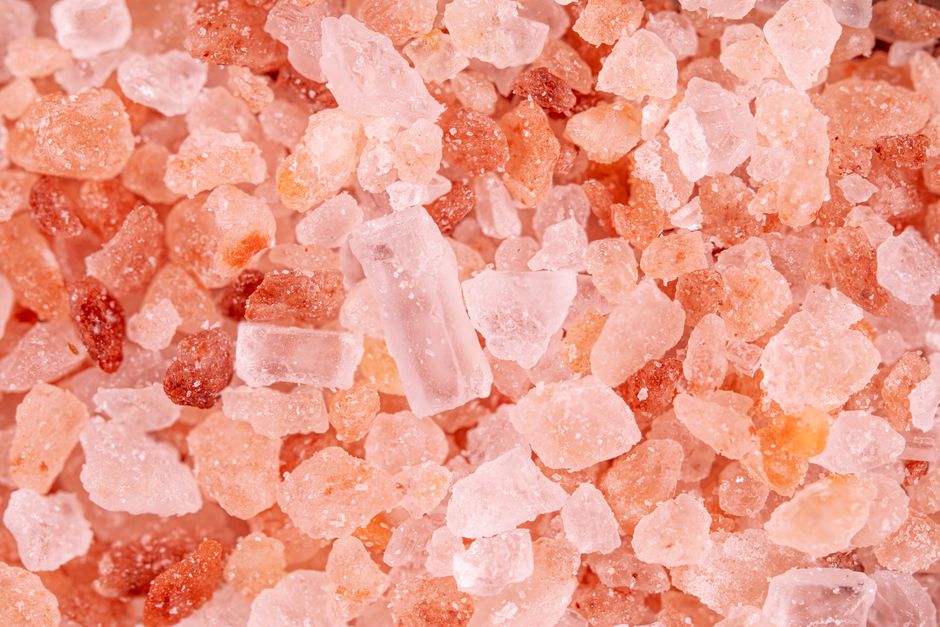
Pink salt is not a health food. It is salt — sodium chloride — with trace amounts of minerals that give it a pink color. Those minerals are present in amounts too small to matter for your health, and pink salt carries the same sodium risks as regular table salt. The main difference is price.
If you bought pink salt expecting a mineral boost, you were sold a story, not a supplement. If you use it simply because you like how it looks and tastes, that is fine. The health question is not which salt you use. It is how much salt you eat overall.
What Is Pink Salt and Where Does It Come From?
Pink salt is rock salt mined from ancient seabed deposits. The most familiar type is Himalayan pink salt, mined in the Salt Range of Pakistan. Other pink salts come from places like Peru and Australia. The pink color comes from trace iron oxide — essentially rust — along with small amounts of other minerals.
All of these salts are chemically similar. They are roughly 97 to 99 percent sodium chloride. The remaining 1 to 3 percent is a mix of minerals including calcium, magnesium, potassium, and iron. That mineral content is what turns the crystals pink and what marketers point to when they call it healthier.
Table salt, by contrast, is more heavily refined. It is nearly pure sodium chloride, and in the US it is typically fortified with iodine — a public health measure that began in the 1920s to prevent iodine deficiency and goiter. Pink salt is not iodized. That distinction matters more than the trace minerals, and most people never hear it.
Does Pink Salt Have More Minerals Than Regular Salt?
Yes, but the amounts are nutritionally meaningless. This is the single most important fact in the entire pink salt conversation.
To get a meaningful amount of, say, magnesium or potassium from pink salt, you would need to eat an absurd quantity of salt — far more than is safe. The minerals are present, but they are not present in quantities that change anything about your diet.
Consider what a typical serving looks like. A quarter teaspoon of salt weighs about 1.5 grams and supplies roughly 575 milligrams of sodium. The trace minerals in that same quarter teaspoon amount to a few milligrams at most. Compare that to foods that actually deliver minerals: a cup of cooked spinach, a banana, a serving of beans. Those foods provide minerals in hundreds of milligrams, not single digits.
Some pink salt brands publish mineral analyses showing dozens of trace elements. That sounds impressive until you read the units. Most are measured in parts per million or less. A mineral you consume in parts per million does not function as a nutrient in your body.
Is Pink Salt Healthier Than Table Salt?
No. For the purpose of human health, pink salt and table salt are effectively the same product with different packaging.
Both raise blood pressure in the same way, because both deliver sodium. Both contribute to the same risks when eaten in excess. The trace mineral difference is too small to measure in any health outcome.
There is one genuine difference, and it favors table salt. Iodized table salt helps prevent iodine deficiency, which remains a real public health concern worldwide and can affect thyroid function, especially in pregnancy. Pink salt does not provide iodine. People who switch entirely to pink salt and use it as their only salt may be reducing their iodine intake without realizing it.
This does not mean you must use iodized salt. Iodine also comes from seafood, dairy, eggs, and some produce, depending on the soil it grew in. But if you have replaced all your salt with a non-iodized variety, it is worth knowing that tradeoff exists.




Is Pink Salt Healthy? What the Evidence Actually Shows
The evidence does not support any health advantage for pink salt. What the evidence does support is a clear relationship between high sodium intake and elevated blood pressure, which is a major risk factor for heart disease and stroke.
Dietary guidelines in the United States recommend limiting sodium to 2,300 milligrams per day, with a further reduction to 1,500 milligrams per day for people with hypertension, diabetes, or kidney disease. That 2,300 milligrams equals about one teaspoon of salt — any salt. The type you choose does not change this number.
Most Americans consume well above the recommended limit, largely from processed and restaurant foods rather than the salt shaker. This is a detail worth sitting with. If you are worried about your sodium intake, the salt you sprinkle at the table is a small part of the picture. The bigger sources are packaged snacks, deli meats, canned soups, frozen meals, and fast food.
Switching from table salt to pink salt does nothing to change any of this. It is a lateral move.
How Do the Different Salts Compare?
The table below compares common salts on the factors that actually matter. Values are approximate and vary by brand and source.
| Type | Sodium chloride | Trace minerals | Iodine | Relative cost |
|---|---|---|---|---|
| Table salt | ~99% | Minimal | Usually added | Low |
| Pink salt | ~97–99% | Small amounts | None | High |
| Sea salt | ~97–99% | Small amounts | Usually none | Medium to high |
| Kosher salt | ~99% | Minimal | Usually none | Medium |
Notice that the sodium chloride content is nearly identical across all four. The differences that exist are in trace minerals, iodine, and price — not in how the salt affects your body.
Are There Any Real Risks From Pink Salt?
The risks of pink salt are the risks of salt. There is no unique danger, but there is also no unique safety.
High sodium intake is linked to elevated blood pressure, and over time that raises the risk of heart disease, stroke, and kidney problems. This applies to pink salt exactly as it applies to any other salt. Using pink salt does not let you eat more salt safely.
One separate concern involves heavy metals. Some pink salts have been found to contain small amounts of lead, arsenic, or other metals, because they are mined from the earth rather than refined. The levels detected in testing have generally been very low, and it is not clear that they pose a meaningful health risk at typical consumption levels. The evidence here is limited, and it is not a strong reason to avoid pink salt — but it is also not a reason to think of it as purer than table salt. “Natural” and “unrefined” do not mean contaminant-free.
Does Pink Salt Have Any Real Benefits?
The claimed benefits do not hold up. Pink salt is marketed for hydration, mineral balance, electrolyte replacement, and even detoxification. None of these claims are supported by clinical evidence.
Electrolyte products do contain sodium, and sodium is genuinely important for hydration and nerve and muscle function. But pink salt is not a superior electrolyte source. It is one source of sodium among many, and it lacks the potassium and other electrolytes that well-formulated hydration products include.
Detoxification claims are not grounded in physiology. The body clears waste through the liver and kidneys. No salt, pink or otherwise, “detoxes” anything.
Where pink salt does have a legitimate role is in cooking. Its larger crystals are easy to pinch and sprinkle, and its flavor is clean. Many cooks prefer it for finishing dishes. That is a culinary preference, not a health benefit, and there is nothing wrong with choosing it on those grounds.
Should You Switch to Pink Salt?
Switch if you enjoy it. Do not switch expecting health benefits, because there are none to get.
If your goal is better health, the salt variety is not where to focus. The more useful moves are reducing sodium overall, and paying attention to the processed foods that supply most of it. Those changes affect your health in ways that swapping salt brands never will.
If you do use pink salt, consider keeping some iodized salt in your kitchen too, or making sure you get iodine from other sources. That is the one place where the choice between salts has a real nutritional consequence — and it points in the opposite direction from the marketing.
Frequently Asked Questions
Is pink salt healthier than regular salt?
No. Pink salt and regular table salt are both roughly 97 to 99 percent sodium chloride, and they affect your body the same way. The trace minerals in pink salt are present in amounts too small to have any nutritional effect.
Does pink salt have more minerals than table salt?
It contains slightly more trace minerals, but in quantities measured in parts per million. You would need to eat unsafe amounts of salt to get a meaningful dose of any mineral from it. Food, not salt, is where minerals come from.
Can pink salt lower blood pressure or help with hydration?
No. Pink salt raises blood pressure the same way any salt does, and it is not a superior hydration product. No clinical evidence supports these claims.
Is pink salt safe to eat every day?
It is safe in the same way any salt is safe — in moderation. The recommended limit is 2,300 milligrams of sodium per day, about one teaspoon of salt, and pink salt counts toward that limit exactly like table salt.
