
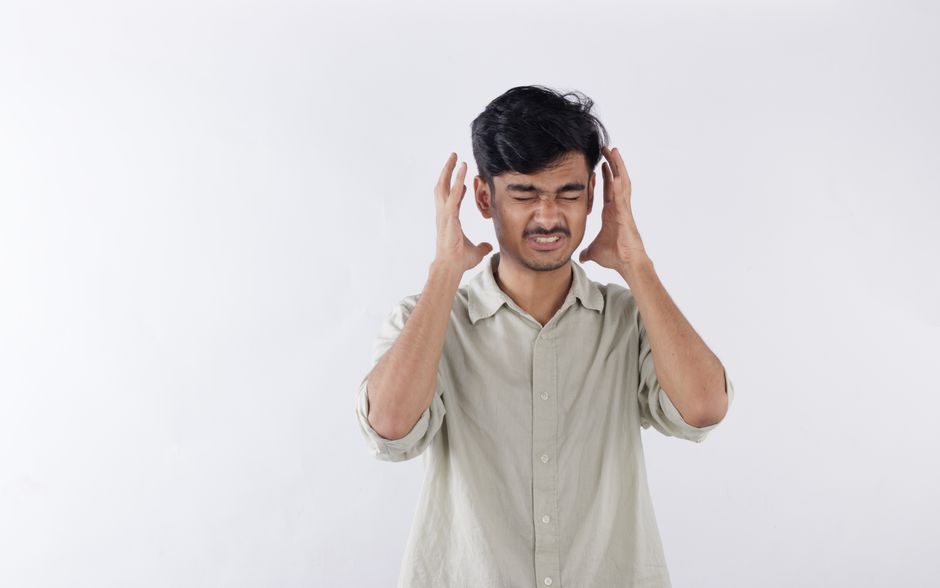
Overthinking is a common experience, but when it becomes constant, it often points to something deeper. The short answer is yes—overthinking is frequently a symptom of anxiety, though it can also occur on its own. It is not a formal medical diagnosis, but it is a well-recognized thinking pattern that is closely linked to anxious states.
What Is the Link Between Overthinking and Anxiety?
Anxiety and overthinking feed each other. Anxiety creates a sense of threat or unease, and the mind tries to solve that feeling by thinking through every possible outcome. This is why anxious people often replay conversations, worry about future events, or analyze past mistakes.
Research consistently shows that people with anxiety disorders tend to engage in more repetitive negative thinking. This includes rumination, which is dwelling on past problems, and worry, which is focused on future threats. Both are forms of overthinking.
Overthinking is not the same as productive problem-solving. Problem-solving leads to a decision or action. Overthinking loops without resolution. The brain stays alert, searching for answers that never feel certain enough.
How Does Overthinking Differ From Normal Worry?
Everyone worries from time to time. Normal worry is tied to a specific event, like a job interview or a medical test. It fades once the event passes or the problem is resolved.
Overthinking tied to anxiety is different. It is persistent, intrusive, and often about things that cannot be fully controlled. The worry does not stop even when there is no clear threat. It can interfere with sleep, work, and relationships.
Another key difference is the content. Normal worry usually has a practical focus. Anxious overthinking often involves catastrophic predictions—imagining the worst-case scenario even when it is unlikely. This is sometimes called catastrophizing.
Is Overthinking a Symptom of Anxiety or a Separate Condition?
Overthinking is best understood as a symptom or feature of anxiety rather than a separate condition. It appears across several anxiety disorders, including generalized anxiety disorder, social anxiety disorder, and panic disorder.
However, overthinking can also happen in people who do not meet the criteria for an anxiety disorder. Some people have a tendency toward rumination as a personality trait. Others overthink during periods of stress, grief, or major life transitions.
It can also be a feature of depression. Rumination is common in both anxiety and depression, and the two conditions frequently overlap. If overthinking is accompanied by persistent low mood, loss of interest, or changes in sleep and appetite, depression may be part of the picture.
There is also a specific pattern called rumination syndrome, but that refers to a physical digestive issue, not a thinking pattern. The mental health use of the word rumination is what applies here.





What Causes the Brain to Overthink?
The brain has a built-in alarm system. When it detects a possible threat, it activates a stress response. This response is helpful in real danger, but in anxiety, the alarm goes off without an actual emergency.
During this state, the brain’s prefrontal cortex—the area responsible for planning and reasoning—stays highly active. It keeps generating scenarios and trying to predict outcomes. This is the mental engine behind overthinking.
Anxiety also reduces tolerance for uncertainty. The brain wants a guaranteed answer, and when it cannot find one, it keeps searching. This creates the repetitive loop that feels impossible to break.
Some research suggests that people who overthink may have differences in brain activity in regions linked to self-reflection and threat detection. But brain imaging is not used to diagnose overthinking or anxiety in clinical practice.
Can Overthinking Occur Without Anxiety?
Yes. Overthinking is not exclusive to anxiety. It can occur in people who are simply prone to deep analysis or perfectionism.
Perfectionists often overthink because they fear making the wrong choice. They may weigh options endlessly, looking for the perfect outcome that does not exist. This can look like anxiety but may not come with the physical symptoms of anxiety, such as a racing heart or shortness of breath.
Overthinking can also be a learned habit. If a person grew up in an environment where they had to anticipate problems to stay safe, their brain may default to scanning for threats even in adulthood.
That said, chronic overthinking often increases anxiety over time. Even if it starts without anxiety, the constant mental churn can produce anxious feelings. The two can become difficult to separate.
How Do You Know If Overthinking Is a Problem?
Overthinking becomes a problem when it starts affecting daily life. Signs include difficulty falling asleep because the mind will not quiet, trouble concentrating at work, or avoiding decisions because of excessive deliberation.
It is also a problem when it causes distress. If the thinking feels uncontrollable, or if it leads to physical symptoms like tension headaches, fatigue, or irritability, it may be worth addressing.
Mental health professionals use structured interviews and questionnaires to assess anxiety. There is no lab test for overthinking. A clinician will ask about the frequency, duration, and impact of the thoughts, as well as other symptoms like restlessness, muscle tension, and sleep disturbance.
If overthinking is accompanied by panic attacks, avoidance of social situations, or persistent fear that is hard to control, it is reasonable to seek an evaluation from a mental health professional.
What Are the Most Effective Ways to Manage Overthinking?
Cognitive behavioral therapy, or CBT, has the strongest evidence base for treating anxiety and related thinking patterns. CBT helps people identify unhelpful thought patterns and test them against reality.
One technique used in CBT is called cognitive restructuring. This involves examining the evidence for and against a worry. It is not about positive thinking. It is about accurate thinking.
Another approach is scheduled worry time. This means setting aside a specific period each day to think about worries, and postponing worry outside that window. Some studies suggest this can reduce overall worry time, though results vary.
Mindfulness-based practices can also help. These teach people to notice thoughts without getting caught up in them. The goal is not to stop thinking, but to change the relationship with thoughts so they have less power.
Physical activity has consistent evidence for reducing anxiety symptoms. Exercise can interrupt the stress response and provide a mental break from the thinking loop.
For some people, medication is helpful. Selective serotonin reuptake inhibitors, or SSRIs, are commonly prescribed for anxiety disorders. These are prescription medications that require evaluation by a doctor or psychiatrist. They do not eliminate overthinking directly, but they can reduce the underlying anxiety that drives it.
No single technique works for everyone. Many people benefit from combining therapy, lifestyle changes, and sometimes medication. A mental health professional can help tailor an approach to individual needs.
Frequently Asked Questions
Can overthinking be a symptom of anxiety?
Yes, overthinking is a common symptom of anxiety, particularly in generalized anxiety disorder. It often appears as persistent worry or rumination that is hard to control.
How do I stop overthinking at night?
Try setting a worry time earlier in the day and writing down concerns before bed. If racing thoughts persist and disrupt sleep regularly, it is worth discussing with a doctor.
Is overthinking a sign of intelligence?
There is no reliable evidence linking overthinking to higher intelligence. Overthinking is more closely associated with anxiety and distress than with cognitive ability.
When should I see a professional for overthinking?
Consider seeking help if overthinking interferes with sleep, work, or relationships, or if it comes with physical symptoms of anxiety. A mental health professional can assess whether an anxiety disorder is present.
