
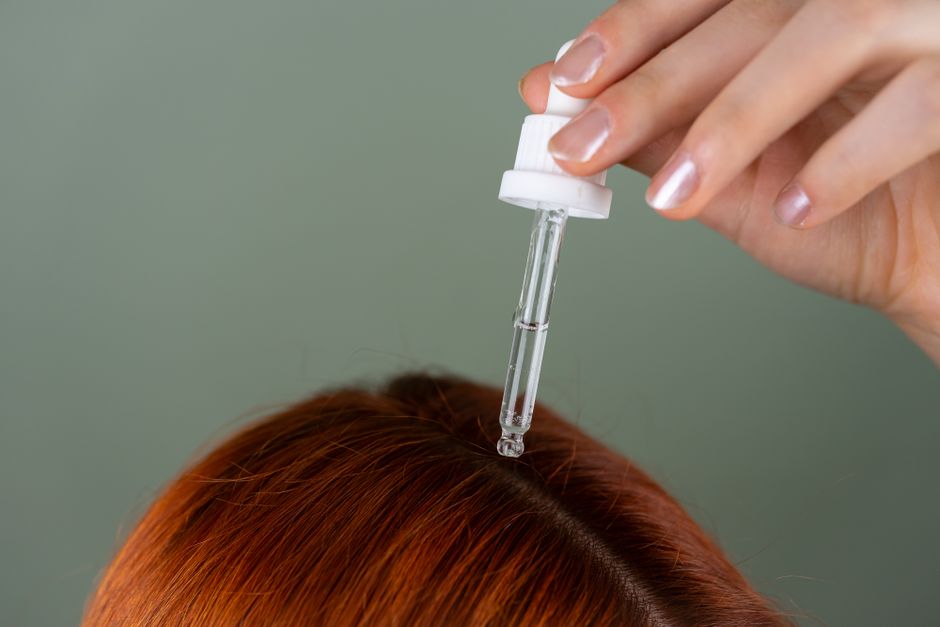
Menthol does not grow hair. It can feel cool and tingly on the scalp, and that sensation is often marketed as “stimulating” hair follicles, but there is no clinical evidence that menthol on its own regrows hair or treats pattern hair loss. What menthol can realistically do is make a shampoo or scalp product feel refreshing. Any real hair growth you notice while using a menthol product is more likely coming from something else in the bottle — or from the fact that hair loss has many causes, some of which resolve on their own.
Is Menthol Good For Hair Growth What To Expect?
If you use a menthol shampoo or scalp tonic, expect a cooling sensation, not new hair. Menthol activates cold-sensing receptors in the skin called TRPM8. That triggers a feeling of cold and tingling. It does not trigger follicle growth.
Hair grows from a structure called the hair follicle, which sits below the skin surface. Growth depends on blood supply, hormones, genetics, nutrition, and the health of the follicle itself. A topical ingredient that creates a sensory experience on the skin surface does not automatically change any of those things.
This is where a lot of scalp product marketing goes wrong. A tingle is interpreted as “working.” But a tingle is just a nerve signal. It is not evidence that hair is growing. No human trial has shown that menthol by itself increases hair count, hair thickness, or growth rate.
What Does Menthol Actually Do to the Scalp?
Menthol is a compound found in peppermint and other mint plants. When applied to skin, it produces a cooling feeling by activating TRPM8 receptors. It also has mild local anesthetic and anti-itch properties, which is why it shows up in topical creams for sore muscles and itchy skin.
Some research has looked at peppermint oil — not isolated menthol — for hair. A small animal study found that peppermint oil applied to mice promoted hair growth compared to a control. That study was in mice, not people, and it used whole peppermint oil, which contains many compounds besides menthol. Results in mice frequently do not carry over to humans. No large human trial has confirmed this effect.
There is also a difference between menthol and peppermint oil that gets blurred in marketing. Peppermint oil contains menthol plus other compounds. A product that says “peppermint” is not the same as one that lists menthol as the active cooling agent. Neither has strong human evidence for hair regrowth.
One more point worth knowing: the cooling sensation can mask irritation. If a product is causing redness, burning, or itching that you would normally notice, menthol’s numbing effect can hide it. That does not make the product safer.
Why Do Some People Think Menthol Helps Hair?
The belief comes from a few places, and it is worth understanding each one.
- The tingle feels like action. Cool and tingly sensations are easy to read as “something is happening.” That feeling is not connected to follicle activity.
- Increased blood flow is assumed to help. Some ingredients do increase local blood flow, and this is often described as “feeding the follicle.” Blood flow matters for follicle health, but increasing it on the surface does not reliably grow hair. The relationship is not as simple as more blood equals more hair.
- Confusion with minoxidil. Minoxidil is an FDA-approved topical treatment for pattern hair loss. Some menthol products are sold alongside it or marketed as natural alternatives. Minoxidil has clinical trial evidence. Menthol does not.
- Coincidence with natural hair cycles. Hair loss from stress, illness, or shedding often improves on its own over months. If someone starts a menthol product during that window, the product gets the credit.
None of these are proof. They are reasons the idea spreads.





What Is Actually Proven to Help Hair Growth?
A short list of things have real evidence behind them. This matters because if you are losing hair, spending months on a product without evidence delays something that might work.
Minoxidil is an FDA-approved topical treatment for androgenetic alopecia (pattern hair loss) in men and women. It has been studied in randomized trials. It works for some people, not all, and results usually require ongoing use.
Finasteride is an FDA-approved oral prescription for pattern hair loss in men. It is not approved for women of childbearing age because of serious risks in pregnancy.
Other options exist depending on the cause — prescription treatments, low-level laser devices, and in some cases procedures. Which one fits depends on why the hair is thinning.
Nutrition matters too. Iron deficiency, thyroid problems, and low protein intake can all affect hair. These are diagnosed with blood tests, not guessed at. If you have unexplained hair loss, a doctor can check for these causes.
What is not on the proven list: menthol, peppermint oil as a standalone treatment, and most “tingling” scalp products. That is the honest position based on current evidence.
Can Menthol Cause Problems for Your Scalp or Hair?
For most people, menthol in a shampoo or tonic causes no harm beyond temporary cooling. But it is not risk-free for everyone.
Menthol can irritate sensitive skin. People with eczema, psoriasis, or a damaged scalp barrier may react with redness, stinging, or a rash. If you have a scalp condition, a cooling ingredient can make irritation worse even while it feels soothing.
Allergic contact dermatitis to menthol and peppermint oil is documented. Signs include itching, redness, and bumps that appear or worsen after use. If that happens, stopping the product is the first step.
Menthol should not be applied to broken skin or open wounds. It should also be kept away from the eyes. These are standard precautions for topical menthol products.
If you are pregnant or breastfeeding, or using a menthol product on a child, there is no established guidance specific to hair growth because menthol is not a recognized hair treatment. For any topical product in these groups, check with a clinician rather than assuming it is fine because it is “natural.”
How to Read Menthol Hair Product Labels
Labels are designed to sound impressive. Here is how to cut through it.
If a product claims to “stimulate follicles” or “boost growth” because it contains menthol or peppermint, ask what human evidence supports that claim. Usually there is none. The claim rests on the sensation, not on trials.
Look at the ingredient list. Menthol, peppermint oil, and menthyl lactate are all cooling agents. Their presence tells you the product will feel cool. It tells you nothing about hair growth.
Be wary of “clinical strength” or “dermatologist tested” language. These phrases are not regulated the way drug claims are. A cosmetic can say it is dermatologist tested without proving it grows hair.
If a product also contains minoxidil, that is a different situation. Minoxidil is the active ingredient with evidence. The menthol in that bottle is there for feel, not for results.
What Should You Expect If You Try a Menthol Product?
Expect a cool, tingly scalp for a while after use. Expect the feeling to fade. Do not expect more hair.
If your goal is a refreshing shampoo, menthol does that job. If your goal is to treat hair thinning, menthol is the wrong tool. Give proven treatments time — hair grows slowly, and visible change from any real treatment typically takes months, not weeks. That timeline applies to treatments with evidence, not to menthol.
If you are losing hair and do not know why, that is the real question to answer first. Pattern hair loss, shedding after illness or stress, thyroid issues, iron deficiency, and other causes look different and are treated differently. A doctor or dermatologist can tell them apart. Guessing with a menthol product usually just costs time.
Frequently Asked Questions
Does menthol help hair grow?
No. There is no clinical evidence that menthol by itself grows hair or treats hair loss. The cooling sensation it creates is a nerve effect, not a sign of follicle activity.
Is peppermint oil good for hair growth?
Some early animal research suggests peppermint oil may promote hair growth in mice, but this has not been confirmed in large human trials. It is not an established treatment for hair loss.
Why does menthol make my scalp tingle?
Menthol activates cold-sensing receptors called TRPM8 in the skin, which produces a cooling, tingling feeling. That sensation does not indicate that hair is growing.
What actually works for hair loss?
FDA-approved treatments such as topical minoxidil and oral finasteride have clinical trial evidence for pattern hair loss, and underlying causes like iron deficiency or thyroid problems can be treated once diagnosed. Menthol is not among the proven options.
