
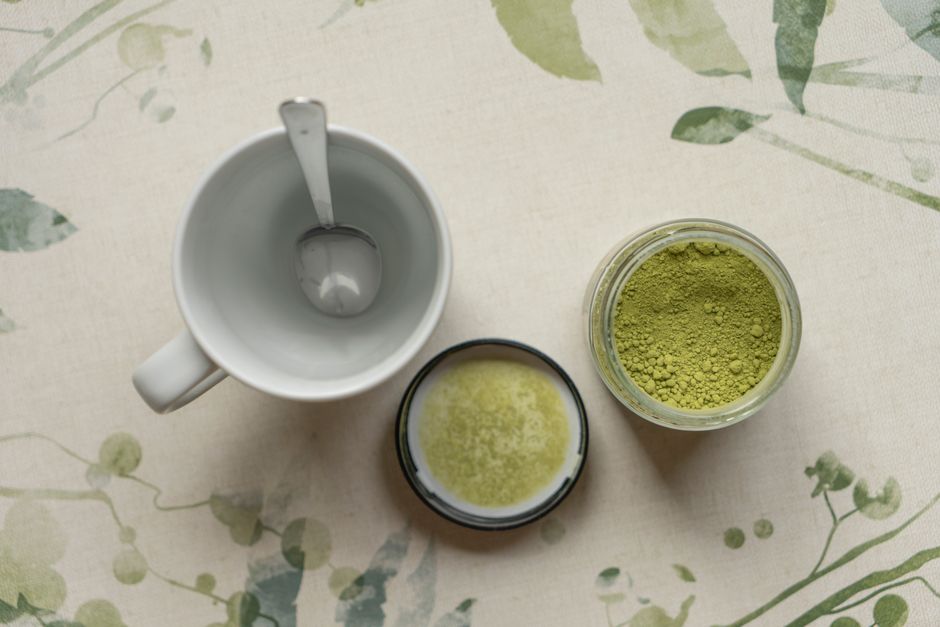
Matcha is a concentrated form of green tea, and its potential benefits for hair come from its high levels of antioxidants, particularly EGCG. While the research is still developing, the evidence suggests that matcha may support hair health by reducing oxidative stress and blocking certain hormones linked to hair loss. However, matcha is not a proven treatment for any specific hair condition, and it carries real risks when consumed in excess due to its caffeine content.
What Makes Matcha Different From Regular Green Tea?
Matcha is green tea leaves ground into a fine powder. When you drink steeped green tea, you discard the leaves. With matcha, you consume the entire leaf, which means you get a more concentrated dose of the plant’s compounds.
This includes a class of antioxidants called catechins. The most studied catechin in green tea is EGCG (epigallocatechin gallate). Research consistently shows that matcha contains higher levels of these catechins per serving than standard brewed green tea. This concentration is the main reason matcha is studied for health effects, including hair.
Is Matcha Good For Hair Benefits And Risks: The Evidence
The question “Is Matcha Good For Hair Benefits And Risks” does not have a simple yes or no answer. The evidence for benefits is mostly preliminary, while the risks are more clearly defined.
Most research on green tea and hair has been done in laboratories or on animals, not in large human trials. One mechanism that has been studied is how EGCG affects dihydrotestosterone (DHT). DHT is a hormone linked to androgenetic alopecia, the most common form of hair loss in both men and women. Some laboratory studies have found that EGCG can inhibit the enzyme (5-alpha-reductase) that converts testosterone into DHT. This is the same mechanism used by prescription hair loss medications like finasteride, though finasteride works much more strongly.
Another area of study is oxidative stress. Hair follicles are sensitive to damage from free radicals, which are unstable molecules that can harm cells. The antioxidants in matcha may help neutralize these free radicals. Some research suggests this could protect hair follicle cells from premature aging and damage. This is biologically plausible, but it has not been confirmed in large clinical studies on humans.
No clinical evidence currently confirms that drinking matcha will regrow hair or prevent hair loss in humans. The studies that exist are small, use isolated compounds rather than the whole beverage, and often involve animal models. This does not mean matcha is useless for hair, but it means the honest position is that the evidence is limited.
How Matcha Could Support Hair Health
Matcha contains several nutrients that play a role in normal hair function. It is not a magic bullet, but its nutritional profile is relevant.
Matcha provides a small amount of vitamin C, which helps the body absorb iron. Iron deficiency is a well-established cause of hair thinning, especially in women. Matcha also contains some B vitamins, which are involved in cellular metabolism. However, the amounts are not high enough to correct a deficiency on their own.
The primary argument for matcha and hair is its anti-inflammatory properties. Chronic inflammation around the hair follicle can disrupt the normal hair growth cycle. The catechins in matcha are known to have anti-inflammatory effects in the body. Reducing inflammation is generally good for overall health, and healthy follicles are less likely to shed prematurely.
There is also a practical point about stress. High caffeine intake can worsen anxiety and disrupt sleep in sensitive people. Poor sleep and high stress are both linked to increased hair shedding. If matcha helps you feel calm (it contains L-theanine, an amino acid that promotes relaxation without drowsiness), it could indirectly support hair health by improving your stress response. But this is indirect and not a direct hair benefit.

The Risks of Matcha for Hair and Health
Matcha is not risk-free. The most significant risk is caffeine. A single serving of matcha (about one teaspoon of powder) contains roughly 60-70 milligrams of caffeine. That is comparable to a cup of brewed coffee, not less. Some people assume green tea is low in caffeine, but matcha is the exception.
Excess caffeine can contribute to poor sleep quality. Sleep deprivation elevates cortisol, the stress hormone, which is associated with increased hair shedding. If you drink matcha late in the day, you may be trading a small antioxidant benefit for a sleep problem that harms your hair more.
Another consideration is heavy metals. Tea plants absorb lead and aluminum from the soil. Since matcha is the whole leaf, it can contain higher levels of these metals than steeped tea, where most of the metal stays in the discarded leaf. This is not a reason to panic, but it is a reason to buy matcha from reputable sources that test their product and to avoid consuming very large amounts daily.
Matcha can also cause stomach upset in some people, especially on an empty stomach. The tannins in green tea can irritate the digestive tract. If you have a sensitive stomach, this could be a practical limitation.
How to Use Matcha if You Want to Try It
If you want to include matcha in your routine for potential hair benefits, the safest approach is to treat it as a beverage, not a medicine.
One to two cups per day is a reasonable amount for most healthy adults. This aligns with general guidance on moderate caffeine intake, which is up to 400 milligrams per day for most adults. Pregnant women should limit caffeine to less than 200 milligrams per day, which means no more than one small matcha serving, and they should discuss it with their doctor.
Avoid adding excessive sugar or dairy if you are concerned about inflammation. A simple preparation with hot water or unsweetened milk is the most neutral choice.
Do not apply matcha powder directly to your scalp. There is no reliable evidence that topical matcha masks improve hair health, and the powder can be difficult to wash out and may irritate the skin. Some commercial hair products contain green tea extracts, but the concentration and quality vary widely, and no large human trials have confirmed their effectiveness.
What Else Works for Hair Health
Matcha is not a substitute for established hair care practices. If you are concerned about hair loss, the evidence is much stronger for other approaches.
Addressing nutritional deficiencies is the first step. Low iron, low vitamin D, and low zinc are all linked to hair thinning. A blood test can tell you if you are deficient. Correcting a true deficiency often improves hair density within several months.
Managing stress and sleep is also critical. Telogen effluvium, a condition where hair sheds excessively after a stressor, is one of the most common causes of temporary hair loss. Reducing chronic stress and getting adequate sleep are the most effective lifestyle measures for this condition.
For androgenetic alopecia, the evidence-based treatments are topical minoxidil and oral finasteride (for men) or spironolactone (for women, off-label). These have been studied in large trials and are proven to slow hair loss and, in some cases, regrow hair. Matcha does not have this level of evidence.
Who Should Avoid Matcha
People who are sensitive to caffeine should be cautious. If you experience palpitations, anxiety, or insomnia after coffee, you will likely have the same reaction to matcha.
Pregnant women should limit matcha to one small serving per day or avoid it entirely, based on their doctor’s advice. The caffeine content is the main concern, not the tea itself.
People taking blood thinners should be aware that high doses of green tea extract can interfere with vitamin K activity. Drinking one cup of matcha is unlikely to cause a problem, but daily high doses of concentrated extracts are a different matter.
If you have an iron deficiency, drinking matcha with meals can reduce iron absorption. The tannins in tea bind to non-heme iron (the kind found in plants). If you are working on raising your iron levels, drink matcha between meals rather than with them.
Frequently Asked Questions
Can matcha regrow hair?
No clinical evidence confirms that matcha can regrow hair in humans. Some laboratory studies suggest its compounds may support hair follicle health, but this has not been proven in clinical trials.
How much matcha should I drink for hair benefits?
There is no established dose of matcha for hair health. One to two cups per day is a reasonable amount for most healthy adults, but it should be treated as a beverage, not a treatment.
Does matcha cause hair loss?
Matcha itself does not cause hair loss. However, its caffeine content can disrupt sleep in sensitive people, and poor sleep is linked to increased hair shedding.
Is matcha better than green tea for hair?
Matcha contains more concentrated antioxidants than steeped green tea, so it may have a stronger theoretical effect. No studies have directly compared the two for hair outcomes.
