
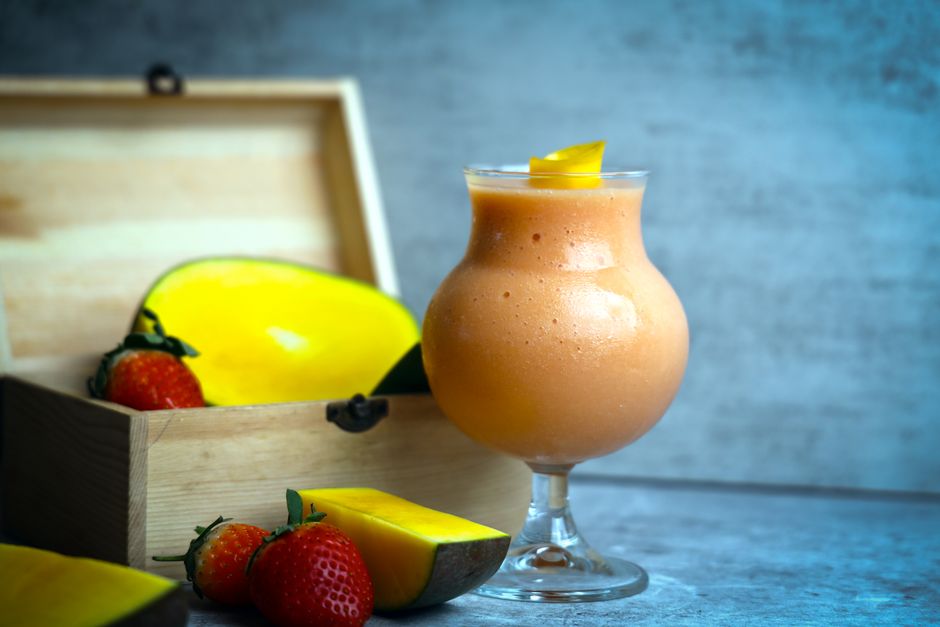
A mangonada is a Mexican frozen treat made from mango, lime, chili, and often chamoy — a salty-sweet pickled fruit sauce. Whether it counts as healthy depends almost entirely on how it is made and how much sugar it contains. A version built on fresh mango and lime delivers real nutrients. A version built on syrup, candy, and large amounts of chamoy can carry more sugar and sodium than a can of soda.
The short answer: mangonada is not automatically healthy or unhealthy. It sits on a spectrum, and the ingredient list is what decides where it lands. This article breaks down what is actually in a mangonada, what the nutrition numbers look like, and where the honest gaps in the evidence are.
Is Mangonada Healthy What The Nutrition Shows
The nutrition profile of a mangonada depends on four things: the mango, the sweetener, the chamoy, and any added candy or syrup. Change any one of those and the numbers shift significantly.
Mango itself is nutrient-dense. According to USDA data, one cup of raw mango provides roughly 99 calories, about 3 grams of fiber, and well over half the daily recommended vitamin C for most adults. It also supplies vitamin A in the form of beta-carotene. Those are real nutritional benefits.
The problem is what gets added. A traditional mangonada layers mango sorbet or ice, chamoy, lime juice, chili powder, and frequently a tamarind candy straw or gummy candy. Each of those adds sugar, sodium, or both.
Because recipes vary so widely, there is no single official nutrition label for a mangonada. A small, fruit-forward version and a large, candy-topped version can differ by hundreds of calories. That variability is the single most important fact about mangonada nutrition.
What Is Actually In a Mangonada?
A mangonada is a layered frozen drink or dessert. The core ingredients are consistent across most versions, even though proportions vary by vendor and region.
- Mango — fresh, frozen, or as sorbet/ice
- Lime juice — usually fresh
- Chili powder — often a chili-lime seasoning blend
- Chamoy — a sauce made from pickled fruit, chili, salt, and sugar
- Optional candy — tamarind straws, gummies, or syrup
Chamoy is the ingredient most people underestimate. It is made from salted, pickled fruit — commonly apricot, plum, or tamarind — blended with chili and sugar. That combination is why chamoy tastes salty, sour, sweet, and spicy at once. It is also why chamoy is the main source of sodium in most mangonadas.
A non-obvious point: the chili-lime seasoning powders used on the rim and top of many mangonadas are typically salt-based. So a mangonada can deliver sodium from two directions — the chamoy and the seasoning — even when the fruit itself contains almost none.
How Much Sugar Is in a Mangonada?
There is no standardized sugar value for mangonada because there is no standardized recipe. What can be said with confidence is that sugar content rises sharply with every added sweetener.
Fresh mango contains natural sugar — roughly 23 grams per cup, based on USDA data. That is normal for fruit and comes packaged with fiber, water, vitamins, and antioxidants. The concern is added sugar, not the sugar naturally present in whole fruit.
Mango sorbet, sweetened syrup, and candy all add sugar without the fiber and micronutrients that come with fresh fruit. A large mangonada with sorbet, syrup, and a candy straw can plausibly contain well over 50 grams of sugar. That is a lot for one treat.
For context, the American Heart Association recommends that most women limit added sugar to about 25 grams per day and most men to about 36 grams per day. A single large mangonada can exceed those amounts. Note that those recommendations apply to added sugar, not the naturally occurring sugar in fruit.
The practical takeaway: the mango is not the problem. The syrup, sorbet, and candy are where the added sugar accumulates.





Does the Fruit Make It Healthy?
Fruit is genuinely nutritious, but adding fruit to a high-sugar base does not cancel out the sugar. This is a common misunderstanding worth stating plainly.
Mango does provide vitamin C, vitamin A, fiber, and beneficial plant compounds. Some research suggests mango contains antioxidants such as mangiferin, though the clinical significance of these compounds in humans is not well established. That is an honest limitation, not a reason to avoid mango.
The issue is dilution. If a mangonada is mostly ice, syrup, and candy with a small amount of mango, the nutritional benefit of that mango is minor relative to the sugar load. If it is mostly fresh blended mango with lime and a light dusting of chili, the picture changes considerably.
So the fruit matters — but it matters in proportion to how much of the mangonada is actually fruit.
Is Chamoy Bad for You?
Chamoy’s main nutritional concern is sodium, not anything exotic. It is a pickled, salted product, and salt is central to how it is made.
Exact sodium values vary by brand and recipe, and there is no single standard. What is clear is that chamoy contributes meaningfully to the sodium content of a mangonada, and that chili-lime seasoning blends add more. For people watching their blood pressure or sodium intake, this is the ingredient to pay attention to.
There is no strong clinical evidence that chamoy itself is harmful beyond its salt and sugar content. Claims that chamoy has special health benefits are not supported by clinical research. It is a condiment — treat it as one.
How Does Mangonada Compare to Other Frozen Treats?
Because recipes vary so much, direct comparisons are approximate. The table below compares general categories rather than specific brands.
| Treat | Main sugar source | Fruit content | Sodium concern |
|---|---|---|---|
| Fruit-forward mangonada | Mango | High | Low to moderate |
| Candy-topped mangonada | Sorbet, syrup, candy | Low to moderate | Moderate to high |
| Ice cream | Added sugar, dairy | None to low | Low |
| Soda | Added sugar or syrup | None | Low |
The pattern is consistent: the more the mangonada leans on whole fruit, the better its nutrition profile. The more it leans on sorbet, syrup, candy, and heavy chamoy, the closer it moves toward dessert territory.
Can You Make a Healthier Mangonada?
Yes, and the changes are straightforward. The goal is to keep the fruit and reduce the added sugar and sodium.
- Use fresh or frozen mango instead of sorbet
- Skip or reduce added syrup
- Use less chamoy, or choose a lower-sodium brand
- Skip the candy straw or gummy topping
- Add extra lime for flavor without sugar
- Use a light hand with salt-based chili seasoning
These swaps do not require special products. They simply shift the balance back toward fruit. A homemade version with blended frozen mango, fresh lime, and a modest amount of chamoy can be a genuinely fruit-based treat rather than a candy drink.
One honest caveat: even a fruit-forward mangonada is still a treat, not a daily staple. Mango is nutritious, but it is also relatively high in natural sugar compared with many other fruits. That is fine in normal amounts and less ideal in large, frequent amounts.
Who Should Be Careful With Mangonada?
Anyone managing blood sugar, blood pressure, or sodium intake should pay attention to how their mangonada is made. This is not about avoiding it entirely — it is about knowing what is in it.
People with diabetes or prediabetes may want to account for the sugar in a mangonada, particularly the added sugar from sorbet, syrup, and candy. The American Diabetes Association notes that added sugars affect blood glucose, and portion size matters. A fruit-based version with minimal added sugar behaves differently than a candy-topped one.
People watching sodium should note that chamoy and chili-lime seasoning are the main sodium sources. People with acid reflux or sensitive stomachs may find the chili, lime, and chamoy combination irritating, though this varies by person.
For most healthy adults, an occasional mangonada is not a health concern. The question is frequency and recipe, not the treat itself.
Is Mangonada a Health Food or a Dessert?
Most mangonadas sold commercially function as desserts, not health foods. That is not a criticism — it is an accurate description. The frozen fruit base gives it more nutritional value than many desserts, but the sugar and sodium from added ingredients usually push it into treat territory.
A mangonada made at home with mostly fresh mango, lime, and a little chamoy is closer to a fruit smoothie. A mangonada loaded with sorbet, syrup, and candy is closer to a sundae. Both are called the same thing, and that naming gap is exactly why blanket claims about mangonada being “healthy” or “unhealthy” do not hold up.
The most useful habit is to look at what is actually going into the cup. If the answer is mostly fruit, it is a reasonable choice. If the answer is mostly sugar and salt, it is a treat to enjoy occasionally rather than a daily health drink.
Frequently Asked Questions
Is mangonada healthy?
It depends entirely on the recipe, since a fruit-based version is far more nutritious than a candy-topped one. A mangonada made mostly from fresh mango and lime is a reasonable treat, while one loaded with sorbet, syrup, and candy is closer to dessert.
How much sugar is in a mangonada?
There is no standard value because recipes vary so widely, but a large mangonada with sorbet, syrup, and candy can exceed 50 grams of sugar. A version made mostly from fresh mango contains far less added sugar.
Is chamoy bad for you?
Chamoy’s main nutritional concern is sodium, since it is a salted, pickled product. There is no strong clinical evidence that it is harmful beyond its salt and sugar content, so it is best treated as a condiment.
Can you make a healthier mangonada?
Yes, by using fresh or frozen mango instead of sorbet and cutting back on syrup, candy, and heavy chamoy. These swaps keep the fruit flavor while reducing added sugar and sodium.
