
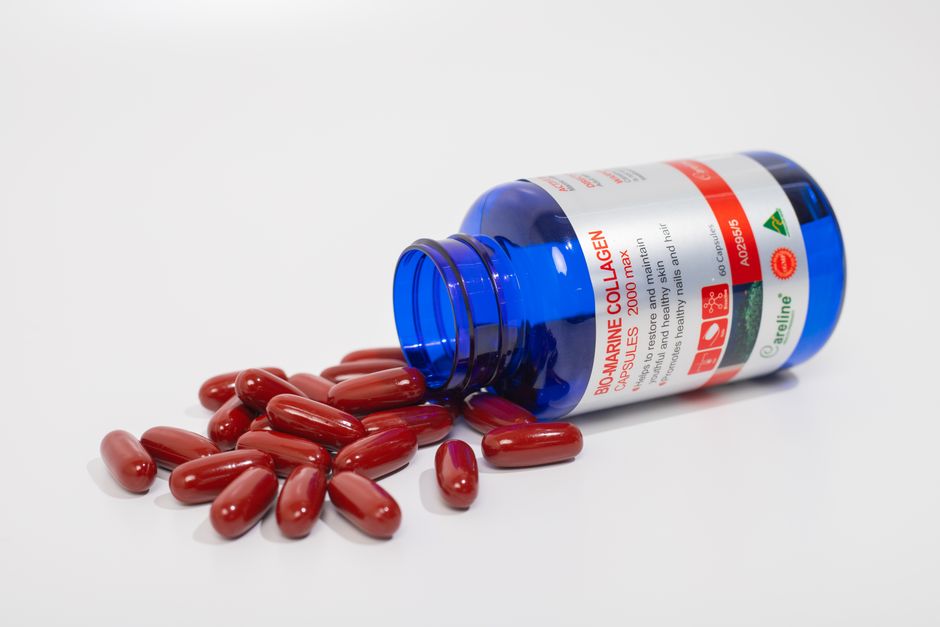
Collagen supplements are everywhere — powders, pills, gummies, and now liquids and shots. The marketing often suggests liquid collagen absorbs faster and works better than capsules. The science tells a more measured story. There is no good evidence that liquid collagen outperforms pills in any meaningful way. What matters most is the type of collagen, the dose, and whether your body can actually use it.
What Is Collagen and Why Do People Take It?
Collagen is the most abundant protein in the human body. It gives structure to skin, bones, tendons, ligaments, and cartilage. Your body makes it on its own, but production declines with age. That decline is one reason skin loses firmness and joints can feel stiffer over time.
Collagen supplements are usually made from animal sources — cow hide and bone, pig skin, or fish scales. The raw collagen is broken down through a process called hydrolysis into smaller pieces called peptides. These peptides are what you find in powders, capsules, and liquids.
The idea behind supplementation is simple. If you supply your body with collagen peptides, maybe it will use them to support skin, joints, and other tissues. Whether that actually happens in a way you can notice is where the evidence gets thinner.
Is Liquid Collagen Better Than Pills What Science Says
No study has shown that liquid collagen works better than collagen pills. The two forms contain the same basic ingredient — hydrolyzed collagen peptides. The difference is mostly in how you take them, not in what they do once they reach your bloodstream.
The claim that liquids absorb faster sounds logical. Liquids do leave the stomach quicker than capsules, which must first dissolve. But faster absorption does not automatically mean better results. Once collagen peptides are broken down into amino acids and small peptides, they enter the bloodstream through the same pathways regardless of the original form.
What the research actually focuses on is dose and type, not delivery format. Studies that have shown skin or joint benefits typically used specific daily amounts of specific collagen peptides over several weeks or months. Those studies used powders or pills. Liquid collagen has far less published research behind it.
One practical point: liquid collagen products often contain fewer grams of collagen per serving than powders. A typical liquid shot might have 2.5 to 10 grams. A scoop of powder often delivers 10 to 20 grams. If the studied dose is higher than what a liquid provides, the format is not the problem — the amount is.
How Does Your Body Actually Absorb Collagen?
When you swallow collagen, it does not travel intact to your skin or joints. Your digestive system breaks it down. Stomach acid and enzymes cut the protein into smaller peptides and individual amino acids. These are absorbed mainly in the small intestine.
From there, they enter the bloodstream and circulate throughout the body. Your cells then use those amino acids for whatever they need — which may or may not be collagen production in the tissue you care about.
This is where marketing often overpromises. Eating collagen does not mean your body will build collagen in your face or knees. The amino acids could be used for energy, for other proteins, or for collagen — your body decides based on its needs.
Some research suggests that specific collagen peptides may signal skin cells to produce more collagen. How strong that signal is, and whether it translates to visible changes, is still being studied. The mechanism is plausible. The clinical results are modest at best in most trials.





What Does the Evidence Say About Collagen Supplements?
The evidence for collagen supplements is mixed and generally modest. Some studies suggest small improvements in skin elasticity and hydration. Others show minor reductions in joint pain for people with conditions like osteoarthritis. But study designs vary widely, and many are small or industry-funded.
Here is what the research generally supports:
- Some studies suggest collagen peptides may improve skin elasticity and moisture after several weeks of use.
- Some research indicates collagen may reduce joint pain slightly in people with osteoarthritis.
- Evidence for hair and nail benefits is weak and largely anecdotal.
- No evidence supports collagen as a treatment for any disease.
Importantly, most of these studies used collagen peptides in powder or capsule form. Liquid collagen has not been studied nearly as much. That does not mean liquid collagen is ineffective. It means we do not have the same body of evidence for it.
It is also worth noting that many collagen studies are funded by the companies that make the products. That does not automatically invalidate the findings, but it is a reason to interpret positive results with some caution.
Does the Form Really Matter — Liquid vs. Powder vs. Pills?
For most people, the form matters less than the dose and consistency. Here is a simple comparison:
| Form | Typical Dose | Convenience | Evidence Base |
|---|---|---|---|
| Liquid | 2.5–10 g per serving | Easy to drink, often pre-measured | Limited research |
| Powder | 10–20 g per scoop | Mix into drinks or food | Most studied form |
| Capsules/Pills | 1–3 g per capsule (multiple needed) | Portable, no taste | Studied, but lower doses per unit |
Powders often provide the highest dose per serving, which may matter if you are trying to reach the amounts used in studies. Pills are convenient but usually require taking several to reach a meaningful dose. Liquids are easy but often lower in collagen per serving.
The best form is the one you will actually take consistently. A lower dose taken daily may be more useful than a higher dose taken sporadically.
Are There Risks or Downsides to Collagen Supplements?
Collagen supplements are generally considered safe for most healthy adults. Side effects are uncommon but can include mild digestive discomfort, bloating, or a feeling of fullness.
Because most collagen comes from animal sources, people with allergies to fish, shellfish, or eggs should check labels carefully. Some products may also contain added sugars, flavorings, or other ingredients that could be problematic for certain people.
There is no established upper limit for collagen intake, but more is not necessarily better. Your body can only use so much at once. Excess protein is either used for energy or excreted.
If you are pregnant, breastfeeding, or have a medical condition, talk to your doctor before starting any supplement. No clinical guidelines currently exist for collagen supplementation in these groups.
What Should You Look for in a Collagen Product?
If you decide to try collagen, the form is less important than what is inside. Look for products that list the type of collagen and the amount per serving. Hydrolyzed collagen peptides are the most studied form.
Type I and Type III collagen are most commonly studied for skin. Type II collagen is often studied for joints. Some products combine types. There is no strong evidence that one type is universally better than another — it depends on your goal.
Check for third-party testing if possible. This means an outside lab has verified the product’s contents. It is not a guarantee of effectiveness, but it does suggest the label is accurate.
Be skeptical of claims that sound too good. No collagen product has been proven to erase wrinkles, cure arthritis, or reverse aging. The evidence supports modest, gradual changes at best — and only in some people.
Frequently Asked Questions
Is liquid collagen better absorbed than pills?
Liquid collagen may empty from the stomach faster, but there is no evidence that this leads to better results. Once absorbed, both forms provide the same peptides and amino acids to your body.
How long does it take for collagen supplements to work?
Some studies suggest changes in skin elasticity may appear after several weeks of consistent use. Joint effects, if any, may take longer. Results vary, and not everyone notices a difference.
Can I get enough collagen from food?
You can support collagen production by eating protein-rich foods and getting enough vitamin C, which your body needs to make collagen. Bone broth and collagen-rich foods contain collagen, but it is broken down during digestion like supplements.
Are collagen pills as effective as powder?
Pills and powder contain the same hydrolyzed collagen, so the form itself does not change effectiveness. Pills often require taking several capsules to reach the same dose as a single scoop of powder.
