
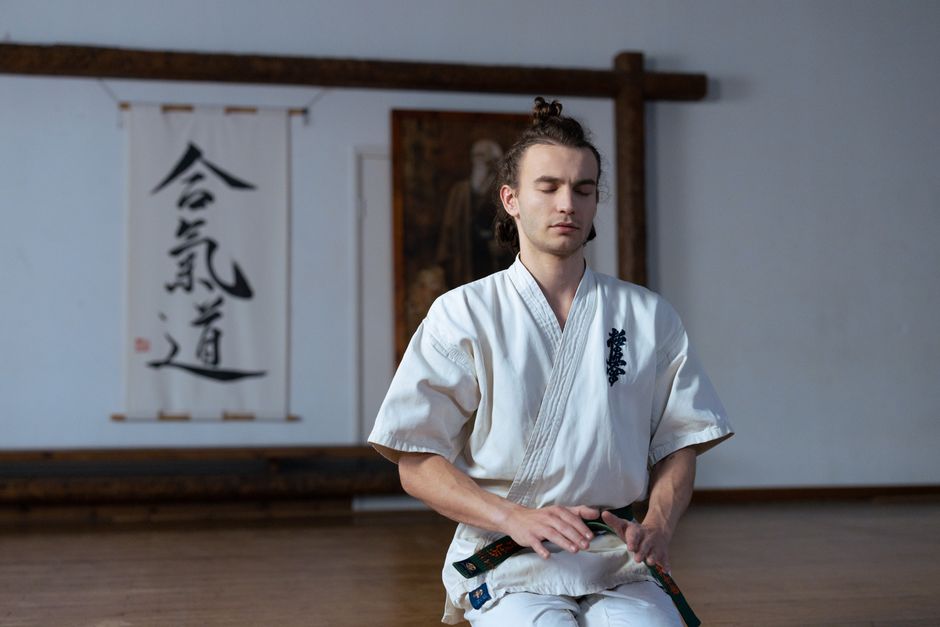
Karate is Japanese. The martial art was developed in the Ryukyu Kingdom, which is now Okinawa, Japan. While it was influenced by Chinese martial arts, karate as a system, name, and practice is firmly Japanese. The word “karate” itself is Japanese, meaning “empty hand.”
Where Did Karate Actually Come From?
Karate’s roots trace back to the Ryukyu Islands, specifically Okinawa. For centuries, Okinawa was a trading hub between Japan and China. This position brought martial arts knowledge from both regions to the island.
Chinese martial arts, particularly forms from Fujian province, heavily influenced early Okinawan fighting systems. Local Okinawans blended these Chinese techniques with their own native fighting methods. The result was a distinct fighting style called “te,” which means “hand” in Japanese.
Originally, this practice had no formal name. It was simply a local fighting tradition passed down through families and villages. As trade continued, Chinese influences deepened, and the style became known as “tode” or “China hand.”
Why Is Karate Not Chinese?
Karate is not Chinese because it developed into a distinct system with its own identity in Okinawa. Chinese martial arts like kung fu and wushu have different stances, movements, and philosophies. Karate evolved from those influences but became something separate.
Chinese martial arts emphasize flowing circular movements, wide stances, and complex acrobatics. Karate uses linear strikes, powerful hip rotation, and shorter stances. The training methods also differ significantly. Chinese systems often focus on forms with weapons and intricate hand techniques. Karate emphasizes practical strikes, kicks, and blocks with a simpler structure.
This separation became official in the early 20th century. Okinawan masters renamed their art from “China hand” to “empty hand” to distance it from Chinese origins. This was partly political, as Japan was at war with China, and partly a statement of independence for the art.
How Chinese Martial Arts Shaped Karate
The Chinese influence on karate is real and significant. Early Okinawan practitioners traveled to China to study martial arts directly. They brought back techniques, training concepts, and philosophical ideas.
Specific Chinese styles like White Crane and Monk Fist Boxing contributed movements still visible in karate today. The emphasis on breathing, stance training, and kata (forms) all reflect Chinese martial arts traditions. Many karate kata have names that trace back to Chinese origins.
However, influence does not equal ownership. Karate masters transformed these borrowed elements into something uniquely Okinawan. The changes were substantial enough that karate became its own art, not a Chinese offshoot.





What Does “Karate” Mean in Japanese?
The word “karate” combines two Japanese characters: “kara” meaning empty and “te” meaning hand. Together they mean “empty hand,” referring to fighting without weapons.
This name is relatively modern. Before the 1930s, karate was written with characters meaning “China hand.” Gichin Funakoshi, the man credited with bringing karate to mainland Japan, pushed for the change. He believed the new name better reflected the art’s spirit and helped it gain acceptance in Japanese society.
The name change was a turning point. It marked karate’s official transition from an Okinawan practice with Chinese roots to a recognized Japanese martial art.
Is Karate a Japanese Martial Art Like Judo and Kendo?
Yes, karate is recognized as a Japanese martial art alongside judo, kendo, and aikido. These arts share common elements: formal etiquette, belt ranking systems, and dojo training structures.
Karate’s formalization into a Japanese martial art happened in the early 1900s. Funakoshi introduced karate to mainland Japan in 1922. He adapted the training methods to fit Japanese educational and military systems. This included standardizing techniques, creating the belt ranking system, and emphasizing character development.
Japanese universities and military academies adopted karate training. This institutional acceptance cemented karate’s status as a legitimate Japanese martial art. Today, karate is taught worldwide with Japanese terminology for techniques, ranks, and commands.
What About Kung Fu and Other Chinese Martial Arts?
Kung fu is a broad term for Chinese martial arts. It includes hundreds of styles with different techniques, philosophies, and histories. Unlike karate’s structured belt system, kung fu often uses a sashing system and emphasizes animal-inspired movements.
Kung fu and karate share some philosophical roots, particularly the idea of martial arts as a path to self-improvement. But the physical practice is clearly different. Kung fu features high kicks, acrobatic movements, and a focus on flexibility. Karate uses lower stances, powerful linear strikes, and efficiency of movement.
Understanding the difference matters. People sometimes use “kung fu” and “karate” interchangeably, but they are distinct arts from different cultures. Karate is Japanese. Kung fu is Chinese.
How Karate Spread From Okinawa to the World
Karate’s journey from Okinawa to global popularity is a story of cultural exchange. After Funakoshi introduced it to mainland Japan, karate gained popularity through school programs and military training.
After World War II, American soldiers stationed in Japan learned karate and brought it back to the United States. This sparked international interest. Karate schools opened worldwide, and the art’s popularity grew steadily through the 1960s and 1970s.
The international karate community organized competitions and standardized rules. Karate became an official Olympic sport in 2020, debuting at the Tokyo Games. This recognition solidified karate’s global status as a Japanese martial art.
Can You Learn Karate Without Going to Japan?
Yes. Karate schools exist in nearly every country. The training follows Japanese traditions, including using Japanese terms for techniques and commands. Many schools maintain connections to Japanese organizations and instructors.
Learning karate outside Japan is common and accepted. The fundamentals are the same regardless of location. The key is finding a qualified instructor and a school that teaches authentic karate traditions.
If you want to learn karate, look for a dojo with certified instructors. Ask about their lineage and what style they teach. The main karate styles are Shotokan, Goju-Ryu, Shito-Ryu, and Wado-Ryu. Each has slightly different techniques and emphases, but all are Japanese karate.
Why This Distinction Matters
Understanding karate’s Japanese identity matters for practical reasons. If you study karate, you are learning a Japanese art with Japanese terminology and traditions. Knowing this history helps you appreciate the art more deeply.
The distinction also matters for authenticity. Many martial arts schools blend styles or create new systems. Knowing what makes karate genuinely karate helps you identify authentic instruction versus a mixed or invented style.
Finally, the history matters because it reflects real cultural exchange. Karate is a product of Chinese influence and Japanese development. Honoring that history means understanding both contributions without confusing the art’s identity.
Frequently Asked Questions
Is karate originally from China or Japan?
Karate originated in Okinawa, which is part of Japan. It was influenced by Chinese martial arts but developed into a distinct Japanese martial art.
Did karate come from kung fu?
Karate was influenced by Chinese martial arts, including kung fu styles, but it is not a direct descendant. Karate developed its own techniques, training methods, and identity in Okinawa.
Why did karate change its name from “China hand” to “empty hand”?
Okinawan and Japanese masters renamed the art from “China hand” to “empty hand” in the 1930s. The change reflected the art’s independent identity and helped it gain acceptance in Japan.
Is karate considered a Japanese martial art?
Yes, karate is recognized as a Japanese martial art alongside judo, kendo, and aikido. It was formalized in Japan and uses Japanese terminology for techniques and ranks.
