
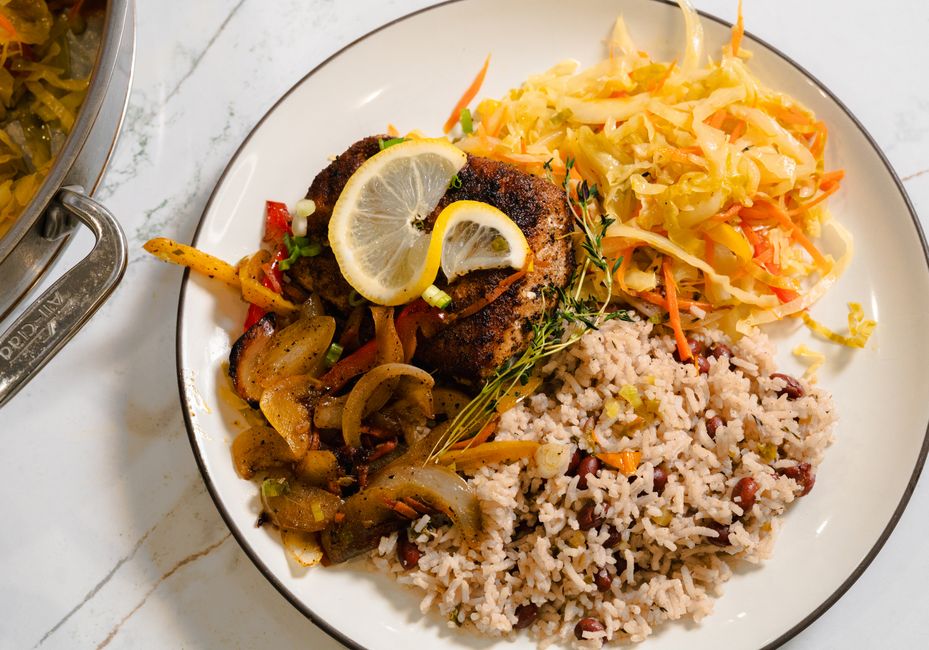
Jamaican food sits at a crossroads of African, Indigenous, Spanish, British, Indian, and Chinese cooking traditions. That mix produced bold, deeply seasoned dishes built largely on beans, root vegetables, greens, tropical fruit, and fish. The traditional version of this diet is genuinely nutrient-dense and often high in fiber, potassium, and plant compounds. The catch is that many Jamaican dishes sold in restaurants and fast-food spots today rely heavily on salt, added sugar, and frying, which shifts the balance.
Is Jamaican Food Healthy? Benefits And What To Watch
Traditional Jamaican cooking has real nutritional strengths. It also has real weak points. Understanding both is what separates an honest answer from a marketing one.
The foundation of the traditional diet is plant-based. Rice and peas, callaloo, yams, dasheen, plantains, and beans show up constantly. Fish, especially in coastal areas, provides protein. This pattern delivers fiber, potassium, magnesium, and a wide range of vitamins from whole foods rather than supplements.
The main things to watch are salt, added sugar, and frying oil. Saltfish, jerk seasoning blends, canned goods, and many bottled sauces carry substantial sodium. Sweetened drinks and heavily fried snacks add calories without much nutrition. None of this makes Jamaican food unhealthy by default. It means the preparation and the specific dish matter enormously.
What makes the traditional diet work
- Heavy use of legumes, which provide fiber and plant protein
- Starchy root vegetables that are often more nutrient-dense than white rice or white bread
- Regular fish intake in coastal communities
- Frequent use of leafy greens like callaloo and water spinach
- Spices and herbs such as thyme, allspice, scallion, and scotch bonnet pepper that add flavor without calories
What Are the Main Health Benefits of Jamaican Cuisine?
The benefits come mostly from what the diet includes, not from any single “superfood.” Beans and peas are the backbone. They supply soluble fiber, which supports digestive health and helps with blood sugar control. Research consistently shows that diets rich in legumes are associated with lower risk of heart disease and type 2 diabetes.
Root vegetables like yam, dasheen, and sweet potato provide complex carbohydrates along with potassium. Potassium is a mineral many Americans do not get enough of, and it plays a role in blood pressure regulation. The DASH eating pattern, which is well established for blood pressure support, emphasizes many of the same food groups found in traditional Jamaican cooking: beans, vegetables, fruit, and fish.
Tropical fruits common in Jamaica — mango, guava, papaya, soursop, and ackee — contribute vitamin C, vitamin A, and various plant compounds. Ackee is worth a specific note. It is the national fruit and appears in Jamaica’s national dish, ackee and saltfish. When unripe, ackee contains hypoglycin A, a naturally occurring toxin that can cause serious illness. Properly ripened and prepared ackee is safe, and commercially canned ackee is regulated for safety. This is a genuine food safety issue, not a myth.
Scotch bonnet peppers and other hot peppers contain capsaicin. Some studies suggest capsaicin may have modest effects on metabolism and appetite, but the evidence is not strong enough to claim it causes meaningful weight loss. The peppers are a flavorful, low-calorie addition regardless.
What Should You Watch Out For?
Sodium is the biggest concern. Saltfish, cured meats, and many seasoning products are high in salt. A single serving of saltfish can deliver a large share of the daily sodium limit. The Dietary Guidelines for Americans recommend keeping sodium under 2,300 mg per day for most adults. If you eat saltfish, soaking it and rinsing it before cooking reduces some of the sodium, though it does not eliminate it.
Added sugar is the second issue. Sweetened beverages and desserts are common, and they add calories with little nutritional value. This is not unique to Jamaican food, but it is part of the modern picture.
Frying is the third. Many popular Jamaican snacks and street foods are deep-fried. Fried dough, fried dumplings, and fried fish are examples. Frying adds fat and calories, and repeated use of oil at high heat can produce compounds that are not ideal for long-term health. This does not mean you can never eat fried food. It means the frequency and the oil quality matter.
Processed and restaurant versions
Restaurant and packaged Jamaican food often contains more salt, sugar, and oil than home-cooked versions. Jerk seasoning sold in stores can include high levels of sodium. Canned callaloo and other canned goods typically have added salt. Reading labels is the practical step here.





How Does Jamaican Food Compare to Other Diets?
| Feature | Traditional Jamaican diet | Typical Western diet |
|---|---|---|
| Plant food base | High — beans, roots, greens, fruit | Lower — more processed grains and meat |
| Fiber | Generally high from legumes and roots | Often below recommended levels |
| Sodium | Can be high due to saltfish and seasoning | Often high from processed foods |
| Added sugar | Variable — higher in modern versions | Often high |
| Fried foods | Common in street food and snacks | Common |
The comparison shows the traditional diet has a strong foundation. The modern version drifts toward the same problems seen in Western diets: too much salt, sugar, and fried food. The difference is that the traditional pattern already includes the protective foods — beans, greens, and fish — that many Western diets lack.
Is Jamaican Food Good for Weight Management?
It can be, depending on what you eat. The traditional diet is built on high-fiber, high-volume foods that help with fullness. Beans, root vegetables, and greens take up space in the stomach and slow digestion. That tends to reduce overall calorie intake without deliberate restriction.
Problems arise with portion size and preparation. Large servings of rice and peas, fried plantains, and fried dumplings add up quickly. Sweetened drinks contribute calories that do not trigger fullness the same way solid food does. The evidence on this is clear: liquid calories are less satiating than solid calories, which makes them easy to overconsume.
If weight management is the goal, the practical approach is to keep the beans, greens, and fish, and to be mindful of fried foods, added sugar, and large starch portions. This is not a Jamaican-specific rule. It applies to any cuisine.
What About Ackee and Other Safety Concerns?
Ackee is the one Jamaican food with a genuine safety issue that deserves direct attention. Unripe ackee contains hypoglycin A, which can cause vomiting, low blood sugar, and in severe cases, serious illness. The fruit must be fully ripe and properly prepared. The seeds and the pink or red membrane around the seeds are discarded. The yellow arils are what get cooked.
Canned ackee sold in the United States is regulated and generally considered safe when prepared according to package directions. Fresh ackee requires knowledge and care. If you are not experienced with it, canned is the safer choice.
Other safety concerns are less specific to Jamaican food. Undercooked fish, cross-contamination in the kitchen, and improper storage of leftovers are universal food safety issues. They are not unique to this cuisine.
How Can You Make Jamaican Meals Healthier?
You do not have to change the flavor profile to improve the nutrition. Small adjustments go a long way.
- Soak and rinse saltfish before cooking to reduce sodium
- Use fresh herbs and spices instead of high-sodium seasoning blends
- Bake or roast instead of frying when possible
- Increase the proportion of callaloo, greens, and beans relative to rice
- Choose water or unsweetened drinks over sweetened beverages
- Use canned ackee rather than preparing fresh ackee yourself if you are not experienced
These changes keep the dishes recognizable while shifting the balance toward the parts of the diet that are most strongly linked to good health.
Does Jamaican Food Fit Into a Heart-Healthy Diet?
Yes, with attention to sodium and frying. The traditional diet already includes many foods that support heart health: beans, fish, vegetables, and fruit. The parts that work against heart health are the same ones that work against it in any cuisine — excess salt, added sugar, and fried food.
The evidence on this is not from Jamaican-specific studies. It comes from broader research on dietary patterns that emphasize plant foods, lean protein, and limited processed food. Those patterns consistently show benefits for blood pressure, cholesterol, and cardiovascular risk. Jamaican food can fit into that pattern if the preparation supports it.
Frequently Asked Questions
Is Jamaican food healthy?
Traditional Jamaican food is generally healthy because it is built on beans, root vegetables, greens, fish, and fruit. Modern versions with heavy salt, sugar, and frying are less healthy.
What is the healthiest Jamaican dish?
There is no single healthiest dish, but callaloo, rice and peas, and steamed fish are strong choices. They provide fiber, plant protein, and nutrients with less added salt and oil than fried options.
Is ackee safe to eat?
Ripe, properly prepared ackee is safe, but unripe ackee contains a toxin that can cause serious illness. Canned ackee sold in the U.S. is regulated and generally considered safe when prepared as directed.
Is Jamaican food high in sodium?
Some dishes are high in sodium, especially those made with saltfish or commercial seasoning blends. Soaking saltfish and using fresh herbs can reduce the sodium content.
