
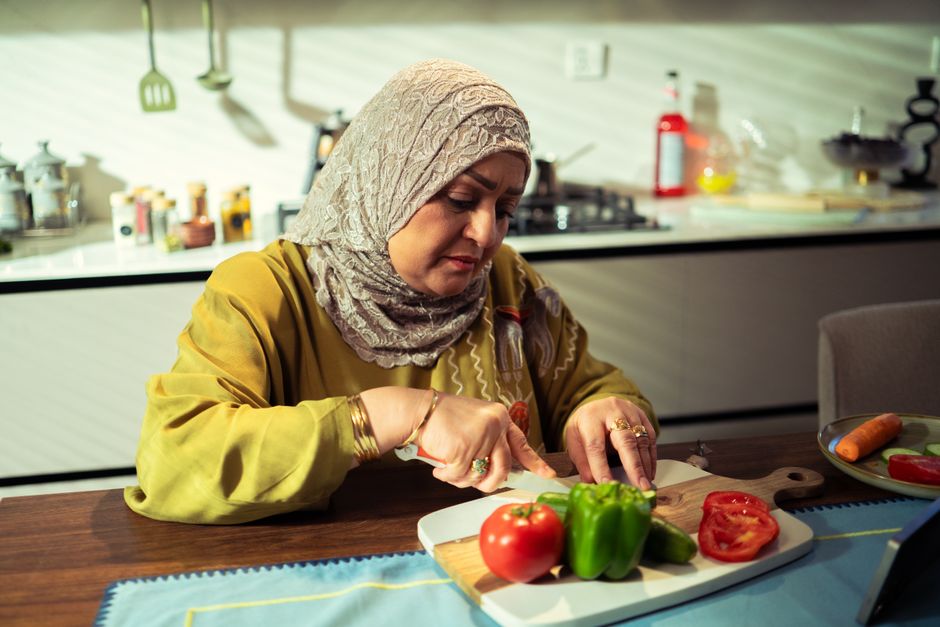
Halal food is not automatically healthier than other food. The word “halal” means permissible under Islamic dietary law, and it describes what a food is, not how nutritious it is. A halal-certified candy bar and a halal-certified lentil stew are both halal, and they are not remotely similar in nutritional value. What halal rules do change is the sourcing, preparation, and in some cases the slaughter method — and a few of those differences have real health implications worth understanding.
What Does Halal Actually Mean for Food?
Halal is an Arabic term meaning “permissible.” In the context of food, it refers to what Muslims are allowed to eat under Islamic law. The rules come from the Quran and from recorded teachings and practices of the Prophet Muhammad, known as the Sunnah.
Several categories of food are explicitly forbidden, or haram. These include:
- Pork and any pig-derived ingredients, including gelatin and lard
- Blood and blood by-products
- Animals that died before slaughter, or were killed by strangling, a blow to the head, or a fall
- Animals slaughtered in the name of anything other than God
- Intoxicants, including alcohol
- Any animal not slaughtered according to Islamic requirements
For meat to be halal, the animal must be slaughtered by a Muslim who invokes God’s name at the time of slaughter. The animal must be alive and healthy at the moment of slaughter. The cut must sever the windpipe, esophagus, and major blood vessels in the neck. The animal’s blood must be allowed to drain.
That last point — full blood drainage — is one of the few halal requirements with a direct nutritional consequence. Blood carries iron, and draining it removes some of the iron that would otherwise remain in the meat. The effect is modest, not dramatic. Meat is not a major source of dietary iron the way organ meats or fortified grains are, so the practical impact on most people’s iron intake is small.
Is Halal Food Healthy? The Honest Answer
Halal certification says nothing about a food’s calorie count, fat profile, sodium level, added sugar, or fiber content. A halal restaurant can serve deep-fried food cooked in reused oil. A halal snack can be loaded with sugar and salt. The label tells you the food meets religious requirements — it does not tell you the food supports your health.
That said, some halal practices overlap with health-conscious eating, and some do not. It helps to separate the two.
Where halal rules and health may align:
- No alcohol means no alcohol calories and no alcohol-related health risks from halal food itself
- No pork means no pork fat, which is high in saturated fat, though halal beef and lamb fat are also high in saturated fat
- Blood drainage reduces some iron, which matters mainly for people who need to limit iron intake — a small group
- The requirement that animals be healthy at slaughter rules out meat from sick animals
Where halal rules and health do not align:
- Halal does not restrict added sugar, refined flour, or ultra-processed ingredients
- Halal does not require grass-fed, organic, or pasture-raised sourcing
- Halal does not limit saturated fat, sodium, or cholesterol
- Halal does not guarantee the animal was treated humanely or raised without antibiotics
The takeaway is straightforward. If you want to eat healthily and eat halal, you still have to read labels and make food choices based on nutrition — the halal label alone will not do that work for you.
Does Halal Slaughter Affect Meat Quality or Safety?
The slaughter method is the most discussed and most debated part of halal food. The animal’s throat is cut with a sharp blade, and the blood is drained. In most halal standards, the animal is not stunned before the cut, though some certifying bodies permit stunning as long as the animal is alive at the time of slaughter.
From a food safety standpoint, rapid and complete blood drainage is generally considered beneficial. Blood is a favorable medium for bacterial growth, so removing it reduces the potential for spoilage and pathogen proliferation. This is a well-established principle in meat science, not a claim unique to halal.
From an animal welfare standpoint, the picture is more complicated. The evidence on whether slaughter without stunning causes more or less suffering than slaughter with stunning is mixed, and the answer depends heavily on the specific method, the skill of the slaughterer, and how quickly the animal loses consciousness. Some studies suggest that a properly performed cut with a sharp blade leads to rapid loss of consciousness from blood loss to the brain. Other studies indicate that without stunning, the animal may experience pain and distress in the seconds after the cut. The evidence is genuinely mixed, and this is a matter of ongoing scientific and ethical debate.
What is clear is that halal slaughter, when performed correctly, does not make meat unsafe to eat. The safety of the final product depends far more on hygiene during processing, storage temperature, and cooking than on the slaughter method itself.
Common Misconceptions About Halal Food and Health
Several ideas about halal food circulate widely and are not supported by evidence.
“Halal meat is healthier because it’s organic.” Halal and organic are separate certifications with different requirements. A product can be halal without being organic, and organic without being halal. Neither label guarantees the other.
“Halal food is always free of additives.” Halal rules restrict certain ingredients, mainly pork-derived and alcohol-derived ones. They do not restrict artificial colors, preservatives, sweeteners, or flavor enhancers. A halal-certified product can contain any additive that is not derived from a forbidden source.
“Halal means the animal was treated well.” Halal rules require the animal to be alive and healthy at slaughter, and they prohibit unnecessary suffering. But halal certification does not guarantee the animal was raised in good conditions, fed a natural diet, or given outdoor access. Those are separate concerns addressed by other certifications.
“Halal food is lower in fat.” There is no basis for this. Halal beef, lamb, and chicken have the same fat content as their non-halal counterparts. Fat content depends on the animal’s breed, diet, and the cut of meat, not on the slaughter method.
How Halal Compares to Other Dietary Frameworks
It can help to see halal alongside other religious and cultural dietary systems. They overlap in some ways and diverge in others.
| Framework | Pork | Alcohol | Blood | Slaughter Method Specified |
|---|---|---|---|---|
| Halal | Forbidden | Forbidden | Forbidden | Yes — cut, drain, invoke God’s name |
| Kosher | Forbidden | Permitted (grape products restricted) | Forbidden | Yes — specific cut and inspection |
| Vegetarian | Forbidden | Varies | Forbidden | Not applicable |
| No religious restriction | Permitted | Permitted | Permitted | None |
Halal and kosher share several rules, including the prohibition on pork and blood and the requirement for a specific slaughter method. They are not identical, and food certified as one is not automatically certified as the other. Vegetarian and vegan diets avoid meat entirely, which sidesteps the slaughter question altogether.
None of these frameworks is inherently more nutritious than the others. A person eating a halal diet, a kosher diet, a vegetarian diet, or an unrestricted diet can be well-nourished or poorly nourished depending on what foods they actually choose.
What Are the Limitations of a Halal Diet for Health?
The main limitation is the same one that applies to any diet: the label does not control nutritional quality. A halal diet can be high in processed foods, added sugar, refined carbohydrates, and saturated fat if the person eating it makes those choices.
There are a few specific points worth noting.
Iron intake. Blood drainage reduces the iron content of halal meat slightly. For most people this is not a concern, because meat is not the primary source of iron in a typical diet. People who rely heavily on meat for iron — and who have higher iron needs, such as menstruating women — may want to include other iron sources like lentils, spinach, and fortified cereals. No clinical guidelines specifically address iron intake for halal consumers, so general nutrition guidance applies.
Alcohol in cooking and processing. Some halal standards prohibit any alcohol, including small amounts used as solvents or in flavor extracts. This is a religious restriction, not a health one. The amount of alcohol in a flavor extract is negligible from a health standpoint, but it may still render a product non-halal for some consumers.
Certification variability. Halal certification standards vary by country and by certifying body. A product labeled halal in one market may not meet the standards of another. This is a regulatory and religious issue more than a health one, but it means the label is not a uniform guarantee.
Cost and access. Halal-certified products can be more expensive and less available in some areas. This can affect food choices and, indirectly, diet quality, though the relationship is not straightforward.
Does Halal Food Have Any Proven Health Advantages?
No large human trials have compared health outcomes between people eating halal diets and people eating non-halal diets. The evidence does not support a claim that halal food is healthier overall.
What can be said is that some components of halal dietary rules — avoiding alcohol, avoiding pork — align with general health recommendations for some people. But those benefits come from the specific restriction, not from the halal label itself. A person who avoids alcohol for any reason gets the same benefit.
The healthiest approach to eating is the same whether or not the food is halal: emphasize vegetables, fruits, whole grains, legumes, nuts, and lean proteins. Limit added sugar, refined grains, sodium, and saturated fat. Read labels. Cook at home when you can. None of that changes because a food is halal.
Frequently Asked Questions
Is halal food healthier than non-halal food?
No. Halal certification addresses religious requirements, not nutritional quality. A halal food can be highly processed and high in sugar, sodium, and saturated fat, just like any other food.
Does halal meat have less iron than regular meat?
Halal slaughter requires full blood drainage, which removes some iron from the meat. The reduction is modest, and for most people it has no meaningful effect on iron status.
Can halal food contain additives and preservatives?
Yes. Halal rules restrict pork-derived and alcohol-derived ingredients, but they do not restrict artificial colors, preservatives, sweeteners, or flavor enhancers. A halal-certified product can contain any additive not derived from a forbidden source.
Is halal the same as organic?
No. Halal and organic are separate certifications with different requirements. A product can be halal without being organic, organic without being halal, or both.
