
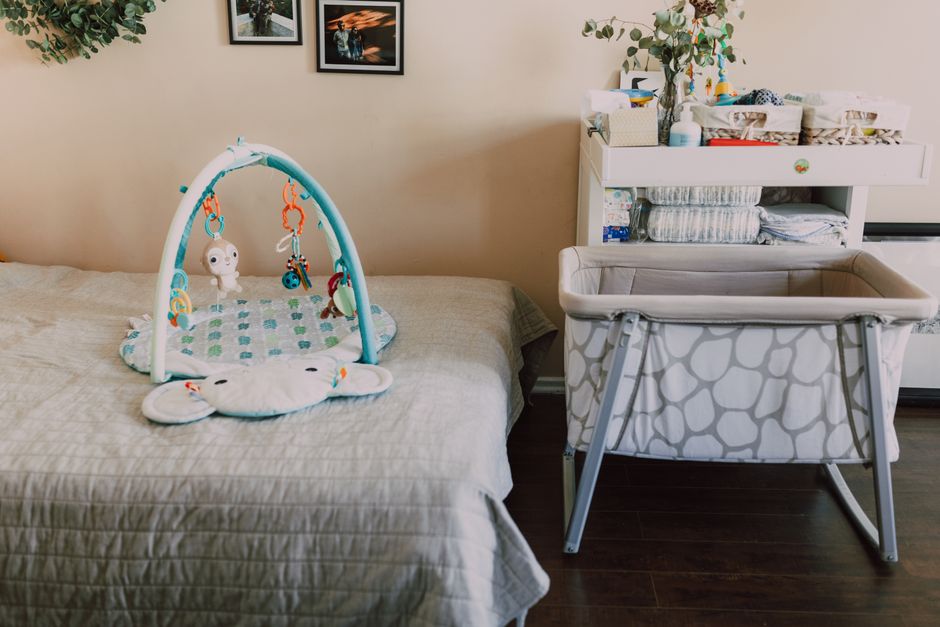
Many parents of babies with reflux are desperate for relief — for their baby and for themselves. Elevating the head of a bassinet seems like a logical fix, but the answer to whether it is safe is not a simple yes. The short answer: no, it is not recommended to elevate a bassinet mattress for a sleeping baby, and doing so can increase the risk of sudden infant death syndrome (SIDS) and suffocation. Here is what you need to know before making any changes to your baby’s sleep space.
Why Elevating a Bassinet Is Not Recommended
The American Academy of Pediatrics (AAP) is clear on this point. A firm, flat sleep surface is the only safe place for a baby to sleep. This applies to bassinets, cribs, and play yards. Any incline changes the geometry of the sleep space and can create risks that outweigh any potential benefit for reflux symptoms.
When you elevate the head of a bassinet, the baby’s head can slump forward onto their chest. This position can compress the airway and make breathing harder. It can also cause the baby to slide down into a position where their face presses against the mattress or the side of the bassinet. Both scenarios increase the risk of suffocation.
Studies have not shown that an inclined sleep surface reduces reflux symptoms during sleep. There is no strong evidence that elevating the head of a bassinet helps with gastroesophageal reflux. What the evidence does show is that prone (tummy) positioning and inclined sleepers raise the risk of SIDS and accidental suffocation.
What the Research Actually Shows About Reflux and Sleep Position
Gastroesophageal reflux is common in infants. The muscle between the stomach and the esophagus is immature, so stomach contents can flow backward. Most babies outgrow this by their first birthday. Spitting up after a feed is normal. It is not the same as having significant reflux disease.
Research on sleeping position and reflux has been studied for decades. Back sleeping is the safest position for all babies, including those with reflux. The AAP has consistently recommended that babies sleep on their backs for every sleep. This recommendation has been in place since the early 1990s and has cut SIDS rates dramatically.
Some older studies suggested that the left side position reduced reflux episodes. However, side sleeping is not recommended because babies can easily roll onto their stomachs. The risk of SIDS in that position outweighs any measurable reduction in reflux symptoms.
Inclined sleep products — like wedges and inclined sleepers — have been pulled from the market after reports of infant deaths. The Consumer Product Safety Commission has warned against them. The evidence for their use in reflux was never strong, and the safety risks became clear.
What Can You Do to Help a Baby with Reflux at Night
If you cannot elevate the bassinet, what can you do? Start with feeding practices. Feed your baby in an upright position. Hold them upright for 20 to 30 minutes after a feed before laying them down. This does not cure reflux, but it can reduce the amount of spit-up.
Smaller, more frequent feeds can also help. A full stomach puts more pressure on the lower esophageal sphincter. Smaller volumes may reduce regurgitation. Burp your baby frequently during feeds, not just at the end.
Keep the sleep environment bare. No pillows, no blankets, no bumpers, no stuffed animals. A fitted sheet over a firm mattress is all that belongs in a bassinet. This is not just about SIDS risk — loose items can also make reflux worse by encouraging positions that compress the abdomen.
Some pediatricians recommend a pacifier at sleep time. Pacifier use has been associated with a lower risk of SIDS. It may also help with reflux by encouraging swallowing, which clears acid from the esophagus. Offer the pacifier after feeding when putting your baby down.





When Reflux Needs Medical Attention
Spitting up is normal. But there are signs that reflux is more than a laundry problem. Watch for poor weight gain, forceful vomiting, blood in the stool, or signs of pain like arching the back and crying during feeds. If your baby refuses feeds or is consistently uncomfortable, talk to your pediatrician.
Some babies have what is called “silent reflux.” They may not spit up much but show other signs like coughing, hiccupping, or irritability. This is harder to diagnose. If you suspect silent reflux, do not self-diagnose. A doctor can assess whether there is a real medical issue.
For confirmed reflux that affects growth or feeding, doctors may recommend treatments. Acid-suppressing medications like proton pump inhibitors are sometimes used in infants. These are not given casually. They have side effects and are only prescribed when the benefits clearly outweigh the risks. There is no evidence that these medications reduce SIDS risk.
No clinical guidelines currently recommend elevating a bassinet for reflux. If your pediatrician suggests something that seems unusual, ask why. Ask what evidence the recommendation is based on. A good doctor will explain the reasoning clearly.
Understanding the Difference Between Reflux and GERD in Infants
Most infant reflux is physiological. It happens because the digestive system is still maturing. This is not a disease. It is a phase. By 12 months, most babies have outgrown it completely.
Gastroesophageal reflux disease (GERD) is different. GERD involves complications like poor growth, breathing problems, or severe esophagitis. This is less common and requires medical evaluation. The line between normal reflux and GERD is not always clear, which is why professional assessment matters.
Parents often hear that elevating the head is what hospitals do for adults with reflux. That is true. But adults and babies have different anatomy and different sleep safety considerations. An adult can adjust their position during sleep. A baby cannot. What works for an adult is not automatically safe for an infant.
The physiology of reflux in infants also differs from adults. In adults, reflux is often about lower esophageal sphincter pressure. In infants, it is more about the angle of the stomach, the short length of the esophagus, and the mostly liquid diet. Gravity helps adults. For infants, the risks of positioning outweigh the potential benefit.
Is It Safe To Elevate A Bassinet For Reflux — Final Verdict
The evidence is consistent. Elevating a bassinet is not safe and is not supported by research. The potential harm — increased risk of SIDS and suffocation — is real and documented. The potential benefit for reflux is unproven.
If your baby has reflux symptoms that worry you, talk to your pediatrician. There are safe ways to manage reflux. They start with feeding techniques and upright time after feeds. They may include medical evaluation if symptoms are severe. They never include putting your baby to sleep on an incline.
Your baby’s sleep space should be boring. Flat, firm, and bare. That is the safest environment for every baby, including those with reflux. It may not feel like a solution, but it is the evidence-based one.
Frequently Asked Questions
Can I put a wedge under my baby’s bassinet mattress?
No. Wedges and other incline devices are not recommended for infant sleep. They increase the risk of SIDS and suffocation and have no proven benefit for reflux.
Is it okay to hold my baby upright after feeding instead of elevating the bassinet?
Yes. Holding your baby upright for 20 to 30 minutes after a feed is a safe and recommended practice. It can help reduce spit-up without adding sleep risks.
What is the safest sleep position for a baby with reflux?
Back sleeping is the safest position for all babies, including those with reflux. The AAP recommends placing babies on their backs for every sleep, day and night.
When should I worry about my baby’s reflux?
Talk to your pediatrician if your baby has poor weight gain, forceful vomiting, blood in the stool, or appears to be in pain during feeds. These signs may indicate GERD rather than normal infant reflux.
