
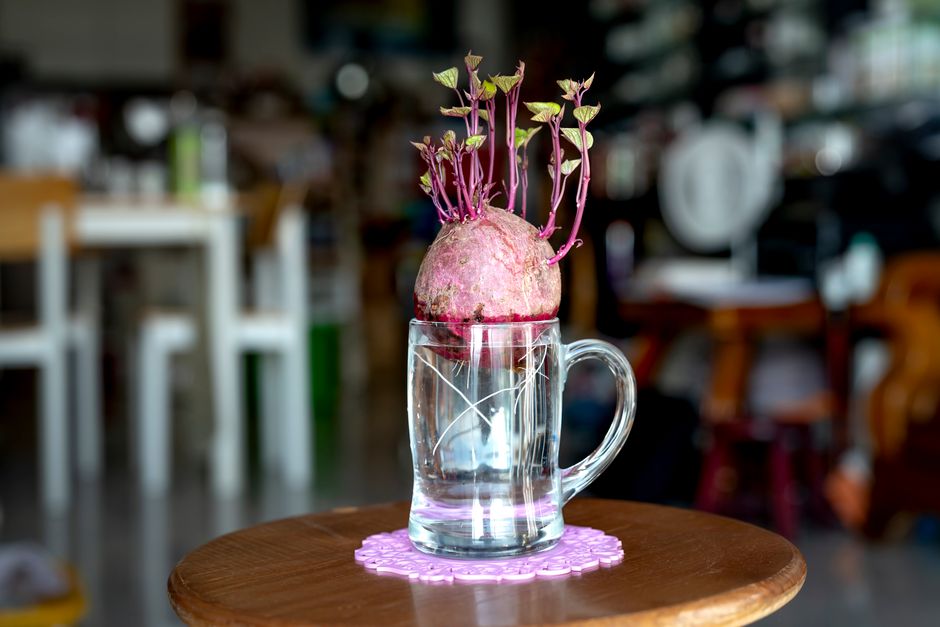
You open your pantry and find a potato with pale white shoots poking out of it. Your first instinct might be to toss it. Your second might be to cut off the sprouts and cook it anyway. The truth about sprouted potatoes is more complicated than most people realize. Here is what the research actually says about eating them and when you should absolutely throw them away.
What Causes Potatoes to Sprout in the First Place?
Potatoes are living storage organs. They sit dormant until conditions tell them it is time to grow. Light and warmth trigger sprouting. So does age. A potato that has been sitting in your kitchen for weeks will eventually sprout no matter what you do.
The sprouts themselves are the potato trying to become a new plant. They draw on the potato’s stored nutrients to grow. This process changes the chemistry inside the tuber. The starch starts converting to sugar. The potato becomes softer and less firm. These changes affect both taste and safety.
Commercial potatoes are often treated with sprout inhibitors. These chemicals slow down the natural growth process. Organic potatoes do not get this treatment. That is why organic potatoes tend to sprout faster in your pantry. It is not a sign of poor quality. It is a sign of no chemical intervention.
Is It Safe To Eat Sprouted Potatoes The Truth About Solanine and Glycoalkaloids
The real concern with sprouted potatoes is not the sprout itself. It is the toxins that build up in the potato as it ages. Potatoes naturally contain compounds called glycoalkaloids. The two main ones are solanine and chaconine. These chemicals protect the potato from insects and disease.
In small amounts glycoalkaloids are harmless to humans. In larger amounts they can cause poisoning. The CDC reports that solanine poisoning symptoms include nausea, vomiting, diarrhea, and in severe cases neurological problems like confusion and weakness. Death from potato poisoning is extremely rare but it has been documented.
The key number to know is 20 milligrams per 100 grams of potato. That is the safety threshold set by health authorities. A normal potato has about 1 to 15 milligrams per 100 grams. A heavily sprouted or green potato can have much higher levels. Research published in the Journal of Agricultural and Food Chemistry found that glycoalkaloid levels can increase tenfold during prolonged storage and sprouting.
Green color on a potato is a separate warning sign. It means the potato was exposed to light and produced chlorophyll. The green itself is harmless. But the same conditions that cause greening also increase glycoalkaloid production. A green potato is almost always higher in solanine than a non-green one.
How to Tell If a Sprouted Potato Is Still Safe to Eat
Not every sprouted potato is dangerous. The safety depends on three factors: how long the sprouts are, whether the potato is green, and how firm the potato feels. Here is a practical guide based on what the evidence shows.
| Sprout Length | Potato Condition | What to Do |
|---|---|---|
| Less than 1 cm (about 1/3 inch) | Firm, no green spots | Safe to eat after removing sprouts |
| 1 to 2 cm (about 1/2 to 3/4 inch) | Firm, slight greening possible | Peel deeply and cut away all green areas |
| More than 2 cm (about 3/4 inch) | Soft, wrinkled, or green | Throw it away |
| Any length | Potato is soft or shriveled | Throw it away |
Small sprouts that are less than a centimeter long pose minimal risk. You can snap them off and cook the potato as usual. The toxin concentration in the sprout itself is high, but removing the sprout removes most of the danger. The flesh beneath the sprout is usually fine.
Longer sprouts mean the potato has been growing for a while. The toxins have had time to spread into the flesh. If the potato is also soft or wrinkled, the glycoalkaloid levels are likely elevated throughout the entire tuber. Cutting off the bad parts is not enough at that point. The whole potato should go.





What About Cooking Sprouted Potatoes Does Heat Destroy the Toxins
This is one of the most common myths about sprouted potatoes. Many people believe that boiling, baking, or frying will neutralize the solanine. That is not true. Glycoalkaloids are heat-stable compounds. They do not break down at normal cooking temperatures.
Research shows that boiling reduces glycoalkaloid levels by only about 5 to 10 percent. Baking and frying have a similar minimal effect. Temperatures above 400 degrees Fahrenheit might start to break them down, but that is hot enough to burn the potato before the toxins are destroyed. You cannot cook your way to safety with a heavily sprouted potato.
Peeling does help more than cooking. The highest concentration of glycoalkaloids is in the skin and the layer just beneath it. Research published in Food Chemistry found that peeling removes about 60 to 90 percent of the toxins depending on how deep you peel. Deep peeling is more effective than shallow peeling. But even deep peeling does not remove all the toxins if they have spread into the flesh.
The only reliable approach is to assess the potato before you cook it. If it is heavily sprouted or green, do not try to salvage it. No amount of peeling or cooking will make it safe.
Who Is Most at Risk From Glycoalkaloid Poisoning
Most healthy adults can handle small amounts of glycoalkaloids without noticeable symptoms. The body has some ability to metabolize and excrete these compounds. But certain groups are more vulnerable. Children are at higher risk because their body weight is lower. The same dose of solanine that causes mild discomfort in an adult can cause serious illness in a child.
Pregnant women should also be cautious. Some animal studies suggest that high glycoalkaloid exposure during pregnancy may affect fetal development. Human studies are limited, but the precautionary principle applies here. The European Food Safety Authority advises pregnant women to avoid sprouted or green potatoes entirely.
People with existing digestive conditions like irritable bowel syndrome or Crohn’s disease may be more sensitive to glycoalkaloids. The compounds irritate the gut lining. Even small amounts can trigger symptoms in someone with a sensitive digestive system. If you fall into any of these categories, it is better to err on the side of caution.
How to Store Potatoes to Prevent Sprouting
Prevention is easier than assessment. Potatoes sprout because of three things: light, warmth, and moisture. Control these and you dramatically slow down the sprouting process. The ideal storage conditions are cool, dark, and dry. A temperature range of 45 to 50 degrees Fahrenheit is optimal. That is cooler than most kitchen cabinets but warmer than a refrigerator.
Do not store potatoes in the refrigerator. The cold temperature converts the starch to sugar faster. This changes the taste and makes the potato turn dark when cooked. It also increases the production of acrylamide, a compound that forms when potatoes are cooked at high temperatures. The refrigerator is not the answer.
A paper bag in a dark cabinet works well. Plastic bags trap moisture and encourage rot. If you have a root cellar or a cool basement, that is ideal. Keep potatoes away from onions. Onions release gases that speed up sprouting in potatoes. Store them separately.
- Keep potatoes in a cool, dark place between 45 and 50 degrees Fahrenheit
- Use paper bags instead of plastic bags
- Store potatoes away from onions and apples
- Check potatoes weekly and remove any that are sprouting or softening
- Buy only what you will use within two weeks
Buying smaller quantities more frequently is the simplest way to avoid the problem entirely. A potato that sits in your pantry for a month will eventually sprout no matter how well you store it. Plan your meals around what you have and use potatoes within a week or two of purchase.
Common Misconceptions About Sprouted Potatoes
The most persistent myth is that removing the sprouts makes the potato completely safe. That is true only for very small sprouts. Once the sprouts are longer than a centimeter, the toxins have already begun to spread into the surrounding flesh. Removing the sprout removes the highest concentration, but not all of it.
Another common belief is that organic potatoes are safer than conventional ones when sprouted. Organic potatoes are not treated with sprout inhibitors, so they sprout faster. But the glycoalkaloid levels in a sprouted organic potato are the same as in a sprouted conventional potato. The safety risk is identical. Organic does not mean toxin-free.
Some people think that sprouted potatoes are more nutritious. There is no evidence for this. The sprouting process consumes nutrients rather than creating them. The potato loses starch and vitamin C as it ages. A fresh potato is nutritionally superior to a sprouted one in every way.
The idea that you can taste solanine is also misleading. Some people report a bitter taste in high-glycoalkaloid potatoes. But not everyone can detect it. The absence of bitterness does not mean the potato is safe. Do not rely on your taste buds to make this decision.
Frequently Asked Questions
Can you eat potatoes with small sprouts?
Yes, if the sprouts are less than one centimeter long and the potato is still firm. Remove the sprouts and peel the potato deeply before cooking.
Does boiling potatoes remove solanine?
No. Boiling removes only about 5 to 10 percent of the toxins. Glycoalkaloids are heat-stable and do not break down at normal cooking temperatures.
How much green is too much on a potato?
Any green color means the potato was exposed to light and likely has elevated glycoalkaloids. If the green area is small and the potato is firm, cut it away deeply. If the potato is mostly green, throw it away.
Can you get sick from eating a slightly sprouted potato?
It is unlikely if the sprouts are small and you remove them properly. The risk increases with longer sprouts, green color, and soft texture. Most healthy adults can handle small amounts of glycoalkaloids without symptoms.
