
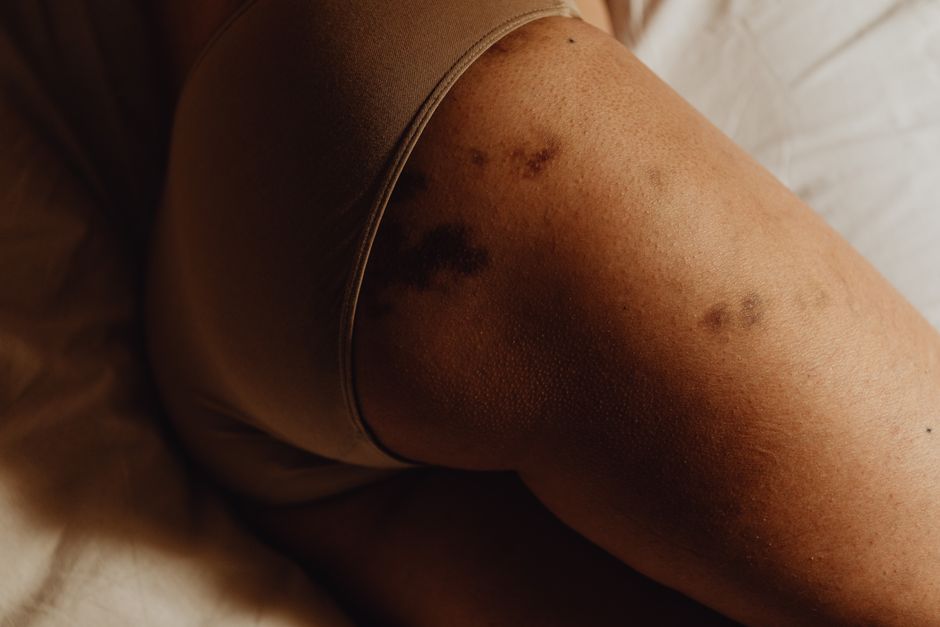
Eating your own scabs is not cannibalism. Cannibalism means eating another member of your own species. A scab is your own dried blood, dead skin cells, and clotted fluid — tissue that came from your body and never belonged to anyone else. So the act is technically self-consumption, not cannibalism. It is also not a good idea, for reasons that have nothing to do with the definition of the word.
What Is a Scab, Exactly?
A scab is a natural bandage your body builds over a wound. When you cut or scrape yourself, blood vessels break and blood leaks into the damaged area. Platelets in your blood stick together and trigger a chain of reactions that turn a protein called fibrinogen into fibrin — a mesh of thin threads that traps red blood cells and forms a clot.
That clot dries out when it meets air. What is left is the scab: a crust made mostly of dried blood, fibrin, dead skin cells, and whatever debris was in the wound. It seals the opening so bacteria and dirt stay out while new skin grows underneath.
Once the skin beneath has repaired itself, the scab loosens and falls off on its own. This is the normal course. Picking it off early interrupts a process that is already working.
Is It Cannibalism To Eat Your Scabs The Truth
No. Cannibalism requires eating the flesh or organs of another individual of the same species. Every cell in a scab is your own. There is no second person involved, so the word simply does not apply.
People sometimes stretch the term to cover eating any human tissue, including your own. That is not how the word is defined. Medical and anthropological writing uses cannibalism to mean consuming another person, not yourself.
There is a separate clinical term for eating non-food items, including scabs, hair, or dirt. It is called pica. Pica is a recognized eating behavior that appears most often in young children and in people with certain nutritional deficiencies or developmental conditions. Eating scabs occasionally is not automatically pica, but a persistent urge to eat non-food material is worth mentioning to a doctor.
Is Eating Scabs Bad for You?
It can be. The scab itself is your own tissue, so it will not poison you in a dramatic way. The problem is what the scab may be carrying and what removing it does to the wound.
A scab forms over broken skin. That skin was exposed to the environment, and bacteria commonly live on the surface of wounds. Some of those bacteria can cause infection. Swallowing them puts them into your digestive tract, where stomach acid kills many but not all of them.
More importantly, picking a scab off to eat it reopens the wound. That restarts healing from an earlier stage, raises the chance of infection, and makes scarring more likely. This is the real harm — not the swallowing, but the disruption.
The evidence on swallowing your own scabs specifically is thin. No large studies have looked at whether it causes illness in otherwise healthy people. The honest position is that the risk from the tissue itself appears low, while the risk from wound interference is clear and well documented.


Why Do Some People Want to Eat Their Scabs?
The urge is more common than most people admit, and it usually has an ordinary explanation.
- Picking habit. Many people pick at scabs without thinking. Eating one can be an extension of that automatic behavior.
- Curiosity. Children especially explore the world through their mouths and may taste a scab once out of simple curiosity.
- Texture and sensory interest. Some people are drawn to the dry, crisp feel of a scab.
- Nutritional deficiency. Pica behavior is sometimes linked to low iron or zinc, though the relationship is not fully understood and not every case has a deficiency behind it.
- Anxiety or stress. Repetitive body-focused habits often increase during periods of tension.
If the behavior is occasional, it is unlikely to mean anything serious. If it is frequent, hard to control, or paired with eating other non-food items, that pattern deserves a conversation with a clinician.
What Happens If You Swallow a Scab?
In most cases, very little. The scab travels down your esophagus into your stomach, where acid and enzymes break it down like any other swallowed material. Dried blood and dead skin are digestible proteins. They pass through and leave your body the usual way.
The exception is infection risk. If the wound the scab came from was infected, the scab may hold bacteria or pus. Swallowing infected material can, in principle, cause gastrointestinal upset. This is not a common reported outcome, but it is a reasonable concern.
There is no established guidance suggesting that swallowing an occasional scab requires medical attention. If you develop stomach pain, fever, vomiting, or diarrhea after swallowing material from an infected wound, that is a reason to seek care.
How Should You Actually Treat a Scab?
Leave it alone. That is the single most useful thing you can do, and it is supported by standard wound care guidance.
Clean the wound gently with mild soap and water when it is fresh. Keep it covered with a bandage while it heals if it is in a spot that rubs against clothing. Change the bandage regularly. Do not pick, scratch, or peel the scab.
See a doctor if a wound shows signs of infection — increasing redness, swelling, warmth, throbbing pain, pus, or a fever. These are established warning signs, not subtle ones. A wound that is not healing after a reasonable period, or one from a deep or dirty injury, also warrants a medical visit.
If you find yourself unable to stop picking at scabs, that is worth raising with a doctor or mental health professional. Body-focused repetitive behaviors are recognized and treatable, and they are not a character flaw.
Does Eating Scabs Have Any Benefit?
No. There is no evidence that eating scabs provides nutrition, boosts immunity, or speeds healing. The idea that swallowing your own tissue does something useful for your body is not supported by research.
Your body already recycles what it needs internally. Eating a scab adds nothing that your digestive system was not already handling. Claims that it “returns” nutrients or strengthens the immune system are not backed by any clinical evidence.
Frequently Asked Questions
Is eating your own scabs considered cannibalism?
No. Cannibalism means eating another person of the same species, and a scab is entirely your own tissue. The word does not apply to eating something that came from your own body.
Can eating scabs make you sick?
Swallowing a scab is unlikely to cause illness on its own, since it is your own dried blood and skin. The bigger risk comes from picking the scab off, which reopens the wound and raises the chance of infection.
Why do I want to eat my scabs?
It is usually a picking habit, curiosity, or a sensory interest in the texture. If the urge is frequent or you also eat other non-food items, that pattern is worth discussing with a doctor.
Is eating scabs a sign of a medical condition?
Occasionally eating a scab is not a sign of anything serious. A persistent urge to eat non-food items like scabs, hair, or dirt can be a sign of pica, which is sometimes linked to low iron or zinc.
