
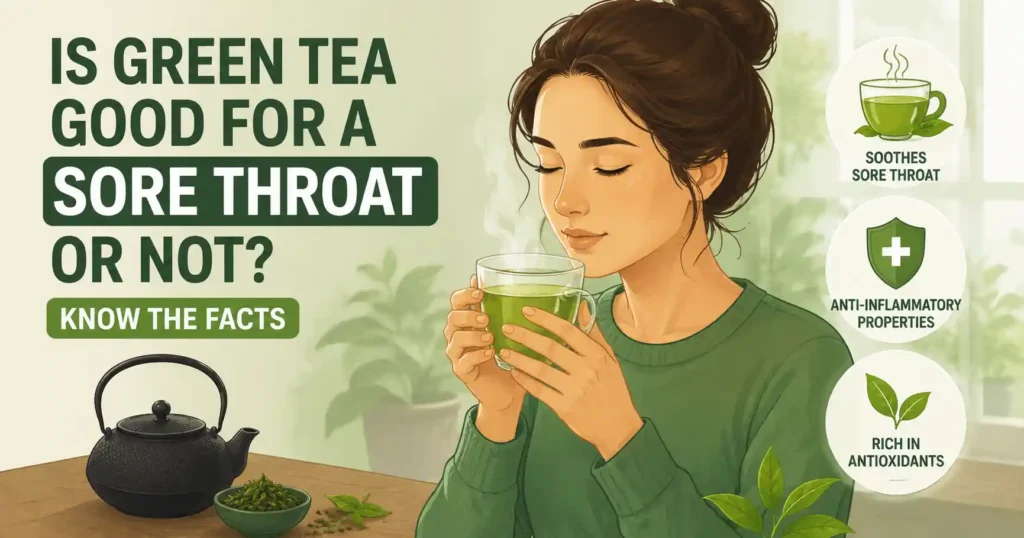
Yes, green tea is good for a sore throat. The natural compounds in green tea, including antioxidants and tannins, can help reduce inflammation and provide temporary pain relief. It also offers hydration, which your throat needs to heal. Research supports these benefits, though green tea is a comfort measure, not a cure.
How Does Green Tea Help a Sore Throat?
Green tea contains several active compounds that work well for throat pain. The most important ones are polyphenols, particularly a group called catechins. These are antioxidants that fight inflammation throughout your body. When your throat is sore, the tissue is inflamed and irritated. The catechins in green tea can help calm that reaction.
Tannins are another key component. These compounds have a mild astringent effect. That means they can tighten tissues slightly and reduce swelling. Tannins also create a temporary coating on the mucous membranes of your throat. This coating can protect raw or irritated areas from further irritation when you swallow.
The warmth of the tea itself matters too. Warm liquids help increase blood flow to the area, which supports healing. They also help loosen mucus if your sore throat comes with congestion. The CDC notes that warm fluids are a standard recommendation for soothing sore throats.
Honey is often added to green tea for sore throats. The World Health Organization recognizes honey as a legitimate remedy for cough and throat irritation. It has natural antibacterial properties and adds a soothing texture. Just do not add honey to tea for children under one year old due to botulism risk.
What Does Research on Green Tea for Sore Throat Show?
Research published in the Journal of Medicinal Food found that green tea gargle solutions reduced pain in people recovering from throat surgery. Patients who gargled with green tea three times a day reported significantly less pain than those who gargled with plain water. The study was small, but the results were clear.
A separate study in the International Journal of Oral Science examined the antibacterial effects of green tea catechins. The researchers found that these compounds can inhibit the growth of Streptococcus bacteria, which is a common cause of strep throat. This does not mean green tea treats strep throat. It means the compounds have some activity against the bacteria in lab conditions. Clinical evidence for treating active infections with green tea alone does not exist.
Some studies suggest that drinking green tea regularly may reduce your risk of catching upper respiratory infections in the first place. A review in the European Journal of Clinical Nutrition analyzed multiple studies and found that people who drank green tea daily had fewer colds and shorter cold durations. The effect was moderate but consistent across different populations.
It is important to be honest about limits here. No study has proven that green tea cures a sore throat. The evidence shows it can reduce symptoms, provide comfort, and possibly help your immune system function better. That is genuinely useful information. It just is not a miracle cure.
Is Green Tea Good For Sore Throat Compared to Other Teas?
Different teas have different benefits for sore throats. Here is how green tea compares to common alternatives.
| Tea Type | Key Benefits for Sore Throat | What Research Shows |
|---|---|---|
| Green Tea | Antioxidants, tannins, mild antibacterial effects | Reduces inflammation, may fight some bacteria |
| Chamomile Tea | Anti-inflammatory, relaxing, no caffeine | Studies show it can reduce cold symptoms |
| Peppermint Tea | Menthol provides numbing effect | Some evidence for pain relief, mostly anecdotal |
| Ginger Tea | Anti-inflammatory, warming | Research supports anti-inflammatory benefits |
| Black Tea | Contains tannins like green tea | Similar astringent effect, less antioxidant content |
Green tea has a unique advantage because of its high catechin content. Black tea undergoes more processing, which reduces these antioxidants. Herbal teas like chamomile offer different benefits but lack the specific compounds found in green tea. If you can tolerate the taste, green tea is a strong choice.





How Should You Prepare Green Tea for a Sore Throat?
Preparation matters more than most people realize. Steeping green tea for too long or in water that is too hot can make it bitter and less effective. The tannins that help your throat become more concentrated with longer steeping also create bitterness that some people find unpleasant.

Here are practical steps for making green tea specifically for a sore throat:
- Use water at 170 to 185 degrees Fahrenheit. Boiling water destroys some of the beneficial catechins. Let the boiling water sit for one minute before pouring it over the tea.
- Steep for two to three minutes. Longer steeping increases tannin content, which can help your throat, but also increases bitterness. Start with two minutes and adjust based on taste.
- Add a teaspoon of honey. Honey adds antibacterial benefits and coats the throat. The CDC mentions honey as a safe and effective sore throat remedy for adults and children over one year.
- Add a squeeze of lemon if you like. Lemon provides vitamin C and additional acidity that can help break up mucus. It does not cure anything, but it adds comfort.
- Drink it warm, not hot. Hot liquids can burn already irritated throat tissue. Let the tea cool to a comfortable drinking temperature before sipping.
Drink green tea three to four times per day while symptoms last. Spacing it out keeps your throat consistently coated and hydrated. Do not drink it constantly, as the caffeine content can add up and disrupt sleep. Decaffeinated green tea is a fine alternative for evening use, though it has slightly lower antioxidant levels.
What Are the Side Effects of Green Tea for Sore Throat?
Green tea is safe for most people, but it is not risk-free. The caffeine content is the most common concern. An eight-ounce cup of green tea contains about 30 to 50 milligrams of caffeine. That is less than coffee but enough to cause jitteriness, anxiety, or sleep problems if you drink several cups throughout the day.
Some people report that green tea makes their throat feel more dry or scratchy. This is likely due to the tannins. Tannins can create a drying sensation in the mouth and throat. If this happens to you, drink a glass of plain water between cups of tea. The hydration from water is just as important for throat healing as the tea itself.
Green tea can also interfere with iron absorption. The tannins bind to non-heme iron, which is the type found in plant foods and supplements. If you have iron deficiency or anemia, avoid drinking green tea with meals. Wait at least one hour after eating before drinking it.
As of 2026, there is no clinical evidence that green tea causes serious harm when used for sore throats. The risks are mild and manageable. Stop using it if you notice throat irritation getting worse or if you have an allergic reaction, which is rare.
What Should You Avoid When Using Green Tea for a Sore Throat?
Some common mistakes reduce the benefits of green tea for sore throats. Avoid adding milk. The proteins in milk bind to catechins and reduce their antioxidant activity. A study in the Journal of Nutrition found that milk proteins significantly decreased the absorption of catechins in the body. Drink green tea plain or with honey and lemon only.
Do not rely on bottled green tea from the store. Most bottled green teas contain added sugar, minimal actual tea, and very few active compounds. A study by ConsumerLab found that some bottled green teas had less than half the catechins of freshly brewed tea. Brewing your own tea is the only reliable way to get the benefits.
Do not use green tea as a replacement for medical care. If your sore throat lasts longer than a week, comes with a fever over 101 degrees Fahrenheit, or includes white patches on your tonsils, see a doctor. Strep throat, tonsillitis, and other infections require antibiotics or other treatments that green tea cannot provide.
Avoid drinking green tea that has been sitting out for hours. The catechins degrade over time, and bacteria can grow in the liquid. Brew fresh tea each time or refrigerate it and drink it within 12 hours. Cold green tea still has benefits, though the warmth is part of the soothing effect.
Common Misconceptions About Green Tea and Sore Throats
A viral claim online says that green tea can kill the virus that causes COVID-19. This is not supported by clinical evidence. Lab studies have shown that green tea compounds can inactivate some viruses on surfaces. That does not translate to killing viruses in your throat. Your body processes the tea compounds differently than a petri dish does.
Another common myth is that green tea works instantly. It does not. The anti-inflammatory effects take time. You may feel temporary relief from the warmth and the coating effect of honey, but the actual reduction in inflammation happens gradually over hours or days of consistent use.
Some people believe that stronger tea is better. This is not true. Over-steeping green tea creates excessive tannins that can irritate your stomach and make your throat feel drier. The goal is balanced extraction, not maximum concentration. Two to three minutes of steeping is the sweet spot for most green teas.
There is also a widespread claim that matcha green tea is significantly better than regular green tea for sore throats. Matcha does contain higher concentrations of catechins because you consume the whole leaf. However, some people find matcha too thick or gritty for a sore throat. It is a fine choice if you like it, but regular brewed green tea works well too.
Frequently Asked Questions
Can green tea make a sore throat worse?
It can if you drink it too hot or if you are sensitive to tannins, which may cause dryness. Stick to warm tea and drink water between cups.
How many cups of green tea should I drink for a sore throat?
Three to four cups per day is a reasonable amount for symptom relief. Drinking more than that can cause caffeine side effects.
Is green tea or chamomile tea better for a sore throat?
Both have benefits, but green tea has stronger evidence for anti-inflammatory and antibacterial effects. Chamomile is better if you want to avoid caffeine.
Can I use green tea as a gargle for a sore throat?
Yes, some studies show that gargling with green tea reduces throat pain. Let it cool to a comfortable temperature before gargling.
