
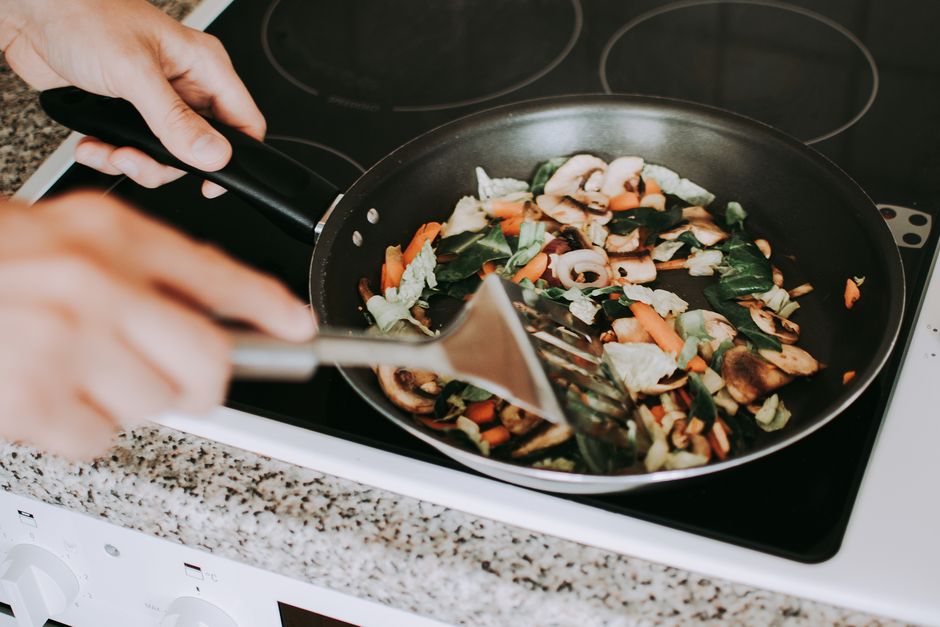
Yes, frying with olive oil is healthy for most home cooking. Extra virgin olive oil is stable enough for sautéing, pan-frying, and even shallow frying at moderate temperatures. The long-standing myth that olive oil becomes toxic when heated is not supported by modern research. However, the type of olive oil and the cooking temperature do matter. This article explains what the evidence actually shows about frying with olive oil.
Does Olive Oil Have a Low Smoke Point?
The smoke point of an oil is the temperature at which it starts to break down and produce visible smoke. Extra virgin olive oil has a smoke point between 375°F and 410°F (190°C to 210°C). Refined olive oil and light olive oil have a higher smoke point, around 465°F (240°C).
These temperatures cover nearly all home frying methods. Pan-frying and sautéing typically occur between 250°F and 350°F. Deep frying usually happens between 350°F and 375°F. For most stovetop cooking, extra virgin olive oil is well within its safe range. The idea that olive oil cannot be used for frying because of its smoke point is a misconception that trade publications and cookbooks have repeated for decades. Recent research has corrected this.
When an oil reaches its smoke point, it does release compounds that can be irritating, but the oil does not suddenly become poisonous. The bigger concern is that the flavor degrades and some beneficial compounds break down. For everyday cooking, olive oil performs very well.
Does Heating Olive Oil Create Harmful Compounds?
All oils change when heated. Some of the compounds formed—such as polar compounds and trans fats—are undesirable in high amounts. However, olive oil is more resistant to these changes than many common cooking oils because of its high monounsaturated fat content and its natural antioxidants, particularly polyphenols.
Research published in the journal Food Chemistry found that extra virgin olive oil produces fewer harmful polar compounds than vegetable oils and sunflower oil when heated to typical frying temperatures. Another study in Journal of Agricultural and Food Chemistry showed that the polyphenols in extra virgin olive oil partially transfer into the food being cooked, meaning some of the health benefits survive the heating process.
No large human trials have directly compared disease outcomes between people who fry with olive oil versus other oils. But the existing chemistry and short-term biomarker studies consistently favor olive oil. It does not become carcinogenic or toxic at normal frying temperatures. Claims that olive oil is dangerous when heated are not supported by the available evidence.
Is Extra Virgin Olive Oil Better for Frying Than Regular Olive Oil?
Extra virgin olive oil is produced from the first pressing of olives without heat or chemicals. It retains more polyphenols, vitamin E, and flavor compounds. Refined olive oil has been processed to remove impurities and some of those compounds, resulting in a neutral flavor and higher smoke point.
For low to medium heat cooking, extra virgin olive oil is the better choice because it provides more antioxidants. Studies show that even after 30 minutes of frying, extra virgin olive oil still contains measurable amounts of polyphenols. For high heat frying—above 400°F—refined olive oil or light olive oil may be more practical because its higher smoke point means the oil lasts longer before degrading. But the health difference between the two at typical cooking temperatures is small.
Both are far healthier than butter, lard, or highly processed seed oils. Choose extra virgin for flavor and nutrient density. Choose refined for very high heat frying where you do not want an olive taste.





How Does Olive Oil Compare to Other Cooking Oils for Frying?
Below is a comparison of common frying oils based on smoke point, fat type, and overall stability when heated.
| Oil | Smoke Point (°F) | Main Fat Type | Heat Stability |
|---|---|---|---|
| Extra virgin olive oil | 375–410 | Monounsaturated | High |
| Refined olive oil | 435–465 | Monounsaturated | Very high |
| Avocado oil | 500–520 | Monounsaturated | Very high |
| Coconut oil | 350–400 | Saturated | High |
| Canola oil | 400–450 | Monounsaturated | Moderate |
| Vegetable oil (soybean) | 400–450 | Polyunsaturated | Lower |
Olive oil sits in a good middle range. Avocado oil has a higher smoke point and similar fat profile, making it another excellent choice. Coconut oil is stable but high in saturated fat, which some people may want to limit. Polyunsaturated oils like vegetable and sunflower oils break down more readily at high heat and produce more undesirable oxidation products.
For the combination of heat stability, antioxidant content, and heart health evidence, olive oil is a top choice for everyday frying.
What Is the Best Way to Fry With Olive Oil?
Use a thermometer to keep oil temperature below the smoke point. For extra virgin olive oil, stay under 400°F. For refined olive oil, up to 450°F is fine.
Pan frying and sautéing are ideal uses for olive oil. The oil stays at a moderate temperature and the food cooks quickly. Shallow frying—where food is partially submerged—also works well. Deep frying at very high temperatures (above 400°F) is better done with a refined or light olive oil or avocado oil, but such high heat is rarely needed for home cooking.
Do not reuse olive oil multiple times. Each heating cycle degrades the oil and increases polar compound formation. For home use, one or two uses for shallow frying is acceptable, but discard the oil if it smells rancid or begins to smoke during cooking.
Store olive oil in a cool, dark place in a sealed container. Heat and light accelerate oxidation even before cooking begins. Fresh olive oil is more stable than old oil.
Frequently Asked Questions
Can you fry with extra virgin olive oil?
Yes. Extra virgin olive oil is safe and healthy for pan frying, sautéing, and shallow frying at temperatures up to 400°F. It retains many of its antioxidants during cooking.
What is the smoke point of olive oil?
Extra virgin olive oil has a smoke point of 375°F to 410°F. Refined or light olive oil has a smoke point of 435°F to 465°F.
Does olive oil become toxic when heated?
No. Olive oil does not become toxic when heated within normal cooking temperatures. Studies show it produces fewer harmful compounds than many other oils.
What is the healthiest oil for frying?
Extra virgin olive oil and avocado oil are both excellent choices due to their high monounsaturated fat content, heat stability, and antioxidant content. For very high heat frying, refined olive oil or avocado oil work best.
