
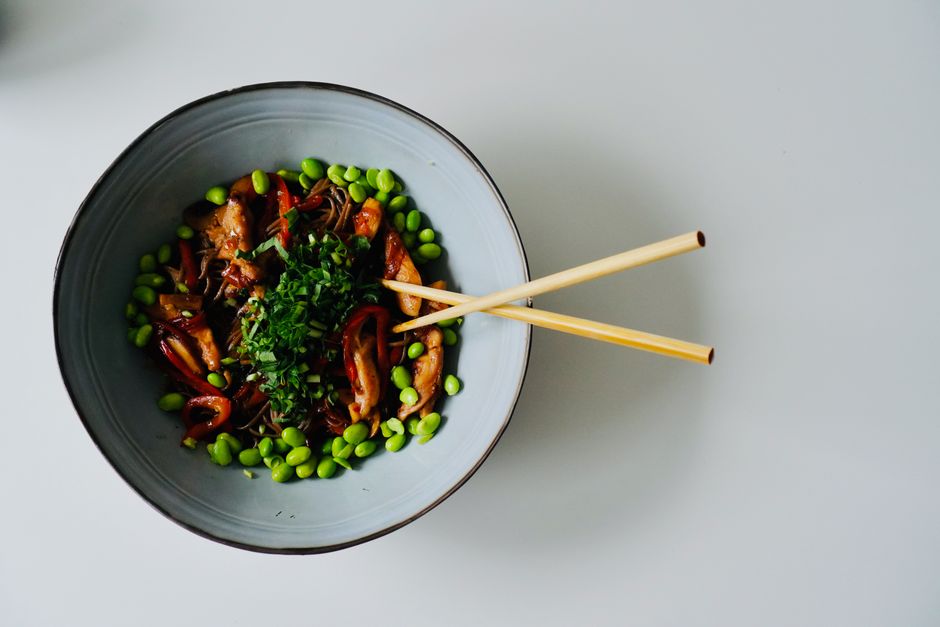
Farro is not a complete protein. Like most grains, it is low in the amino acid lysine, which means it cannot supply all nine essential amino acids in the amounts your body needs on its own. The good news is that farro contains more protein than white rice or standard pasta, and pairing it with beans, lentils, dairy, or meat fills in the gaps easily.
Farro has become a staple in grain bowls and salads, often praised as an ancient superfood. Some of that praise is earned. Some of it is marketing. Here is what the actual nutrition and food science say about farro’s protein, how it compares to other grains, and which pairings genuinely complete the amino acid profile.
What Is Farro And Where Does It Come From?
Farro is an Italian word that covers three different wheat species: emmer, einkorn, and spelt. When you buy farro in the US, you are almost always buying emmer wheat. It is one of the oldest cultivated grains in the Mediterranean and Middle East, and it has a chewy texture and nutty flavor that holds up well in soups and salads.
Farro comes in three forms, and the form matters for how you cook it:
- Whole farro — the least processed. The bran and germ are intact. It takes the longest to cook, often 30 to 40 minutes or more, and may need soaking.
- Semi-pearled farro — part of the bran has been removed. Cooks faster, usually 20 to 30 minutes, but loses some fiber and nutrients.
- Pearled farro — the bran is fully removed. Cooks fastest, often 15 to 20 minutes, but has the least fiber and lowest nutrient density.
This distinction matters because the protein and fiber content you see on nutrition labels depends heavily on which form is being measured. Whole farro is the most nutritious. Pearled farro is closer to white rice in how refined it is.
Is Farro A Complete Protein? Facts And Pairings Explained
No. Farro is an incomplete protein because it is limited in lysine, an essential amino acid that grains generally lack in sufficient amounts. A complete protein contains all nine essential amino acids in proportions your body can use efficiently. Farro falls short on that standard by itself.
That said, “incomplete” is not a criticism of farro. It describes almost every plant protein except soy and quinoa. The term simply means the food cannot do the whole job alone. It says nothing about whether the food is healthy or worth eating.
Here is where a common myth needs correcting. Many people believe you must carefully combine complementary proteins at the same meal to get any benefit. That idea comes from outdated nutrition thinking. Your body maintains a pool of free amino acids and can draw on amino acids from foods eaten across the day. You do not need rice and beans on the same plate at the same moment. Eating a varied mix of plant proteins over the course of a day is enough for most healthy adults.
That said, eating complementary foods together is still a practical and pleasant way to make sure you are covered. It also tends to produce meals that taste better and are more satisfying.
How Much Protein Does Farro Have?
Cooked farro provides roughly 5 to 6 grams of protein per cooked cup, depending on the variety and how it was processed. That is higher than cooked white rice, which has around 4 grams per cup, and roughly comparable to cooked brown rice. It is well below what you would get from the same volume of beans, lentils, or meat.
Here is a rough comparison of cooked grains per one-cup serving. Values vary by variety and preparation, so treat these as general reference points rather than exact figures.
| Grain (cooked, 1 cup) | Protein | Fiber | Complete protein? |
|---|---|---|---|
| Farro | ~5–6 g | ~4–5 g | No |
| Brown rice | ~5 g | ~3 g | No |
| White rice | ~4 g | <1 g | No |
| Quinoa | ~8 g | ~5 g | Yes |
| Oats | ~6 g | ~4 g | No |
Quinoa is the outlier here. It contains all nine essential amino acids in adequate amounts, which is why it gets called a complete protein. Farro does not. That does not make quinoa a better food overall — farro has its own strengths, including a firm texture and a flavor many people prefer.
One practical note: the protein in farro is not the main reason to eat it. Its fiber, magnesium, and B vitamins are arguably more valuable contributions to a diet.





What Should You Pair With Farro To Make It Complete?
Pair farro with a food high in lysine to fill in the missing amino acid. Beans, lentils, dairy, eggs, and meat are all rich in lysine. Any of these turns a farro dish into a complete protein meal without any special effort or calculation.
Practical pairings that work well:
- Farro and white beans — a classic Italian combination. Beans supply the lysine farro lacks.
- Farro and lentils — both are plant foods, but lentils are high in lysine, so together they cover the full amino acid profile.
- Farro and Greek yogurt or cheese — dairy is high in lysine and adds calcium.
- Farro and eggs — a breakfast or grain bowl option that rounds out the protein.
- Farro and chicken, fish, or beef — animal proteins are complete on their own and easily cover the gap.
You do not need to measure anything. A farro salad with chickpeas, or a farro soup with beans, is automatically a complete protein dish. The pairing does the work.
Is Farro Gluten-Free?
No. Farro is a wheat species, so it contains gluten and is not safe for anyone with celiac disease or a wheat allergy. This is one of the most common misconceptions about the grain. People see “ancient grain” and assume it is gluten-free, the way quinoa or buckwheat is. It is not.
For people with non-celiac gluten sensitivity, the picture is less clear. Some research suggests that ancient wheat varieties like farro and spelt may be better tolerated than modern wheat by some individuals, but the evidence is not strong enough to make a general recommendation. Anyone with a diagnosed gluten-related condition should avoid farro and choose a genuinely gluten-free grain instead.
Good gluten-free alternatives with similar texture and nutrition include quinoa, buckwheat, and sorghum. Brown rice also works, though it has a softer texture.
Does Farro Have Health Benefits Beyond Protein?
Farro is a whole grain, and whole grain intake is consistently linked to lower risk of heart disease, type 2 diabetes, and some cancers in large observational studies. Those findings apply to whole grains as a category, not to farro specifically. It is reasonable to expect farro to contribute to those benefits the way other whole grains do, but no study has isolated farro and shown unique effects.
What farro does offer, in whole form, is a solid package of fiber, magnesium, iron, and B vitamins. The fiber supports digestive health and helps with blood sugar control. The magnesium and iron are meaningful contributions, especially for people who eat mostly plant-based meals.
One caution worth stating plainly: the health halo around ancient grains can lead people to overeat them or to treat them as a substitute for vegetables and legumes. Farro is a grain. It is a good one. It is not a vegetable or a protein source on the level of beans or meat.
Who Should Be Careful With Farro?
Anyone with celiac disease or a wheat allergy should avoid farro entirely. There is no safe amount for people with these conditions.
People with irritable bowel syndrome may find farro difficult to tolerate because it contains fructans, a type of fermentable carbohydrate that can trigger symptoms in sensitive individuals. This is not universal, and some people with IBS handle farro without issue.
People watching their carbohydrate intake should note that farro is still a grain, with roughly 30 to 35 grams of carbohydrate per cooked cup depending on variety. It fits well into most balanced diets, but it is not a low-carb food.
If you take medications that interact with vitamin K or have any condition requiring careful mineral monitoring, talk to your clinician before making farro a regular part of your diet. This is general caution, not a farro-specific warning.
Frequently Asked Questions
Is farro a complete protein?
No. Farro lacks sufficient lysine, an essential amino acid, so it is an incomplete protein on its own. Pairing it with beans, lentils, dairy, eggs, or meat makes the meal complete.
Does farro have more protein than quinoa?
No. Cooked quinoa provides roughly 8 grams of protein per cup, while cooked farro provides about 5 to 6 grams. Quinoa is also a complete protein, and farro is not.
Is farro gluten-free?
No. Farro is a type of wheat and contains gluten, so it is not safe for people with celiac disease or wheat allergy. Choose quinoa, buckwheat, or sorghum instead if you need a gluten-free grain.
Can I eat farro every day?
Yes, for most healthy adults farro can be part of a daily diet as one of several whole grains. Variety matters more than any single grain, so rotate it with oats, brown rice, and other whole grains.
