
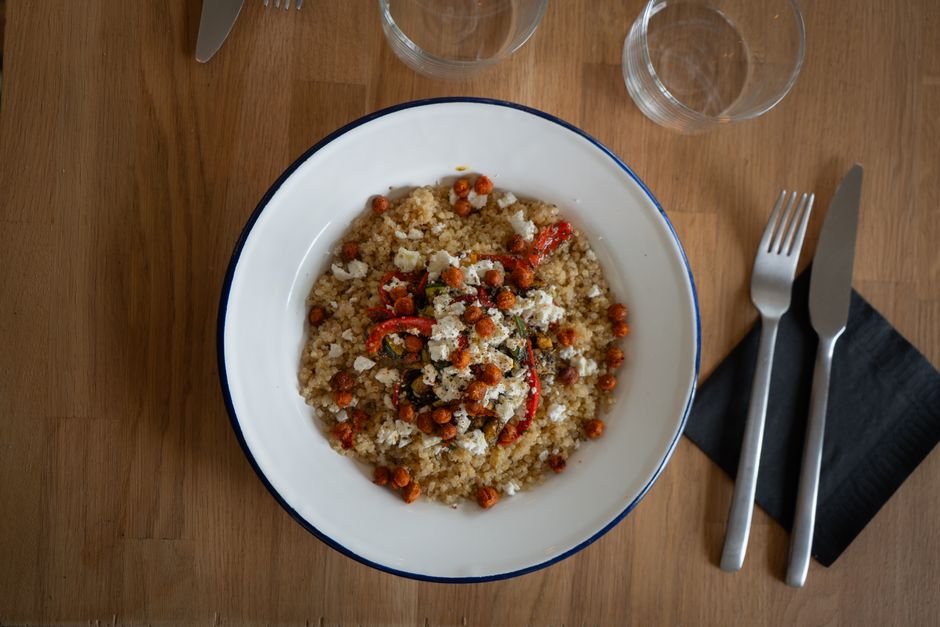
Couscous is not a traditional Mediterranean diet food, but it fits the pattern well — it is a grain-based carbohydrate that works as a base for vegetables, legumes, olive oil, and fish. Whether it belongs on your plate depends less on the couscous itself and more on what you serve with it and which type you buy.
The Mediterranean diet is not a strict list of approved foods. It describes a pattern of eating built around plants, whole grains, legumes, olive oil, fish, and moderate portions. Couscous can slide into that pattern without much friction, especially the whole wheat version. The refined white kind is more like white rice or white pasta — fine in moderation, but not the whole-grain choice the pattern favors.
What Is Couscous Exactly?
Couscous is tiny granules made from semolina, which is coarsely ground durum wheat. That is the short answer. It is not a grain in its own right, and it is not a seed or a pasta in the way most people use the word.
Traditional North African couscous is handmade by rolling semolina with water and a little flour until small pellets form. Those pellets are then steamed, often several times, over a pot of stew. The result is light, separate grains with a chewy texture. This version takes time and skill.
The couscous sold in most US supermarkets is different. It is instant or pre-steamed couscous. You pour boiling water over it, cover the bowl, and wait about five minutes. It rehydrates rather than cooks. The texture is softer and the process is nearly foolproof.
Both forms come from the same basic ingredient — durum wheat semolina. The difference is the processing and the preparation method, not the grain itself.
Is Couscous on the Mediterranean Diet What to Know About the Grain
The Mediterranean diet does not have an official food list. It is a dietary pattern, not a rulebook. That matters because it means couscous is not banned or required — it is judged by how it fits.
The pattern emphasizes whole grains, and couscous can be a whole grain if you buy the whole wheat version. Whole wheat couscous keeps the bran and germ of the wheat kernel. Refined couscous strips those away, leaving mostly the starchy endosperm.
That single difference changes the nutrition meaningfully. Whole wheat couscous has more fiber and more of certain vitamins and minerals. Refined couscous is closer to white rice in nutritional profile.
Geography also matters here. Couscous is a staple across North Africa and parts of the Middle East, not the European Mediterranean coast. Traditional Mediterranean diet research focused on Greece, southern Italy, and Spain. So couscous was never part of the original pattern being studied. It is a compatible addition, not a historical component.
How Does Couscous Compare to Other Mediterranean Diet Grains?
Couscous holds its own against the grains that anchor the Mediterranean pattern. It is low in fat, provides plant protein, and cooks fast. The whole wheat version adds fiber that refined grains lack.
Here is how a few common grains compare per one-cup cooked serving, using standard USDA nutrient data:
| Grain (1 cup cooked) | Calories | Fiber | Protein |
|---|---|---|---|
| Whole wheat couscous | ~174 | ~5 g | ~6 g |
| Refined couscous | ~176 | ~2 g | ~6 g |
| Brown rice | ~216 | ~3.5 g | ~5 g |
| Quinoa | ~222 | ~5 g | ~8 g |
| Whole wheat pasta | ~174 | ~6 g | ~7 g |
Whole wheat couscous and whole wheat pasta land in similar territory. Quinoa edges ahead on protein and is naturally gluten-free, which matters for anyone with celiac disease or gluten sensitivity. Brown rice is lower in fiber than whole wheat couscous but remains a solid whole grain.
The takeaway is simple. Whole wheat couscous is a reasonable whole-grain choice. It is not superior to quinoa or whole wheat pasta, and it is not inferior either. It is one option among several.




Does the Type of Couscous Matter for Health?
The type matters more than most people realize. Refined and whole wheat couscous look similar and cook the same way, but they behave differently in the body.
Whole wheat couscous retains the bran, which slows digestion and provides fiber. Refined couscous digests faster, which can spike blood sugar more quickly. For most healthy people this is not a major concern. For people managing type 2 diabetes or prediabetes, the distinction is worth paying attention to.
Portion size still matters regardless of which type you choose. Couscous is calorie-dense once cooked and easy to over-serve. A cup is a reasonable serving, but it is easy to pile two or three cups on a plate without noticing.
One detail worth knowing — pearl couscous, sometimes called Israeli couscous, is not actually couscous. It is a small pasta made from wheat flour and water, shaped into round beads. It has a different texture and a different nutritional profile. It is not a whole grain unless specifically labeled as whole wheat.
How Should You Serve Couscous the Mediterranean Way?
What you put on the couscous matters more than the couscous itself. This is where the Mediterranean pattern really lives.
A Mediterranean-style couscous dish typically includes:
- Generous amounts of vegetables — tomatoes, peppers, zucchini, eggplant, onions, carrots
- Legumes such as chickpeas, lentils, or white beans for protein and fiber
- Olive oil as the primary fat
- Fresh herbs like parsley, cilantro, or mint
- Fish, chicken, or a modest amount of lean meat, used as a supporting player rather than the center
A traditional Moroccan couscous often follows this exact template. The grain sits at the bottom of the bowl, vegetables and legumes are piled on top, and a small amount of meat or fish is included. That structure aligns closely with the Mediterranean pattern.
The pattern breaks down when couscous becomes a vehicle for heavy sauces, large portions of red meat, or a lot of butter. At that point the grain is no longer the issue — the surrounding dish is.
Does Couscous Fit If You Have Specific Health Concerns?
Couscous is made from wheat, so it contains gluten. Anyone with celiac disease or a confirmed wheat allergy should avoid it. People with non-celiac gluten sensitivity may also want to choose alternatives, though this condition is less well defined and diagnosis varies.
For blood sugar management, whole wheat couscous is the better choice than refined. Pairing it with protein, fat, and fiber-rich vegetables slows digestion further. This is standard guidance for anyone watching glucose response, and it applies to couscous the same way it applies to rice or pasta.
For weight management, couscous is not a problem food, but portion awareness helps. It is easy to eat more than intended because it is mild in flavor and pairs with almost anything.
For heart health, the Mediterranean pattern as a whole has the strongest evidence behind it — not any single grain. Couscous contributes to that pattern when it replaces refined grains and when it is served with olive oil, vegetables, and fish rather than butter and red meat.
Is Couscous a Good Choice Overall?
Couscous is a flexible, mild grain that fits comfortably into a Mediterranean-style way of eating. It is not a superfood, and it is not a food to avoid. It is a carbohydrate source, and its health impact depends on the type you buy and the meal you build around it.
Choose whole wheat when you can. Watch your portion. Load up the vegetables and legumes. Use olive oil instead of butter. Keep meat as a side note rather than the main event.
Do those things and couscous earns its place on the plate. Skip them and it becomes just another refined starch — pleasant, filling, and not doing much for you.
Frequently Asked Questions
Is couscous allowed on the Mediterranean diet?
Yes, couscous fits the Mediterranean diet pattern, especially the whole wheat version. The diet is a pattern rather than a strict food list, so couscous works when paired with vegetables, legumes, olive oil, and fish.
Is couscous a whole grain?
Only whole wheat couscous is a whole grain. Regular couscous is refined and has less fiber and fewer nutrients than the whole wheat type.
Is couscous healthier than rice or pasta?
Whole wheat couscous is roughly comparable to whole wheat pasta and brown rice in nutrition. It is not clearly healthier than either, and quinoa provides more protein than all three.
Is couscous gluten-free?
No. Couscous is made from wheat, so it contains gluten and is not safe for people with celiac disease or wheat allergy. Rice, quinoa, and certified gluten-free grains are suitable alternatives.
