
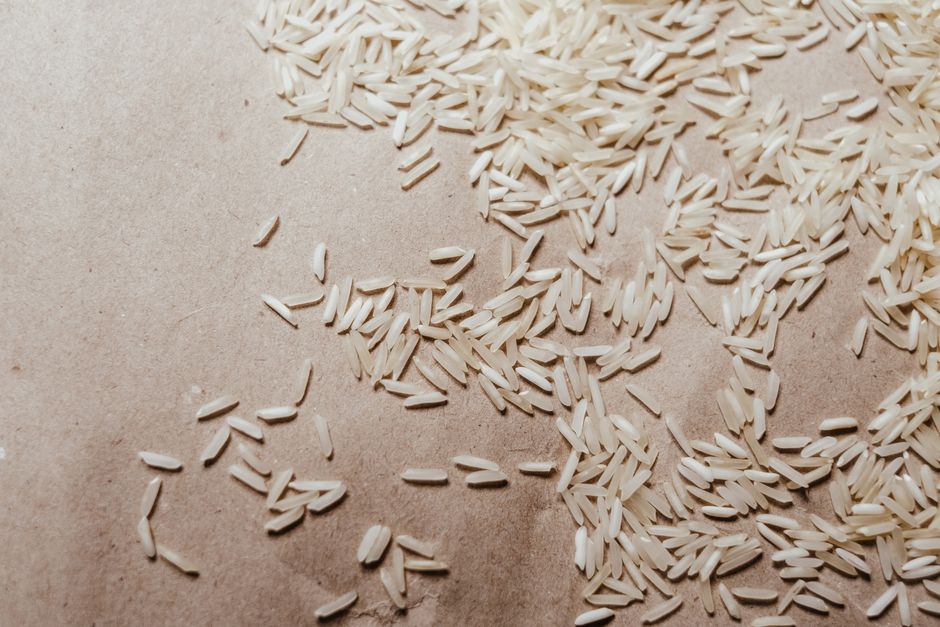
Brown rice does not make you fat on its own. It is a whole grain with about 216 calories per cooked cup, and eating it in normal portions as part of a balanced diet is not linked to weight gain. What matters far more is how much you eat, what you eat with it, and your overall calorie balance.
That said, brown rice is still a carbohydrate-dense food. A large portion, or a bowl piled high with butter and sugary sauces, adds up fast. The grain itself is not the problem. The context around it usually is.
What Is Brown Rice and How Does It Differ From White?
Brown rice is the whole grain. Only the inedible outer hull is removed. The bran layer and the germ stay intact, and that is where most of the fiber, vitamins, and minerals live.
White rice has had the bran and germ polished away. What remains is mostly the starchy endosperm. This is why white rice cooks faster, lasts longer on a shelf, and has a softer texture. It also explains why brown rice carries more fiber, magnesium, and B vitamins than its white counterpart.
Both are primarily carbohydrate. Cooked brown rice has roughly 45 grams of carbohydrate per cup, compared with about 45 grams for white rice. The calorie counts are close. The difference is in how the body processes them.
Brown rice has a lower glycemic index than white rice. That means it raises blood sugar more slowly. This matters for people managing diabetes or prediabetes, though it does not directly determine whether a food causes weight gain.
Is Brown Rice Fattening?
No. Brown rice is not inherently fattening. Weight gain happens when you consistently take in more calories than you burn, regardless of the source. Brown rice is simply a source of calories like any other grain.
The confusion often comes from the carbohydrate conversation. Low-carb diets have made many people wary of rice in general. But research on whole grains, including brown rice, generally shows that people who eat more whole grains tend to have healthier body weights over time, not higher ones. That is an association, not proof that brown rice causes weight loss. People who eat whole grains also tend to have other healthy habits.
What is clearer is that whole grains are more filling than refined grains. The fiber in brown rice slows digestion and helps you feel full. Feeling full matters. It is one of the practical reasons portion control becomes easier when your plate has more fiber in it.
One point worth clarifying: brown rice does not have fewer calories than white rice. Some people assume “healthier” means “lower calorie.” It does not. The two are nearly identical in calories. Brown rice wins on fiber and micronutrients, not on calorie count.
How Many Calories Are in Brown Rice?
One cup of cooked brown rice contains about 216 calories. That is a standard reference figure from USDA nutritional data. It also provides roughly 45 grams of carbohydrate, about 5 grams of protein, and close to 4 grams of fiber.
Portion size is where most people lose track. A restaurant serving of rice can easily be two or three cups. That is 400 to 650 calories before you add anything else to the plate.
| Food | Calories (per cooked cup) | Fiber (grams) |
|---|---|---|
| Brown rice | ~216 | ~4 |
| White rice | ~205 | ~1 |
| Quinoa | ~222 | ~5 |
| Oats (cooked) | ~166 | ~4 |
Notice how close these numbers are. No single grain is dramatically lower in calories than another. The differences that matter are fiber, nutrient density, and how satisfying the food is.





Does Brown Rice Help With Weight Loss?
The evidence here is moderate, not strong. Some studies suggest that replacing refined grains with whole grains like brown rice may support weight management, but the effect is modest and hard to separate from other lifestyle factors.
What brown rice does offer is a practical swap. If you are going to eat rice anyway, choosing the whole grain version gives you more fiber and nutrients for roughly the same calories. That is a reasonable trade.
But brown rice will not cause weight loss on its own. No single food does. If you eat brown rice in large portions and pair it with high-calorie toppings, you can still gain weight.
The fiber content does help with satiety. A cup of brown rice with vegetables and lean protein is a filling meal. That fullness can make it easier to eat less overall. This is indirect, but it is real and it matters.
What About Arsenic in Brown Rice?
Rice absorbs more arsenic from soil and water than most other grains. This is a real concern, and brown rice can contain somewhat more inorganic arsenic than white rice because the arsenic concentrates in the bran layer.
For most adults eating rice a few times a week, this is not a major health risk. The bigger concern is for people who eat rice daily as a staple, and for infants and young children, who are more vulnerable because of their smaller body size.
If you eat rice often, you can reduce arsenic by rinsing it before cooking and cooking it in extra water that you drain off, similar to pasta. Varying your grains, such as rotating in oats, quinoa, or barley, also lowers exposure. This is not a reason to avoid brown rice entirely. It is a reason to eat a varied diet.
How Should You Eat Brown Rice Without Gaining Weight?
Portion control and what you pair it with matter more than the grain itself. A reasonable starting point is about half a cup to one cup of cooked rice per meal, depending on your calorie needs and activity level.
- Measure portions rather than eyeballing them, at least until you get a feel for serving sizes.
- Fill half your plate with vegetables, a quarter with protein, and a quarter with rice or another grain.
- Go easy on butter, oil, and creamy sauces, which can add more calories than the rice itself.
- Pair rice with protein and fiber to stay full longer.
- Rotate grains so you are not eating rice at every meal.
None of this is complicated. The rice is not working against you. The extras usually are.
Does Brown Rice Raise Blood Sugar?
Brown rice raises blood sugar, but more slowly than white rice. It has a lower glycemic index, which means the glucose enters the bloodstream at a gentler pace. This is largely because of its fiber and bran content.
For people with diabetes or prediabetes, this slower rise can be helpful, but it does not make brown rice a free food. Carbohydrates still count. Portion size and what you eat alongside the rice, such as protein and fat, affect the blood sugar response.
No single food should be judged only by its glycemic index. How much you eat and what you eat it with often matter more than the index number alone.
Is Brown Rice Better Than White Rice for Weight?
Slightly, but not dramatically. The calorie difference is small. The fiber difference is meaningful. Brown rice has about 4 grams of fiber per cup, while white rice has about 1 gram.
That extra fiber can help with fullness and blood sugar control. Over time, small advantages like this can add up. But swapping white rice for brown rice alone will not produce noticeable weight loss if the rest of your diet stays the same.
If you genuinely prefer white rice, that is not a failure. You can add fiber and protein from other parts of the meal. The goal is the overall pattern, not one perfect grain.
Frequently Asked Questions
Is brown rice fattening?
No, brown rice is not fattening on its own. It contains about 216 calories per cooked cup, and weight gain depends on your total calorie intake, not on this grain by itself.
How many calories are in a cup of brown rice?
One cup of cooked brown rice has roughly 216 calories, along with about 45 grams of carbohydrate and 4 grams of fiber. These figures come from standard USDA nutritional data.
Can I eat brown rice every day and still lose weight?
Yes, if it fits within your overall calorie needs and portions stay reasonable. Brown rice is filling because of its fiber, but eating large amounts can still add up.
Is brown rice healthier than white rice?
Brown rice has more fiber, magnesium, and B vitamins because the bran and germ are kept intact. The calorie counts are nearly the same, so the advantage is in nutrients and fiber, not calories.
