

Yes, banana is a good first food for most babies. It is soft, easy to mash, and rich in potassium and vitamin B6. It also needs no cooking, which makes it one of the simplest foods to prepare when a baby is ready to start solids.
That said, banana is not a complete first food on its own, and how you serve it matters. Around 6 months, babies need iron from food, and banana is not a good source of iron. So it works best alongside iron-rich options, not instead of them.
When Can a Baby Start Eating Banana?
Most babies are ready for solid foods at around 6 months. That timing comes from the American Academy of Pediatrics and the World Health Organization, and it is based on signs of readiness rather than age alone.
Those signs include sitting up with little or no support, holding the head steady, showing interest in food, and losing the tongue-thrust reflex that pushes food back out of the mouth. A baby who can do these things is usually ready to try soft foods, and mashed banana fits that stage well.
Starting before 4 months is not recommended. A young infant’s digestive system and swallowing skills are not ready, and early solids can displace the breast milk or formula that should still be the main source of nutrition in the first year. If you are unsure whether your baby is ready, that is a conversation to have with your pediatrician, not a decision to make from a chart alone.
Why Is Banana a Good First Food for Baby?
Banana checks several boxes that make it practical for a first food. It is naturally soft, so it does not need to be cooked or pureed in a machine. You can mash it with a fork in seconds. It has a mild, sweet flavor that most babies accept easily.
Nutritionally, a banana provides potassium, vitamin B6, vitamin C, and some fiber. According to USDA data, a medium banana has roughly 400 milligrams of potassium. That is a meaningful amount for a small body, though breast milk and formula already supply potassium too.
The texture is also easy to adjust. You can mash it smooth for a beginner, or leave soft chunks for a baby who has been eating solids for a while. That flexibility means one food can grow with your baby’s skills over several months.
What banana does not provide much of is iron and zinc. Those two nutrients become especially important around 6 months, when a baby’s stored iron from birth starts to run low. This is the single most important thing to understand about banana as a first food.
Does Banana Cause Constipation in Babies?
Banana can contribute to constipation in some babies, but the effect depends on ripeness. Unripe, greenish bananas contain more resistant starch and tannins, which can slow things down. Fully ripe bananas with brown spots have less of these compounds and are gentler on the gut.
The evidence here is not strong enough to say banana reliably causes constipation in every baby. Some parents notice it, others do not. If your baby seems to strain more after starting banana, ripeness is the first thing to check, and offering water with meals alongside other foods can help.
It is worth knowing that banana is sometimes described as constipating while other foods like prunes are described as laxative. In practice, a baby’s overall diet and fluid intake matter more than any single food. If constipation persists or your baby seems uncomfortable, talk to your pediatrician rather than adjusting the diet on your own.


How Should You Serve Banana to a Baby?
How you serve banana depends on your baby’s age and feeding skills. The goal is always a texture your baby can manage safely without choking.
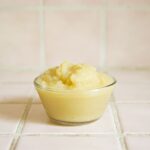
- Around 6 months: Mash ripe banana with a fork or blend it smooth. You can thin it with breast milk or formula if needed.
- 6 to 9 months: Offer soft, small pieces or a whole peeled banana that the baby can hold and gum. Some parents roll pieces in infant cereal to make them easier to grip.
- 9 months and older: Soft chunks, slices, or strips work well as finger food while the baby practices self-feeding.
Whole banana slices can be a choking risk for some babies because they are firm and round. Many feeding specialists suggest cutting them lengthwise into strips rather than coins, or mashing them, until the baby has good chewing skills. This is common feeding guidance rather than a rule backed by large trials, but it reflects how choking risk works with round, firm foods.
Banana is also easy to mix. Combining mashed banana with iron-fortified infant cereal, or with a spoon of nut butter thinned into the mash, adds nutrients banana lacks on its own. If you introduce peanut or other nut butters, do it in a thin, diluted form and watch for any reaction, since early allergen introduction is now widely recommended but should be done thoughtfully.
Is Banana a Choking Hazard for Babies?
Banana itself is soft, so it is not a high-risk choking food the way whole grapes, nuts, or hard raw vegetables are. The risk comes from how it is cut and how ripe it is.
A firm, underripe banana cut into round coins can be difficult for a baby to chew and can block the airway. A very ripe banana cut into strips or mashed is much safer. The general principle with any food is that it should be soft enough to squash easily between your fingers.
Always have your baby seated upright while eating, and never leave a baby alone with food. These are standard feeding safety practices, not specific to banana. If you have any doubt about your baby’s chewing or swallowing, ask your pediatrician or a feeding specialist.
How Does Banana Compare to Other First Foods?
Banana is a strong first food, but it is not the only one, and it should not be the only one. The table below shows how it stacks up against a few common first foods on the nutrients that matter most at the start of solids.
| Food | Iron | Key Strength | Prep Needed |
|---|---|---|---|
| Banana | Low | Soft, no cooking, potassium and B6 | None |
| Iron-fortified infant cereal | High | Iron and zinc | Mix with liquid |
| Pureed meat | High | Iron, zinc, protein | Cook and puree |
| Cooked sweet potato | Low | Vitamin A, soft texture | Cook and mash |
| Avocado | Low | Healthy fats, soft texture | Mash |
The takeaway is simple. Banana is convenient and nutrient-dense in some areas, but it is low in iron. Pairing it with an iron-rich food covers the gap that banana alone leaves open. That combination, not banana by itself, is what makes a solid first meal.
Can Babies Be Allergic to Banana?
Banana allergy is uncommon but real. It is more likely in babies who already have other food allergies or a condition called oral allergy syndrome, which is linked to pollen allergies. In that situation, the body reacts to proteins in banana that resemble pollen proteins.
Symptoms can include a rash around the mouth, hives, or in rare cases more serious reactions. If your baby has never eaten banana before, offer a small amount first and watch for any signs over the next couple of hours. This is standard practice when introducing any new food.
If your baby has a known allergy to latex or to certain pollens, mention banana to your pediatrician before introducing it. That link is well documented, though it does not mean every baby with those sensitivities will react to banana. When in doubt, ask rather than guess.
What Else Should You Know About First Foods?
Banana is a good start, but the first year of eating is about variety. Around 6 months, babies need iron-rich foods regularly, plus a range of textures to build chewing skills. Breast milk or formula should still be the main source of nutrition through the first year.
Introduce one new food at a time, with a few days between them, so you can spot any reaction. Offer water in an open cup with meals once solids begin. And keep the focus on soft, safe textures that match your baby’s growing abilities.
Banana fits into that picture easily. It is not the whole picture, but it is a reliable, low-effort piece of it.
Frequently Asked Questions
Is banana a good first food for a 6 month old?
Yes, mashed ripe banana is a suitable first food at around 6 months for most babies. It should be paired with iron-rich foods, since banana is low in iron.
Can banana cause constipation in babies?
Banana may contribute to constipation in some babies, especially if it is underripe. Fully ripe bananas with brown spots are generally gentler, but the evidence is not strong enough to say banana reliably causes it in every baby.
How do I serve banana to my baby safely?
Mash ripe banana for beginners, and offer soft strips or small pieces as your baby’s chewing skills develop. Avoid firm round slices, which can be a choking risk.
Can babies be allergic to banana?
Banana allergy is uncommon but possible, and it is more likely in babies with other allergies or pollen sensitivities. Offer a small amount first and watch for any reaction.
