
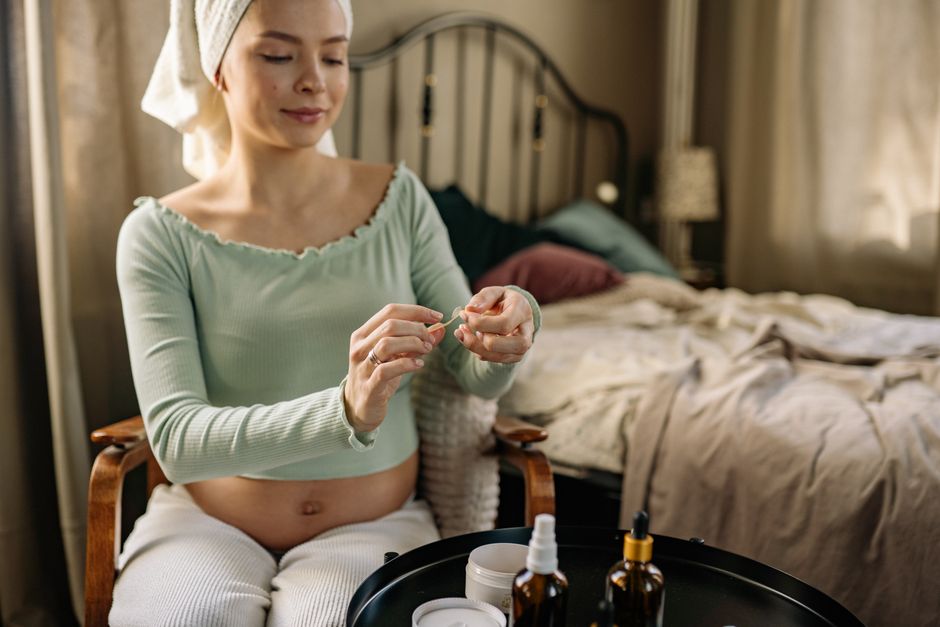
Bakuchiol is a plant-based ingredient often used as a gentler alternative to retinol in skincare. For pregnancy, the short answer is that bakuchiol appears to be a safer choice than retinol, but clinical safety data in pregnant women is still limited. Most dermatologists consider bakuchiol a reasonable option during pregnancy because it is not a vitamin A derivative, but you should always discuss any new skincare product with your obstetrician or midwife first.
What Is Bakuchiol and Why Is It Compared to Retinol?
Bakuchiol is a natural compound extracted from the seeds and leaves of the Psoralea corylifolia plant, sometimes called the babchi plant. It has been used in traditional Ayurvedic medicine for centuries, but its use in modern Western skincare is relatively new.
What makes bakuchiol popular is that it behaves similarly to retinol in the skin. Both ingredients can help with fine lines, uneven skin tone, and texture. Both work by influencing how skin cells turn over and how collagen is produced.
Retinol is a form of vitamin A. High doses of vitamin A derivatives are known to cause birth defects, which is why retinol and prescription retinoids like tretinoin are avoided during pregnancy. Bakuchiol is not a vitamin A compound at all. It belongs to a different chemical family. This is the main reason it has gained attention as a possible pregnancy-safe alternative.
However, resembling retinol in effect is not the same as being proven safe in pregnancy. The distinction matters.
Is Bakuchiol Pregnancy Safe According to Current Evidence?
No large human studies have directly tested bakuchiol use in pregnant women. Clinical trials generally exclude pregnant participants for ethical reasons, so direct safety data is absent.
What researchers do know comes from laboratory and animal studies. Some research suggests bakuchiol does not act on the same cellular receptors as retinol. Retinol works through retinoic acid receptors, which are linked to the birth defect risk. Bakuchiol appears to work through different pathways, which is biologically reassuring.
One small human study compared bakuchiol to retinol for facial aging. It found both ingredients improved wrinkles and pigmentation after 12 weeks. The study did not include pregnant women, and it was not designed to assess pregnancy safety.
The evidence gap means dermatologists make recommendations based on theoretical risk rather than proven safety. Most consider bakuchiol a low-risk option because of its chemical structure and lack of vitamin A activity. But “low risk” is not the same as “proven safe.”
How Does Bakuchiol Compare to Retinol in Pregnancy?
Retinol and prescription retinoids are clearly advised against during pregnancy. Oral isotretinoin, the acne medication, is well documented to cause severe birth defects. Topical retinoids are also avoided as a precaution, even though the amount absorbed through skin is small.
Bakuchiol does not carry the same concern because it is not a retinoid. It does not convert to retinoic acid in the body. This chemical difference is the foundation of its reputation as a pregnancy-friendly alternative.
Still, some experts point out that bakuchiol has not been studied long enough to know all its effects. The ingredient has only been widely used in cosmetics since around 2015. Long-term safety data, including reproductive safety, is simply not available yet.
If you are choosing between retinol and bakuchiol during pregnancy, bakuchiol is the more conservative choice based on what is currently known. But the most conservative choice of all is to use no active anti-aging ingredients at all unless your doctor approves them.



What Do Dermatologists Recommend for Pregnant Women?
Most dermatologists take a cautious approach to skincare during pregnancy. The general principle is to use the fewest products possible and to avoid ingredients with known risks.
For anti-aging and acne concerns, the common recommendations during pregnancy include:
- Glycolic acid and lactic acid in low concentrations for exfoliation
- Azelaic acid for redness and acne
- Vitamin C serums for brightening and antioxidant protection
- Hyaluronic acid for hydration
- Bakuchiol as a retinol alternative, if the patient prefers an anti-aging ingredient
These ingredients are generally considered safe because they are either naturally present in the body or have minimal absorption through the skin. That said, no topical ingredient is completely risk-free during pregnancy. The skin does absorb some amount of whatever you apply, and that amount varies by product formulation and skin condition.
Some dermatologists recommend bakuchiol to pregnant patients. Others prefer to avoid all active ingredients that lack pregnancy-specific safety data. Both approaches are reasonable. The difference is a matter of risk tolerance.
Are There Any Known Risks of Bakuchiol During Pregnancy?
There are no documented cases of bakuchiol causing harm during pregnancy. That statement is true, but it reflects a lack of data rather than proof of safety.
Animal studies have not shown reproductive toxicity for bakuchiol, which is encouraging. However, animal results do not always predict human outcomes, especially for skincare ingredients applied in small amounts over long periods.
One concern that occasionally comes up is that bakuchiol may have mild estrogen-like activity in some laboratory tests. The significance of this finding for pregnant women is unknown. No clinical evidence suggests that bakuchiol affects pregnancy hormones or fetal development.
Skin irritation is a more practical concern. Bakuchiol can cause redness or peeling in some people, especially when first introduced. Pregnancy can make skin more sensitive, so starting with a low concentration and patch testing is wise.
How to Use Bakuchiol Safely If You Are Pregnant
If you and your doctor decide bakuchiol is acceptable for you, use it the same way you would any active skincare ingredient. Start slow and watch your skin’s reaction.
A few practical guidelines:
- Use bakuchiol once daily, preferably in the evening
- Start with a product that lists bakuchiol lower on the ingredient list
- Patch test on your inner arm for three days before applying to your face
- Stop use if you develop persistent redness, burning, or peeling
- Always use sunscreen during the day, since any exfoliating ingredient can increase sun sensitivity
Bakuchiol is generally considered gentle, but pregnancy skin can react differently. What your skin tolerated before pregnancy may not be tolerated now.
No clinical guidelines currently exist for bakuchiol dosing in pregnancy. There is no established safe concentration or frequency of use. The recommendations above are based on general skincare principles, not pregnancy-specific research.
What About Bakuchiol While Breastfeeding?
The same lack of data applies to breastfeeding. No studies have measured whether bakuchiol passes into breast milk.
Most dermatologists apply the same cautious approach as with pregnancy. Bakuchiol is likely low risk because it is not a retinoid and is applied topically in small amounts. But no one can state with certainty that it is safe for a nursing infant.
If you are breastfeeding and want to minimize any potential exposure, you can apply bakuchiol after nursing and wipe the area if the product is near the breast. For facial products, the amount absorbed systemically is likely very small.
Frequently Asked Questions
Can I use bakuchiol while pregnant?
Most dermatologists consider bakuchiol a reasonable option during pregnancy because it is not a vitamin A derivative. However, no clinical studies have confirmed its safety in pregnant women, so you should ask your doctor before using it.
Is bakuchiol safer than retinol for pregnancy?
Yes, bakuchiol is generally considered safer than retinol during pregnancy because it does not act like vitamin A. Retinol and prescription retinoids are avoided during pregnancy due to known birth defect risks, while bakuchiol has no such documented risk.
Does bakuchiol contain vitamin A?
No, bakuchiol is not a vitamin A compound. It is a plant-based molecule from the babchi plant that mimics some of retinol’s skin effects through different biological pathways.
What anti-aging ingredients are safe during pregnancy?
Glycolic acid, lactic acid, vitamin C, hyaluronic acid, and azelaic acid are commonly recommended during pregnancy. Bakuchiol is also used as a retinol alternative, but always confirm any product with your obstetrician first.
